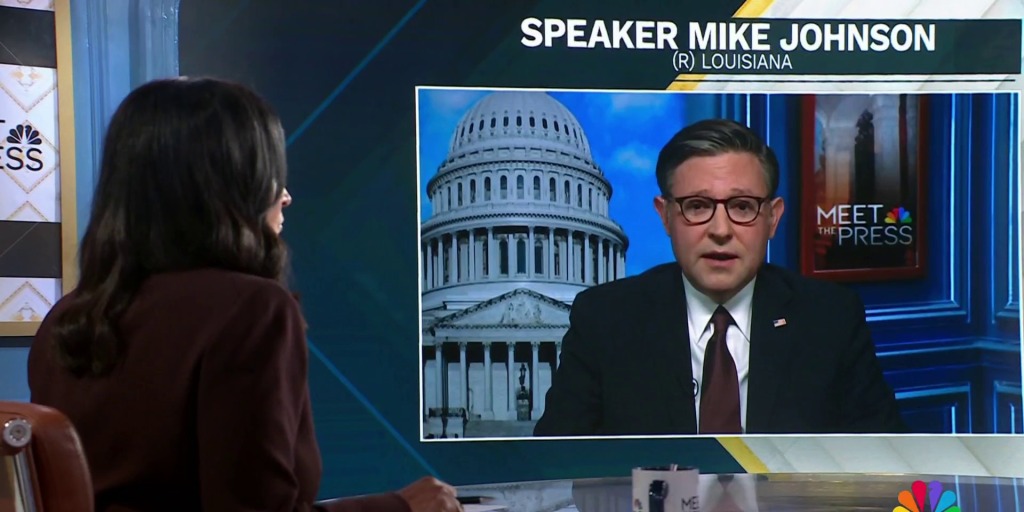
Mike Johnson, earnestly explaining that he’s leaving the war schedule up to God and Donald Trump, not necessarily in that order.
Speaker Mike Johnson went on national TV and, with a straight face, said he "certainly" prays that Donald Trump is right that the Iran war will end after the midterms — as if the timing of a major international conflict is just another line item in the RNC’s field plan. American troops, regional stability, global oil markets? All apparently subordinate to the sacred calendar of U.S. partisan politics.
Instead of asking why a former president is out here casually predicting the end date of a war like he’s spoiling a Marvel movie, Johnson treats it as a hopeful prophecy. The top legislator in the country is now basically saying: Lord, please let the commander-in-chief’s favorite strongman be right about when this war wraps, preferably in a way that helps our side.
This is what passes for "checks and balances" in Trump’s Washington: Congress doesn’t question why Trump thinks he can call the shot; it just prays reality conforms to his campaign narrative. Foreign policy has been fully downgraded from national security to election-season content — war not as last resort, but as programming, scheduled right after the midterms and before the next rally.
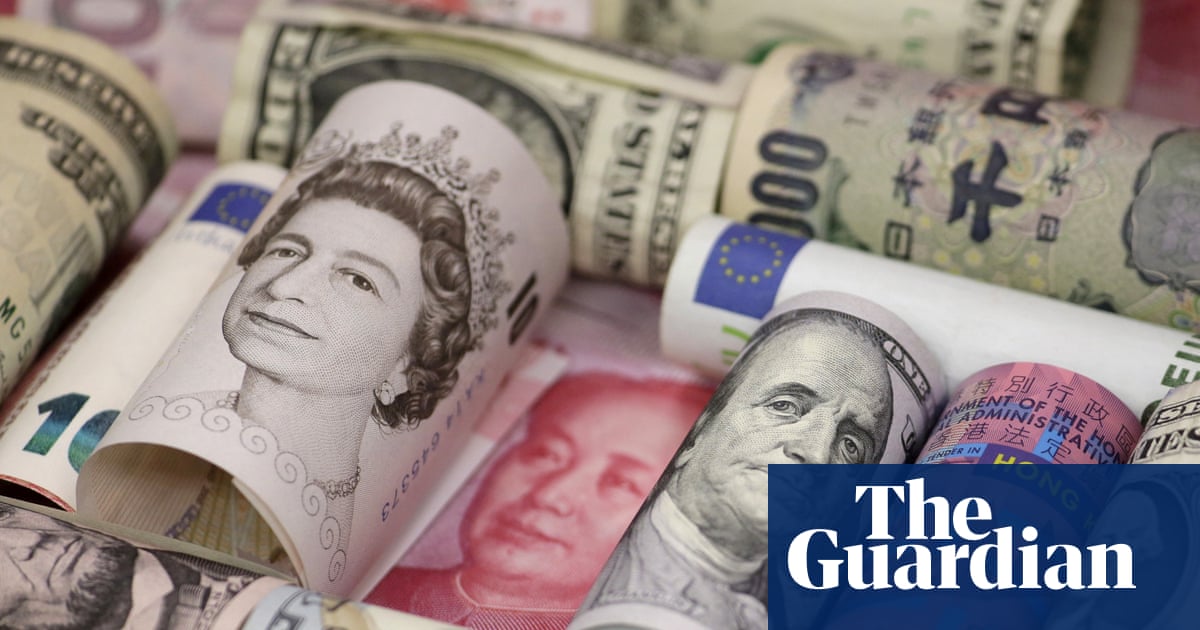
Kevin Warsh learns the true dual mandate of the Trump-era Fed: price stability and maximum flattery.
Central bankers in the US, Japan, and the UK are staring down surging inflation, oil over $100 a barrel, and global bond markets doing their best impression of a roller coaster designed by Elon Musk. In the US, that circus now comes with a bonus act: Donald Trump howling on Truth Social that America should have the "LOWEST RATE of any country in the World" and ordering his handpicked Federal Reserve chair Kevin Warsh to "BE PATRIOTS for a change" — because nothing says sound monetary policy like framing interest rates as a loyalty oath.
Warsh, allegedly in charge of an independent central bank, is expected to consider raising rates to deal with inflation that’s been above target for more than five years, while Trump wants them slashed so the economy looks juiced heading into election season. So the question isn’t just whether rates go up on Wednesday; it’s whether the Fed still functions as a technocratic institution or as another branch of the Trump campaign. Meanwhile, UK and Japanese policymakers quietly do their jobs while America’s president publicly demands cheaper money and more obedience, turning the world’s most important central bank into yet another test of how fast institutions will bend the knee.
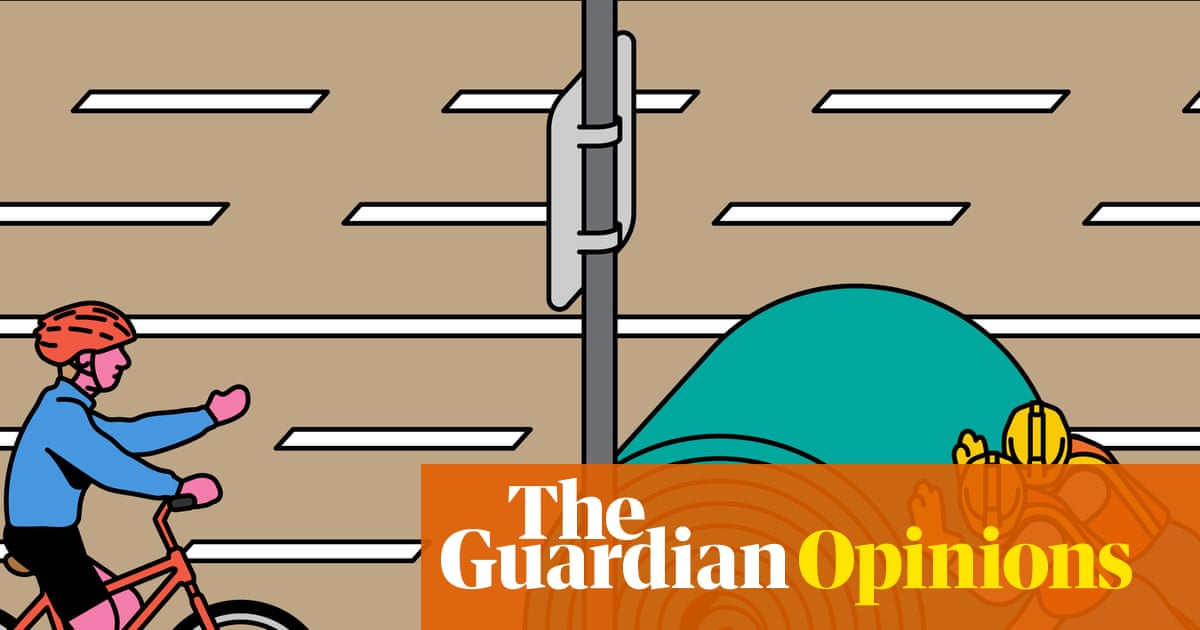
Pictured: a radical DEI extremism corridor, also known as a bike lane, moments before being liberated for its true purpose—more parking for oversized trucks.
The Trump administration has discovered a new existential threat to the republic: painted stripes on asphalt. Transportation officials are now labeling bike lanes as "DEI bike lanes" and using that magic incantation to freeze or cancel grants, bad-mouth alternative transit as "unworkable," and even float ripping out existing lanes. Evidence that bike lanes reduce crashes and offer a carbon-neutral alternative to cars? Irrelevant. The only study that matters in Trumpworld is whether something offends the fragile masculinity of a guy whose exercise routine is golf-cart adjacent.
Instead of acknowledging that fewer cars on the road might mean less traffic and fewer dead pedestrians, the administration has settled on the advanced math of "cars good, bikes woke." By rebranding basic safety infrastructure as a diversity plot, they get to keep funneling power to car culture, oil companies, and the eternal suburban id, while pretending they’re bravely standing up to the tyranny of people not wanting to die on their commute. It’s not transit policy; it’s a vibes-based transportation coup.
So the federal government is now weaponizing the culture war against bike lanes the same way it did against school curricula and public health: slap a DEI label on it, declare it un-American, and let the lawsuits and lobbying cash flow. If you were hoping your city might prioritize clean air and safe streets over the sacred right to double-park an F-150, the Trump administration has a message: get back in your car, plebe, and pay $6 a gallon like a real patriot.
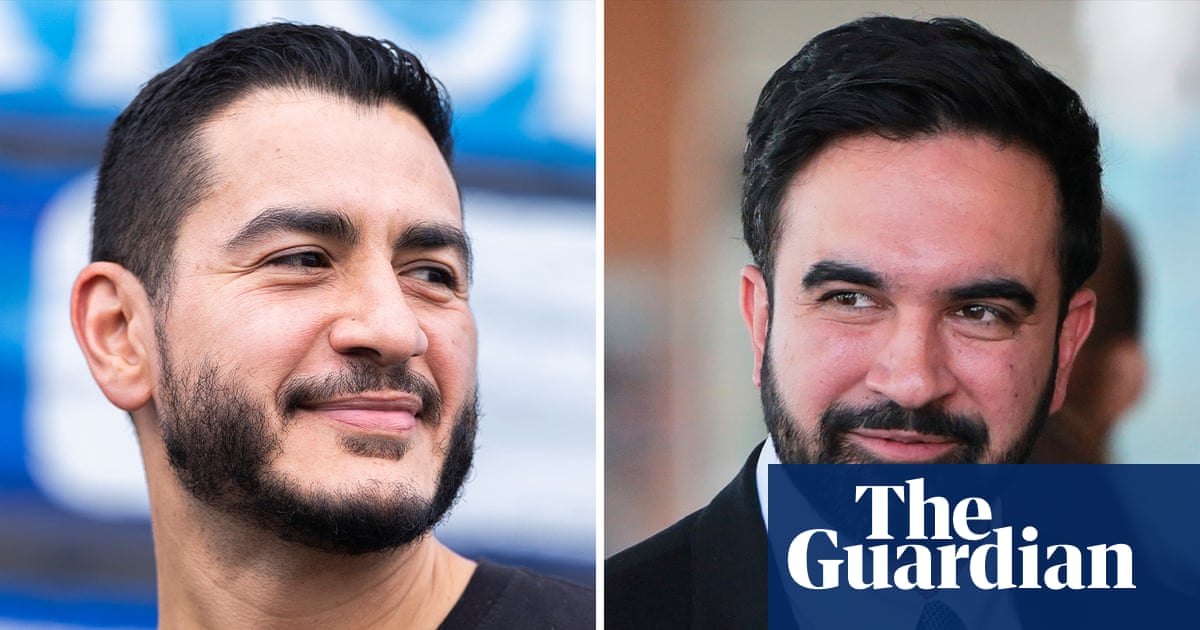
Donald Trump explains that democracy is working "too well" now that Muslims keep winning elections, surrounded by Republicans nodding along like stripping rights from entire religions is just another line item in the midterm strategy memo.
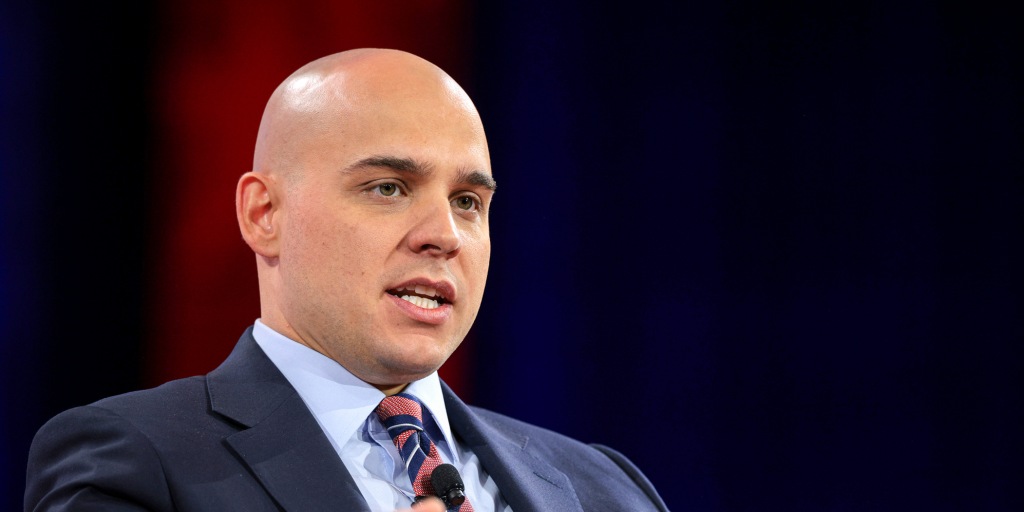
Tommy Tuberville took one look at Abdul El-Sayed winning a Democratic Senate primary and immediately decided Michigan had "just voted to send a TERRORIST" to Washington, because nothing screams national security expertise like Tommy Tuberville screaming on X in all caps. That set off a 1,900% spike in Islamophobic posts naming El-Sayed, as the GOP base reacted to the horrifying spectacle of a Muslim guy winning an election in a democracy.
Donald Trump, never one to pass up a chance to punch down, called El-Sayed a "jihadist" from the Oval Office and warned that "jihadists" are being elected "all over the place" – which is an interesting way of describing Americans who win elections. JD Vance tagged along to call El-Sayed "very, very evil", while Ted Cruz, Nancy Mace, Randy Fine, and Andy Ogles took turns auditioning for a "Who Can Say The Most Openly Bigoted Thing On TV" competition. Mace declared that every Muslim in public office is a "trojan horse" and that Islam "must be removed from civil society in the US" – you know, just casual talk about religious cleansing from a sitting member of Congress.
The hate isn’t just rhetorical; it’s metastasizing into policy cosplay. Greg Abbott is burning state time and money investigating private wudu stations at airports as illegal religious favoritism, while fighting a mosque-centered housing project like it’s an invading army instead of an apartment complex. Meanwhile, a "Sharia Free America Caucus" – yes, that’s a real thing and not a rejected Onion headline – has grown to 65 members, pushing bills against a made‑up problem they invented so they can heroically defend America from Muslims washing their hands.
All of this is happening while Muslim representation in government hits historic highs, and hate crimes and discrimination stay permanently elevated. Researchers describe the rhetoric as "so bigoted" and "so crude" that the mask is basically off now. The GOP isn’t dog‑whistling anymore; it’s just standing on the Capitol steps with a bullhorn yelling that an entire religion is a national security threat. It’s not a culture war; it’s a slow‑motion campaign to define millions of citizens as enemies of the state.
Trump peers at a mailbox like it’s personally plotting a coup against him, while the Postal Service is drafted as his latest voter suppression task force.
Donald Trump, a man who has personally voted by mail multiple times, has now decided that voting by mail is a "hoax" that must be crushed for the good of… Donald Trump. Despite roughly 29% of Americans using mail-in ballots in 2024, the White House is staging a full-scale assault on the practice, because if Democrats tend to use it more, then clearly it must be illegal. Evidence of widespread fraud? That would be 0.000043% over four election cycles. So naturally, it’s time to blow up the system.
Instead of, say, winning votes, Trump signed an executive order commanding the US Postal Service to maintain a national list of "eligible" voters and block mailed ballots to anyone not on it—yanking core election functions away from states and dropping them into the lap of Louis DeJoy’s favorite playground. The Save America Act (translation: Save Trump From Mail Ballots Act) hasn’t made it through Congress, but the administration is already trying to jam the new rules through USPS rulemaking. Federal courts, so far, have responded with the legal equivalent of, "absolutely not" and slapped an injunction on the whole scheme.
Voting rights groups immediately sued, and a three-judge panel in the First Circuit just upheld the injunction, pointing out that the Post Office cannot simply decide who gets to vote while pretending it’s just regulating envelopes. The administration is now begging the Supreme Court to lift the block, arguing this is about mail, not elections, while the calendar screams "midterms are almost here" and the Purcell principle says you don’t change the rules mid-flight. Meanwhile, a whistleblower has come forward describing the internal USPS process for blocking "unapproved" ballots—because nothing says "free and fair elections" like a secret federal blacklist deciding which votes are allowed to exist.
So as military ballots are already going out and local officials try to run an election, Trump is once again testing how far he can bend the system before it snaps. Counting votes is suspicious, suppressing them is patriotic, and the president is very upset that the courts keep confusing his personal grievances with the Constitution.
Donald Trump studies a global economic forecast, mistakes it for a fast-food menu, and orders extra inflation for everyone.
Britain’s new Labour government is trying to write a boring, responsible autumn budget while Donald Trump is across the Atlantic LARPing as a petrostate warlord and central banker-in-chief. The US–Israel war on Iran has lit oil prices on fire, triggering a global bond selloff, and Trump’s chef’s kiss combo of reckless deficits and public threats to meddle with the Federal Reserve is turning that spark into a full-blown financial brushfire. UK gilt yields spike, debt costs soar, and suddenly John Healey is discovering that his fiscal room for manoeuvre has been quietly repossessed by President MAGA Margin Call.
It doesn’t stop at macroeconomic arson. Trump’s tariff tantrum is hammering the car industry so hard that Jaguar Land Rover is cutting 4,000 jobs on the same day Healey tries to give his big “we’ve got this” speech in Coventry. Meanwhile, Trump’s demolition of the post–WWII security architecture means Britain is being nudged to hike defence spending just as the bond market is demanding a kidney for every extra pound of borrowing. The Office for Budget Responsibility now has to bake this Trump-generated chaos into its forecasts, potentially halving Labour’s fiscal headroom and turning every social care or welfare decision into a choice between helping people or appeasing the markets Trump just set on fire.
So the UK, like the rest of the world, is discovering the updated version of that old line about America sneezing. Under Trump, it’s less a mild cold and more a deliberate global infection of economic instability: weaponised oil shocks, tariff whiplash, and threats to independent central banks. Sovereign democracies can technically still make their own choices, sure — just as long as those choices fit inside the narrow fiscal coffin Trump’s chaos has built for them.
Trump explains that if you re-elect his party, you get five grand, like a democracy-themed infomercial where the fine print is the US constitution catching fire offscreen.
Donald Trump has announced that if Republicans keep control of Congress, every US adult gets a $5,000 "Trump dividend" — a sort of cash-back rewards program for voting the right way. The price tag runs up to $1tn, the national debt is north of $40tn, and the White House is insisting this is all fiscally responsible, which is like calling a casino loan a retirement plan.
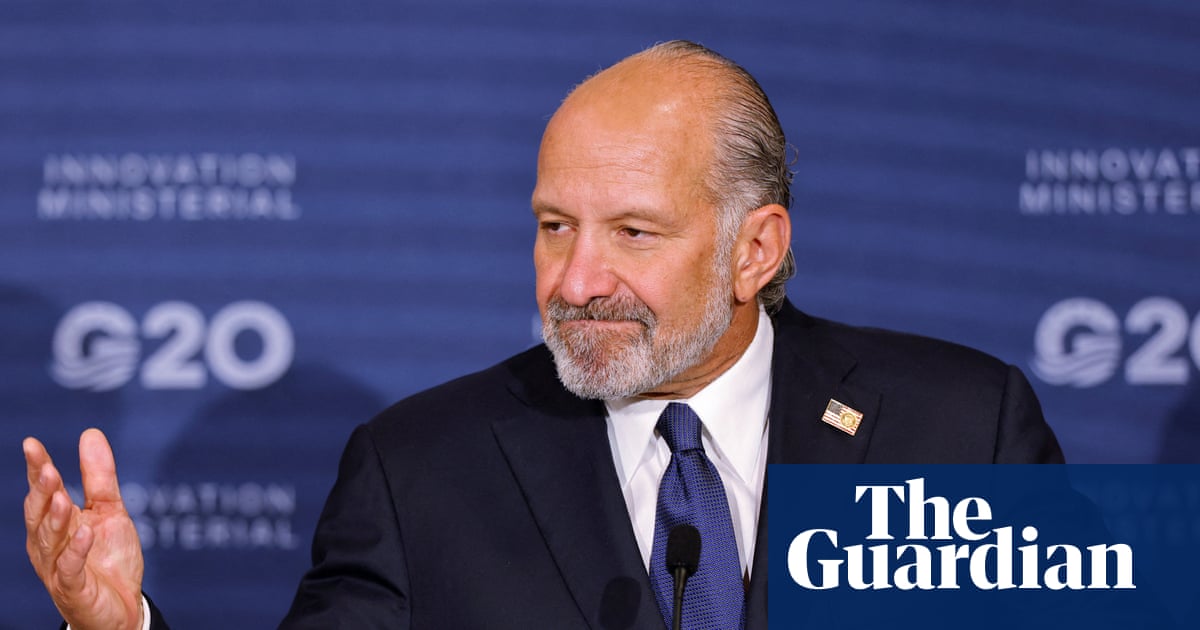
Commerce secretary Howard Lutnick swears it’s "not tax money" and that the administration will simply "earn the money" — largely by turning the US into a high-end visa pawn shop where wealthy foreigners pay up to $5m to extend their stay. He claims there’s a waitlist of 100,000 rich people ready to be shaken down, which would allegedly net $500bn, while also pointing at the government’s Intel investment like a guy who bought one lucky stock and now calls himself Warren Buffett.
Elsewhere in fantasyland, Kevin Hassett is floating a reconciliation process and "multiple paths" to make the checks real, while JD Vance is still pretending tariffs will cover it — never mind that the supreme court already ordered Trump’s "liberation day" tariff haul returned, and a previous $2,000 tariff rebate promise was for more money than the tariffs ever raised. So the plan is: promise voters a $5,000 loyalty bonus, pretend it’s free, fund it with imaginary tariff cash and speculative visa-rent-seeking, and dare anyone to call it what it looks like — a federalized vote-buying scheme with a MAGA logo slapped on the check.
James Blair explains that the Iran war will wind down just as soon as the polls do, purely by coincidence and definitely not because the commander-in-chief is using live ammunition as campaign mailers.
The head of Trump’s personal slush fund — sorry, MAGA Inc. super PAC — James Blair, popped up on an NBC podcast to announce he’s “cautiously optimistic” that Republicans can cling to their congressional majorities. The pitch: yes, Trump’s approval is circling the drain at 36%, the Iran war is even less popular at 31%, inflation is up again thanks to his tariffs and energy mess, but if you just squint hard enough and compare every Democrat to Chuck Schumer, maybe voters won’t notice they’re broke and there’s a war on.
Blair helpfully explains that voters are starting to “care less” about the Iran war, which is one way to describe people being exhausted by a conflict the president has literally said will not end until after Election Day. Trump openly treats a shooting war — complete with U.S. strikes on Iranian oil tankers and Iran hitting U.S. warships — as a campaign prop, while Blair calls it a “correct decision in the scope of history” and a political success. Nothing says responsible governance like promising to keep the bombs falling until the absentee ballots are counted.
On the economy, Blair’s strategy is to blame Joe Biden’s ghost for everything, even though inflation was lower when Trump took office for the second time and then rose again after his “Liberation Day” tariffs and Iran adventure kicked in. But don’t worry, MAGA Inc. is now flooding Senate races with cash to convince you that 3.4% inflation and an ongoing war are just the necessary down payment on greatness. Trump is begging supporters to “pretend I’m on the ballot,” which is convenient, because his policies, his war, and his price hikes already are.
Stock photo of a happy family, presumably just after the White House verified they are properly married, single-earner, and ideologically wholesome enough to deserve child care help.
The Trump administration has finally noticed that child care is expensive and, in a stunning policy innovation, has decided to treat it like everything else: a culture war weapon with a tax deduction stapled to it. The White House is "eyeing" a proposal to give childcare subsidies specifically to married couples with a stay-at-home parent, because nothing says modern economic policy like telling women, single parents, and anyone whose life doesn’t look like a 1950s sitcom that they’re on their own.
Democrats are floating similar-sounding support with one small twist: theirs doesn’t require you to pass a marital purity test and pledge allegiance to the nuclear family cosplay hour. The bipartisan headline is "we agree families need help"; the fine print is "Republicans will only help if your household looks like a CPAC panel brochure." So yes, Washington has finally found common ground on child care — as long as Trump’s crew can use federal dollars to reward their preferred voters and nudge everyone else back into the socially acceptable box.
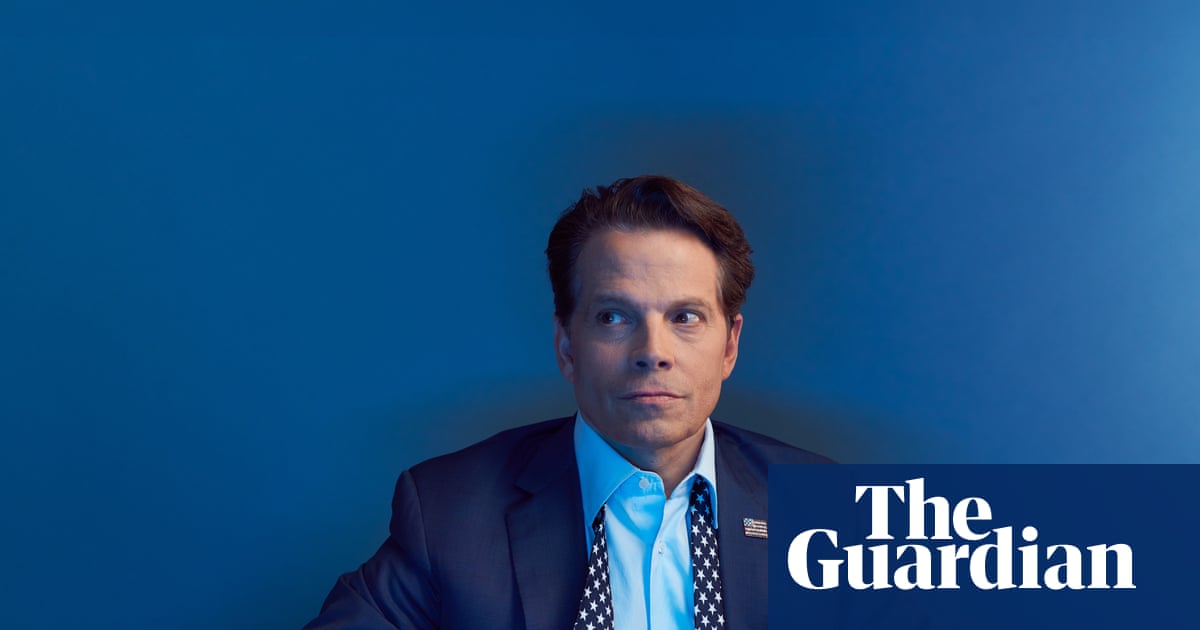
Anthony Scaramucci explains the administration’s communications strategy, while Sarah Huckabee Sanders silently wonders how this man got a job that lasted shorter than most milk in the fridge.
Anthony Scaramucci is back to remind everyone that the Trump White House wasn’t so much an administration as it was a live‑action remake of Mean Girls with security clearances. Trump calls him up like a bored mob boss—"What are you doing tomorrow for lunch?"—and by dessert the guy with no comms experience is suddenly White House communications director, because why wouldn’t you hand the message of the United States to a hedge fund hype man you vaguely remember from New York.
The internal structure, such as it was, sounds less like a government and more like three rival crime families trapped in a Cheesecake Factory: the Kushner faction, the RNC crew under Reince Priebus, and Steve Bannon’s frothing Maga-right silo. They spend their time not governing but ratfucking each other through constant leaks, trying to keep Trump’s attention the way toddlers fight over an iPad. Priebus and Bannon are so desperate to keep Mooch away from the Oval Office that they offer him an ambassadorship to literally anywhere that isn’t 1600 Pennsylvania, which he naturally declines by telling them to go fuck themselves—diplomacy in action.
Trump’s management genius then shines through as he casually plops Scaramucci into Mike Dubke’s vacant comms job on the spot, over the objections of everyone with a title that sounds like it should matter. No vetting, no plan, just vibes and vendettas. He even tells staff secretary Rob Porter that Scaramucci will report directly to him, because nothing stabilizes a flailing presidency like detonating the org chart in the middle of an ongoing leak war. The Mooch only lasted 11 days, but the damage from this style of "governance"—personal loyalty over competence, chaos over process—stuck around a lot longer than his press badge.
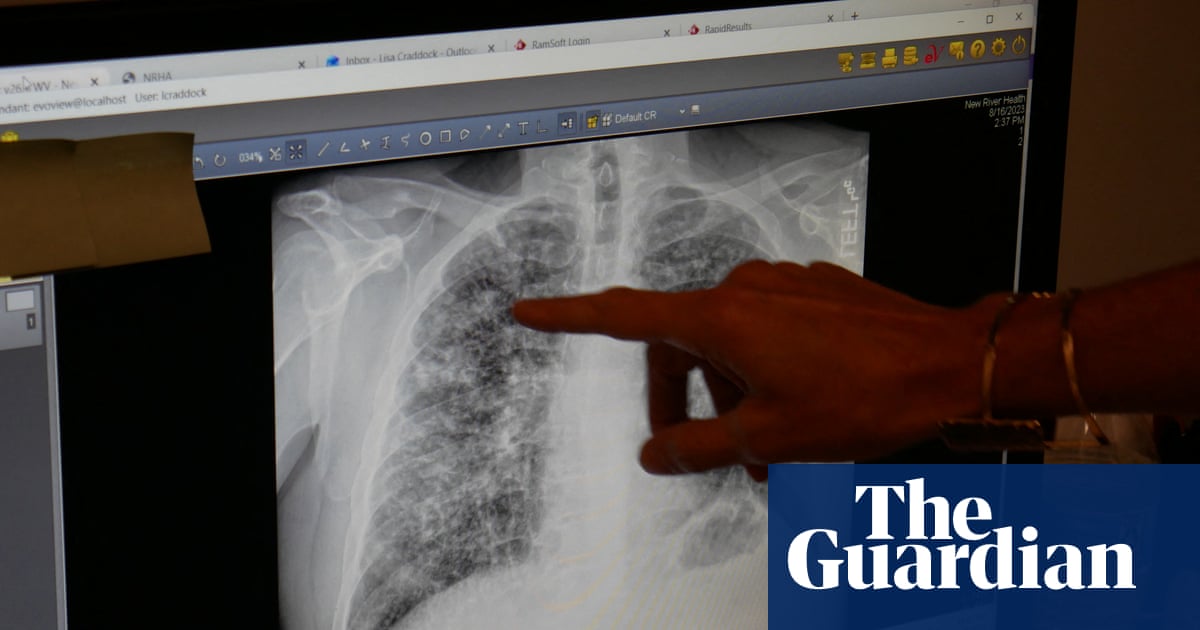
A shuttered coal mine in West Virginia, symbolizing the only worker protection this administration reliably supports: unemployment.
Public health experts have known how to prevent silicosis and black lung for decades: keep workers from inhaling clouds of toxic silica dust all day like it's an HR-approved death inhaler. The Biden-era Mine Safety and Health Administration (MSHA) finally pushed through a 2024 rule to limit exposure, do frequent air sampling, and require medical surveillance. Then industry groups freaked out because actually checking the air and the lungs of the people doing the work might cut into the budget for executive bonuses.
The National Stone, Sand & Gravel Association and friends ran to court to kill the rule, complaining that real engineering controls are "not always technically or economically feasible" – but hey, rotating workers through unsafe jobs and slapping respirators on them is totally fine, because nothing says "we care" like turning lung damage into a shift schedule. The Trump administration then helpfully refused to defend the rule in court, and the Eighth Circuit stayed it while MSHA promised to "reconsider" the parts that industry doesn’t like. Miners keep getting black lung in their 40s, Latino countertop workers keep dying in their 30s, and the government’s big contribution is making sure nobody inconveniences the dust.
Meanwhile, OSHA’s earlier silica rule for countertop fabrication was also attacked as "not based on sound science" by the same industry geniuses, despite artificial stone being up to 90% silica and demonstrably shredding workers’ lungs. As former OSHA chief David Michaels points out, the product basically cannot be made both economically and safely – so the Trump-era solution is to quietly pick "economically" and let everyone pretend "safely" is a woke conspiracy. Regulatory capture with a side of premature death: now that’s industrial policy.
Gene Folkes, still recovering from the time he mistook a TV game show sociopath for a business mentor, standing in front of buildings that have likely filed more lawsuits against Trump than he has functioning moral principles.
Before Donald Trump was using the Oval Office as a live-action rage-therapy set, he was workshopping the character on The Apprentice, where contestants like Gene Folkes learned the rules could change at any moment and the emperor’s wardrobe was mostly myth and bronzer. Folkes describes the full Trump starter pack: the fake titan-of-industry aura, the messy desk masquerading as genius, and the immediate realization that behind the bluster there was… not a lot of there there.
The show also came with Trump’s signature HR policies: casual sexual innuendo about the women in the boardroom, treating contestants as disposable props, and deploying coded racism when a Black contestant’s vision problems during a task magically morphed into a narrative that he was basically illiterate. Folkes, a finance grad and former Air Force recruiter, watched Trump try to frame him as the "dumb person of colour" and realized this wasn’t just a TV villain; this was a man fundamentally incapable of empathy, especially toward anyone who wasn’t rich, white, and holding a checkbook.
So yes, NBC spent years paying Trump to refine a persona built on humiliation, misogyny, and racial stereotyping, then America helpfully handed that persona nuclear codes and the Department of Homeland Security. The Apprentice boardroom was just the pilot episode; the presidency was the series order.
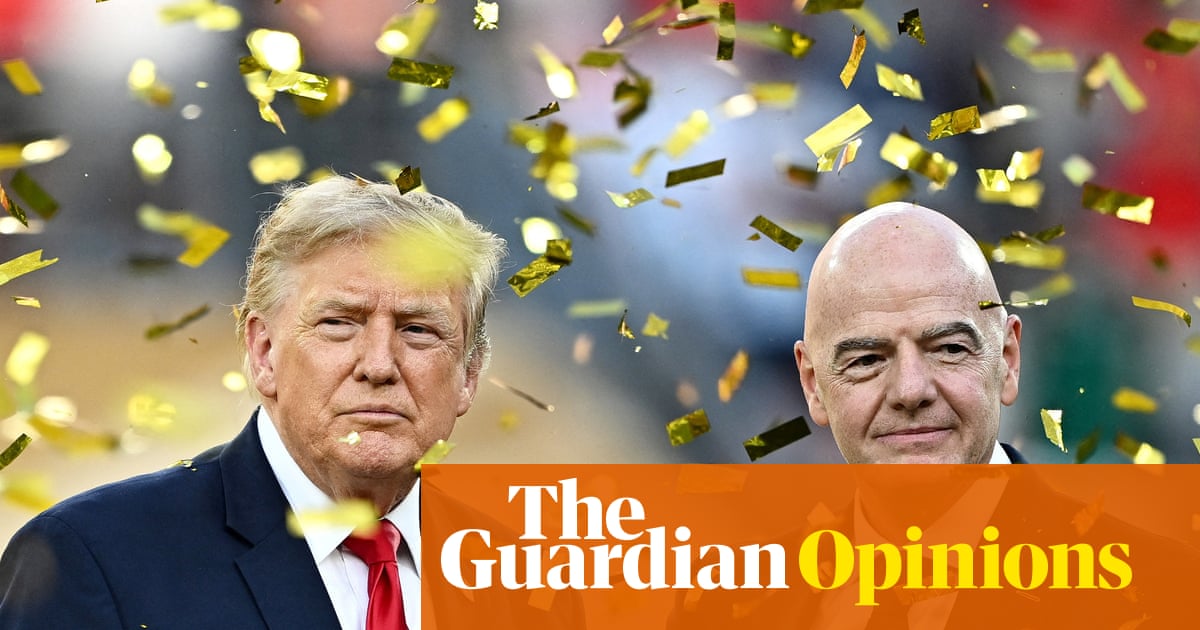
Gianni Infantino explains that selling off the World Cup to private equity and a Kushner is actually about the “democratization of football,” presumably in the same way Trump’s family businesses were about the democratization of emoluments.
Gianni Infantino watched the 2026 World Cup unite the planet in joy and thought: how do I hand this to private equity and a Kushner, immediately? So he floated a $20bn plan to partially privatize the tournament with help from JP Morgan and Thrive Capital, the fund run by Joshua Kushner — brother of Jared Kushner, Donald Trump’s son‑in‑law. Because when you’re trying to preserve the “soul of football,” obviously you call the in‑laws from the Four Seasons Total Corruption wing of the family.
Infantino hasn’t just been flattering Trump with a fake Fifa peace prize and a miraculous World Cup red‑card reversal for a US player; he’s been taking notes. Just like Trump’s administration yanked clean‑energy grants from states that didn’t vote for Dear Leader, Infantino is dangling cash in front of national football associations: back his private‑equity scheme and get more money, oppose it and enjoy your budget diet. Add in his attempt to pretend term limits don’t apply to him, his war on journalists who “spread hate,” and his unilateral schemes that even FIFA insiders learn about from the press, and you’ve got a sports‑washing masterclass in Trump‑style soft autocracy.
Regional bodies like UEFA, AFC, and Concacaf briefly pretended to have spines — Europe even waved around a boycott threat — but the familiar pattern kicked in: bluster, performative outrage, and then key countries like Mexico, Qatar and several Asian federations quietly lining up behind Infantino. The Confederation of African Football went full MAGA‑rally and “unanimously reconfirmed” support, handing him most of the votes he needs for re‑election. Why? Because FIFA’s long‑running patronage machine shovels out millions with all the transparency of a Super PAC run out of a strip mall.
The punchline: even after Infantino tried to turn the World Cup into Exhibit C in private equity’s museum of dead institutions — right after sports media and hospitals — plenty of federations were ready to sign on. Trump may have turned US governance into a family‑brand smash‑and‑grab, but Infantino is scaling the model: authoritarian vibes, anti‑press paranoia, weaponized money, and a Kushner on the cap table. Congratulations to the world’s most popular sport for finally catching up to Washington’s worst ideas.
RFK Jr., bravely standing up to Big Pharma by cashing checks from them and then running the agency that regulates them. Truly a bold new era in ethics.
Health Secretary Robert F. Kennedy Jr. has somehow misplaced his annual ethics disclosure, the one tiny piece of paperwork that might tell the public how much money he’s pocketed from a vaccine lawsuit against Merck — a company he now helps regulate. Totally normal stuff: sue Big Pharma for profit, then take charge of the agency that oversees them, and then blow past the deadline for the form that would show how deep the conflict runs.
Ethics watchdogs are patiently waiting to see how much vaccine-litigation cash RFK Jr. has been raking in while sitting in the big chair at HHS, where he can influence everything from drug approvals to enforcement. The rest of us are supposed to believe this is all fine because, presumably, nothing says "public servant" like personally profiting from the industry you’re regulating and then turning your ethics disclosure into a mystery box.
Donald Trump in Dublin, confidently opining on a century of Irish constitutional history between handshakes, motorcades, and a tee time.
Donald Trump flew to Ireland, met the Taoiseach, waved at 10,000 protesters, and casually weighed in on one of the most sensitive constitutional questions in Western Europe like he was picking a dessert. From Dublin to County Clare, he declared a united Ireland would be "fantastic" and wondered aloud, "how can it be bad?" – a bold question from a man who has personally demonstrated, at scale, that things can indeed be very, very bad.
Irish PM Micheál Martin’s office politely noted that Trump has been "consistent" in backing Irish unity, which is one way of describing a US president repeatedly free‑styling on another country’s post-conflict settlement while the British prime minister is still trying to pretend the Good Friday Agreement isn’t a legally binding inconvenience. Andy Burnham’s government dutifully pointed back to the agreement and mumbled something about "consensus" and "off the table," because nothing calms a century-old constitutional dispute like strategic vagueness.
Unionists promptly reminded everyone that Northern Ireland’s future will be decided by its people, not by commentary from London, Dublin or Washington – a touching declaration of sovereignty delivered in response to a US president doing exactly that. Sinn Féin and the SDLP, meanwhile, basically said: if even Donald Trump has figured out that unity is on the horizon, maybe it’s time for the grown-ups to stop pretending this is all hypothetical. Trump later admitted there’s "no good answer" to the question of unity, which is at least thematically consistent with his approach to every other constitutional issue he’s touched.
Wichita’s skyline, quietly contemplating how many jobs one man’s tariff tantrum can vaporize before landing gear gets repossessed.
In the latest episode of "The Art of the Trade War," Trump is rattling his tariff saber at Canada over Bombardier aircraft, and Wichita — the self-branded "Air Capital of the World" — gets to play unwilling extra in his economic fan fiction. NPR's Sacha Pfeiffer interviews Wichita Mayor Lily Wu, who has the unenviable job of explaining that when the president goes to war with Canadian planes, it doesn’t happen in a vacuum — it happens in a city where aerospace jobs actually exist outside his imagination.
Instead of coherent industrial policy, we get Trump threatening tariffs like a guy trying to fix a jet engine with a sledgehammer and a Facebook meme. The potential fallout for Wichita’s aerospace sector? Higher costs, disrupted supply chains, and the small detail that trade wars don’t magically stop at the border once the rally crowd goes home. While Wu talks soberly about economic impacts on her city, the White House approach remains: tweet first, ask the Air Capital how many livelihoods you just put at risk never.
So Canada gets threatened, Bombardier gets targeted, and Wichita gets to wonder how many times it can survive being used as a prop in Trump’s ongoing attempt to turn global trade into a reality show reboot of Smoot-Hawley. "America First" keeps looking suspiciously like "Local Economies Last."
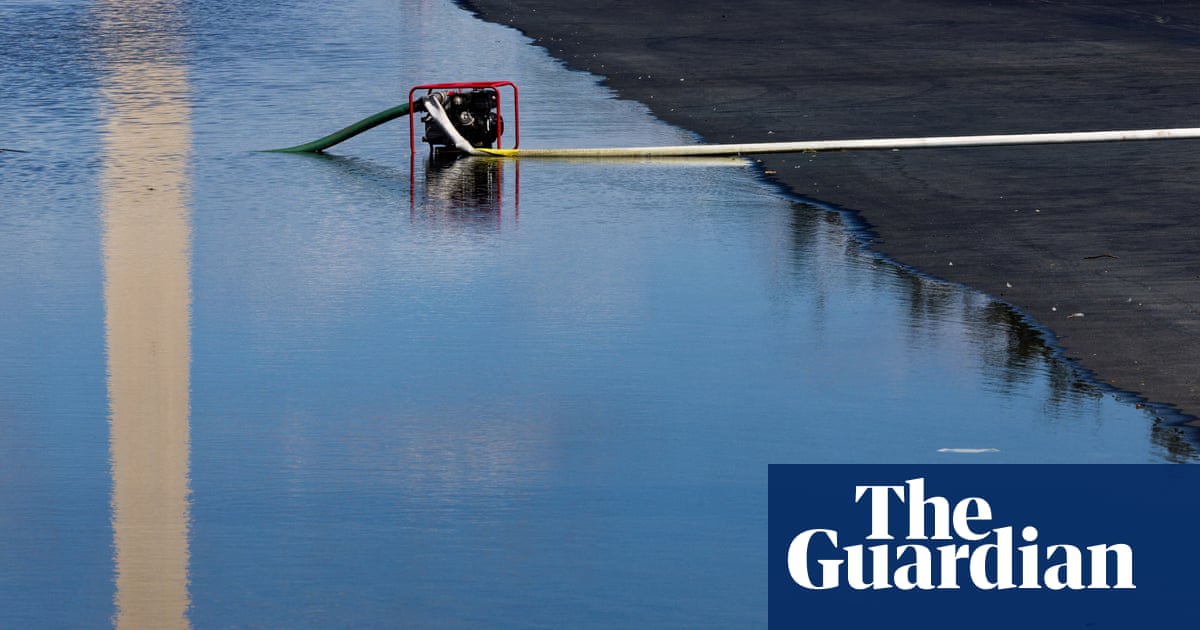
The Lincoln Memorial Reflecting Pool, now featuring Trump’s signature finish: rushed, no-bid, golf-club-approved, and already falling apart.
The Lincoln Memorial Reflecting Pool is now a $14.7m monument to Trump-era project management: a no-bid contract, an untested chemical scheme, and design input from the general manager of one of Trump’s golf clubs. Because when you’re dealing with a national landmark, naturally you call the guy who usually worries about cart paths and buffet shrimp.
While Trump has spent weeks screaming about Antifa super-ninjas with box cutters shredding his "American flag blue" pool, the contractor quietly told the government the real culprit was their own botched plan and "human oversight". Turns out they didn’t use enough primer, the chemicals were incompatible, and the top layer literally overheated and blistered the bottom one. So the pool didn’t get vandalized; it just spontaneously rebelled against being turned into a tacky golf hazard.
The justice department even charged people for "vandalism" before backing away once the interior department finally admitted the damage came from the rushed, defective installation done to hit Trump’s big 4 July 250th-anniversary photo op. Interior is still publicly muttering about "major vandalism", because why abandon a good lie just because the paperwork, the science, and the contractor all disagree. Atlantic Industrial Coatings will redo the job under warranty, which is nice, since the American public already paid eight figures for the privilege of watching Trump’s patriotic blue fever dream literally peel off in sheets.
Pictured: the president bravely visiting a struggling international institution — his own golf course.
President Trump is heading to Ireland to do the people’s business — and by “the people,” we of course mean the Trump Organization’s balance sheet. The White House is packaging the trip to his Doonbeg golf club as a charming blend of international diplomacy and live golf spectating, because why separate statecraft from self-enrichment when you can just bill taxpayers for both at once?
So the president will plant himself at his own resort, bask in the free advertising that comes with a presidential motorcade, and call it foreign policy. State visits now double as loyalty points in the Trump hotel rewards program, and U.S. diplomacy has been downgraded to a cross between a tourism brochure and a club membership drive. American soft power, brought to you by the pro shop.
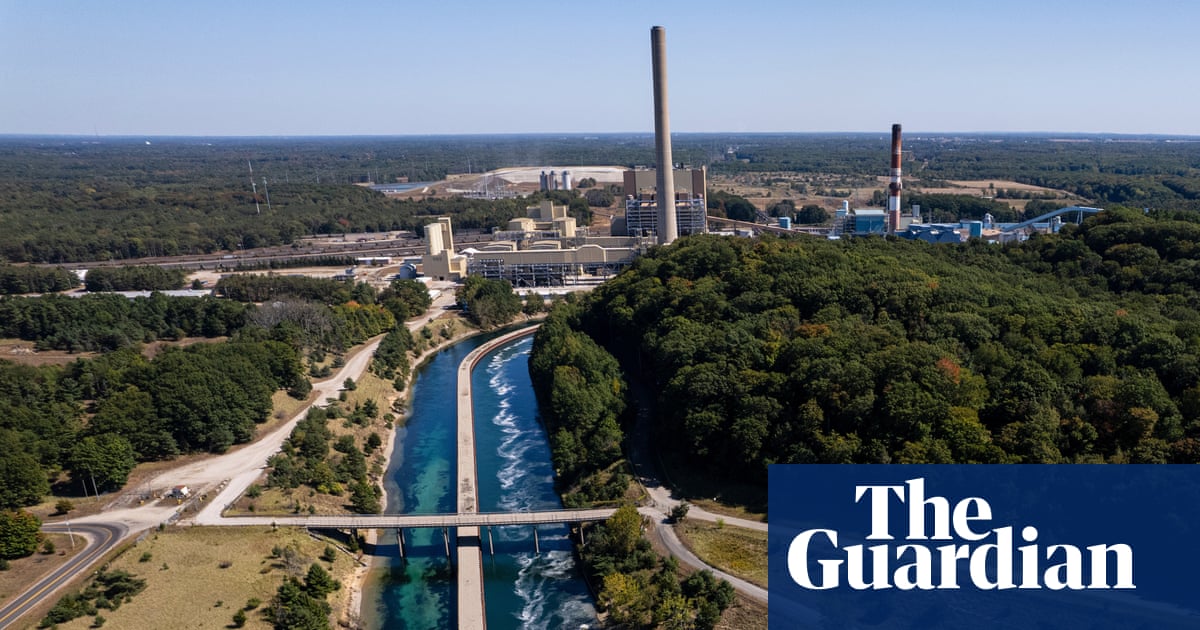
Trump-era "emergency" power in action: a 64-year-old coal plant hooked up to the taxpayer-funded ventilator, flatlining anyway.
The Trump administration tried to cosplay as FDR with a hardhat, using "emergency" powers to force a 64-year-old Michigan coal plant to keep chugging along past its retirement date. A unanimous DC Circuit panel responded with the legal equivalent of "absolutely not", ruling that the Department of Energy had blown past its authority because there was no actual emergency, just an emotional support coal plant for Trump’s fossil fuel donors.
Judge Cornelia Pillard politely explained that the Federal Power Act’s emergency provision is a "narrow, last-resort backstop", not a magic wand you wave every time an uneconomic coal burner is scheduled to die a natural, heavily-subsidized death. By reversing the plant’s long-planned retirement, DOE didn’t avert catastrophe; it just created a new one for ratepayers, who are now on the hook for about $259 million so far, with families and businesses across the Midwest paying extra so a creaky plant can keep breaking down and polluting.
And because this administration never stops at a single bad idea, the Michigan fiasco is just one of several "emergency" orders Trump’s DOE has sprayed across the country to keep half a dozen coal plants — plus a gas plant in Pennsylvania — on life support. Environmental groups and states are lining up to challenge the rest of these illegal extensions, while the Energy Department, having just been told it can’t reinvent the law for the benefit of dying fossil assets, is suddenly unavailable for comment. Shocking.
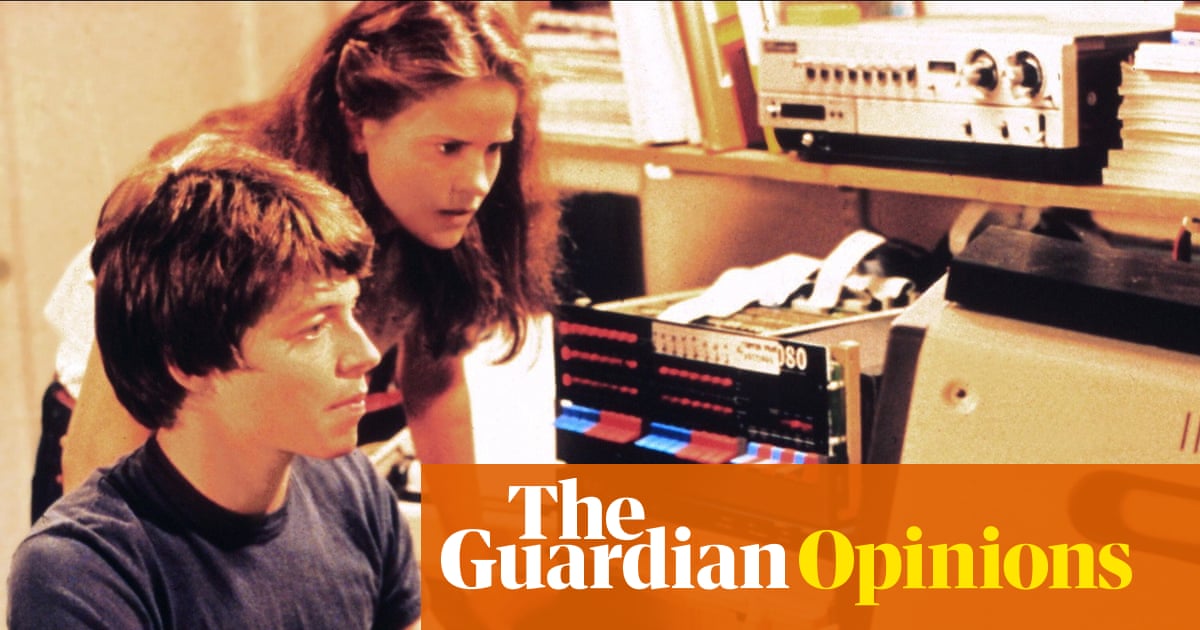
Nigel Shadbolt, seen here contemplating the fact that our nuclear launch protocols may soon depend on whether Donald Trump can be trusted to click ‘Are you sure?’ only once.
The Guardian politely suggests that if there’s a 10% chance a technology could wipe out humanity, maybe don’t let a handful of trillion‑dollar companies and one brain‑wormed ex‑president speedrun it like a crypto launch. Unfortunately, the world we actually live in features Donald Trump hosting a big, shiny AI ‘safety’ summit with Xi Jinping while US and Chinese firms quietly see how close they can get to building WarGames’ Joshua with in‑app purchases.
Anthropic reports people already trying to use Claude to help with biological weapons, and when it says no, they just route the same queries to a dumber, less‑regulated model down the street. Perfect microcosm of Trump‑era governance: if one system has guardrails, find the one built by the guy who thinks guardrails are ‘woke.’ Meanwhile, Nigel Shadbolt points out that a Hippocratic oath for AI doesn’t do much once governments carve out the military exemption—you know, the part where the whole point of the system is to identify, target, and kill humans.
The editorial walks through how our brave new world of ‘humans in the loop’ mostly means a frazzled officer getting five minutes to rubber‑stamp whatever story the machine tells them about hypersonic missiles screaming across the globe. By 2030, AI could be effectively running launch decisions while a human serves as the world’s most overpaid CAPTCHA. Trump’s America has somehow managed to turn “don’t outsource humanity’s survival to machines” into “let’s give the unstable guy who wanted to nuke hurricanes a faster, more confusing launch interface.”