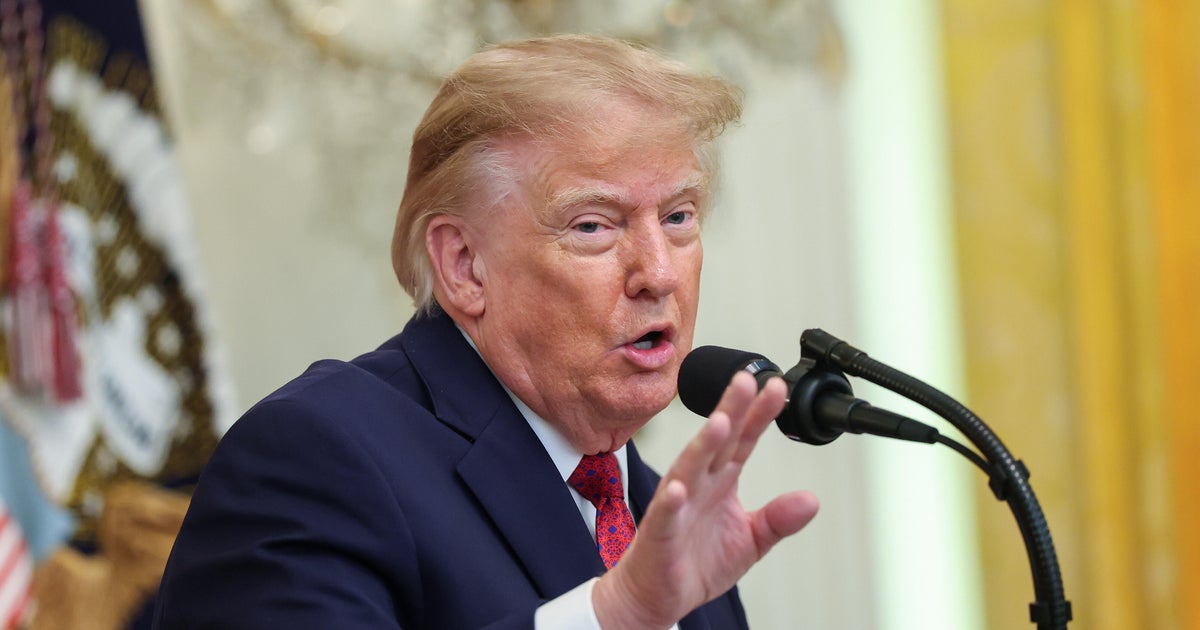
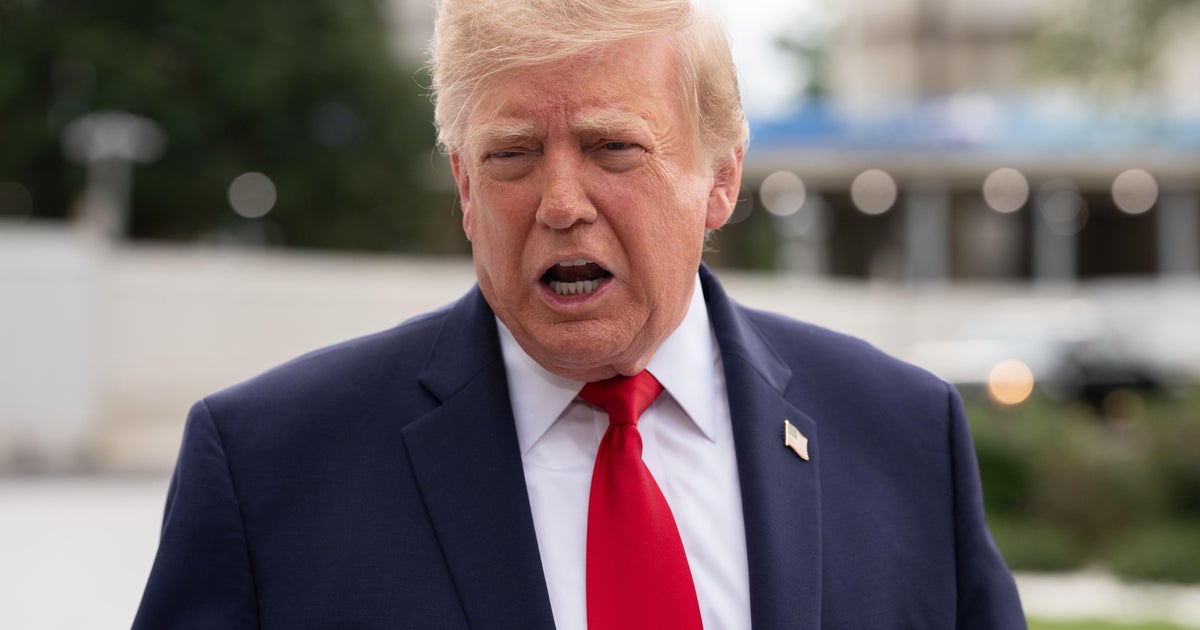
Because nothing says "serious leader of the free world" like turning the presidential motorcade into a discount NASCAR event, Trump’s team reportedly pushed speeds approaching 100 mph driving from a Denton, Texas rally to another ego-stroking stop in Durant, Oklahoma. Helicopter and plane were ruled out due to storms, so instead of adjusting the schedule like functioning adults, they apparently decided the solution was: floor it.
This wasn’t an ambulance, it wasn’t a national emergency, and no, democracy was not going to collapse if he arrived late to yell about immigrants and electric trucks. It was just a taxpayer-funded caravan blasting down public highways so Trump wouldn’t miss his next applause break. Local drivers and law enforcement? Reduced to background NPCs in the president’s personal action movie.
The Secret Service will, of course, say it was all perfectly safe and coordinated, as if turning a multi-vehicle convoy into a high-speed brick wall is just fine because they used the right jargon. Meanwhile, the rest of us are supposed to accept that the rules of the road only apply to people who don’t have a fleet of armored vehicles, federal protection, and a bottomless need for crowd shots. Rule of law is for the little people; the big guy gets a rolling demolition derby.
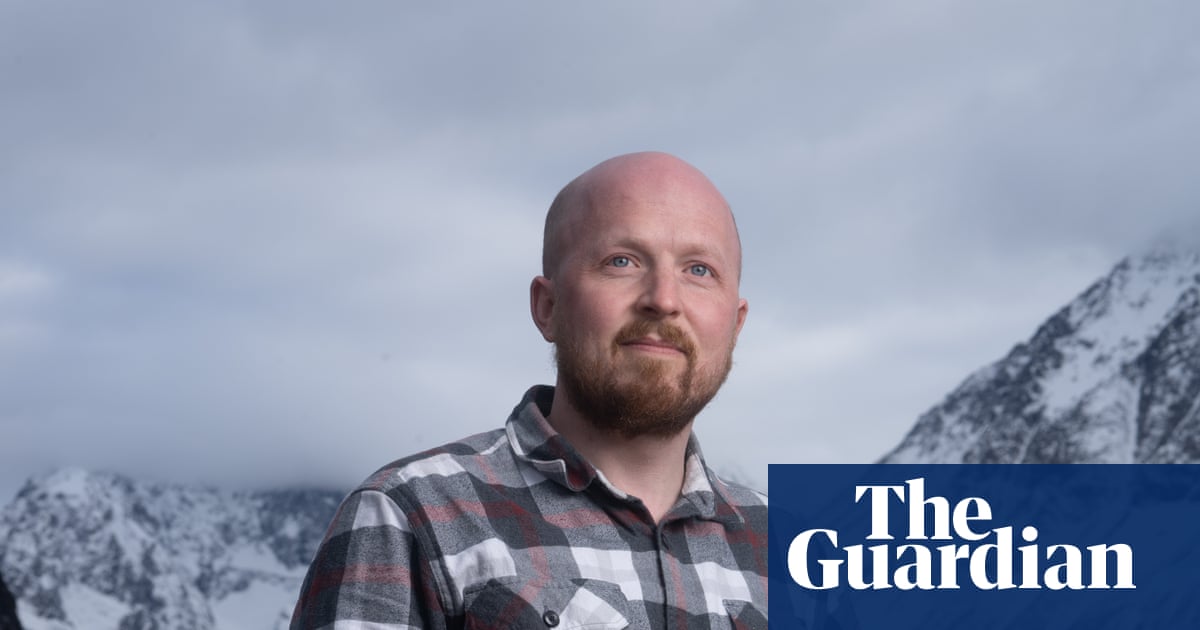
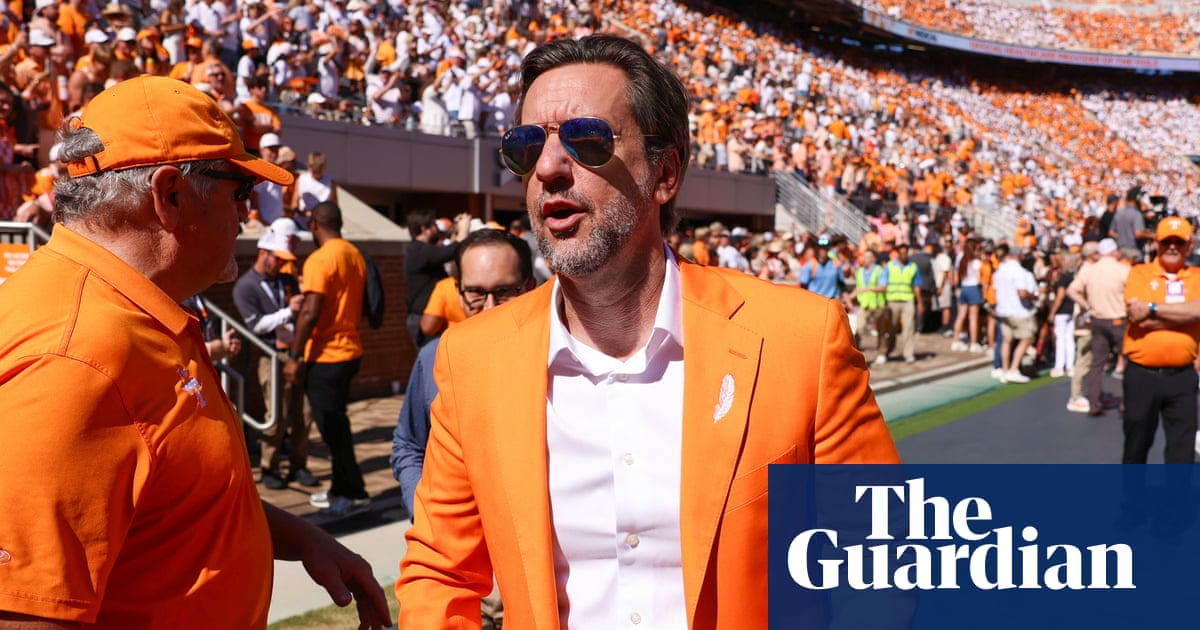
Local elder politely greets man who did the unthinkable in modern Republican politics: showed up in person and didn’t blame everything on a deep state cabal.
Alaska, the state Republicans treat as a permanent safety deposit box for electoral votes and oil fantasies, is suddenly flirting with a Democrat because Donald Trump’s approval rating has fallen through the permafrost. Jonathan Kreiss-Tomkins, a 37-year-old former state rep who actually visits tiny Indigenous villages in a boat instead of screaming at them on Truth Social, is now the frontrunner for governor after winning the top spot in the state’s open primary.
The outgoing governor, Mike Dunleavy – an early Trump fanboy who promised everyone giant oil-dividend checks and then handed out $1,000 plus a consolation $200 energy pat-on-the-head – is leaving office with the kind of popularity usually reserved for mosquitoes and bank overdraft fees. Meanwhile, Alaska’s ranked-choice system means voters don’t have to marry the least-worst Republican; they can just rank three different flavors of MAGA loser and then still end up electing the guy who knows how to operate a snowmachine.
Republicans have obligingly cleared the path by nominating what one longtime Alaska politics watcher calls “a bunch of political losers,” which is harsh but also extremely on-brand for a party that keeps stapling itself to Trump’s sinking approval numbers. So now the Last Frontier is quietly asking itself whether it’s time to stop being a test market for authoritarian cosplay and maybe try basic governance from someone who can navigate a river without capsizing the state.
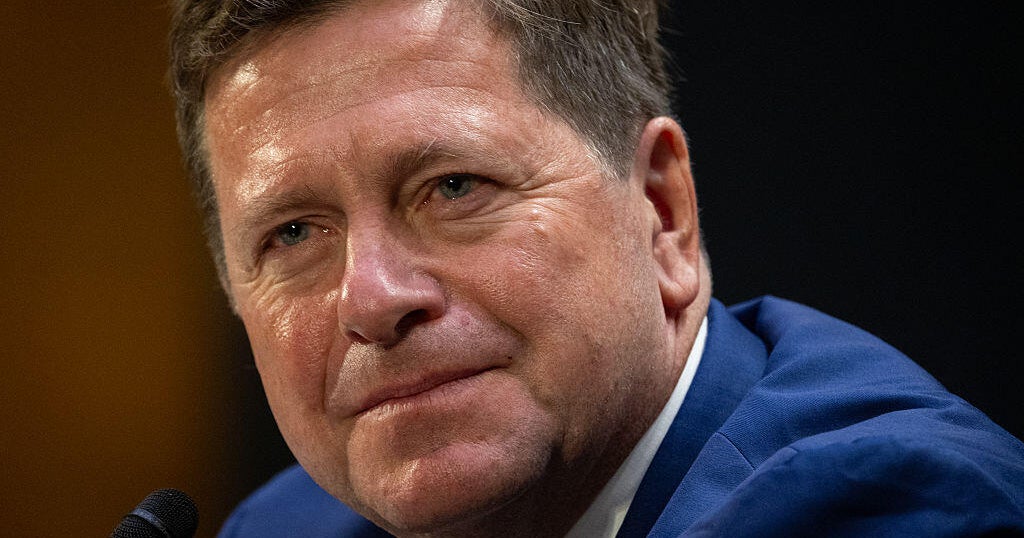
The White House is reportedly about to name Director of National Intelligence Jay Clayton as the new AI — sorry, "super intelligence" — czar, because if you're going to concentrate power over a world-changing technology, why not hand it to the guy who already oversees the entire intelligence community? Nothing screams "thoughtful governance" like stapling a second job onto the DNI and calling it a strategy.
Trump, who thinks warnings about AI's existential risks are a "hoax," is now building an "AI Force" while insisting on a featherweight regulatory touch. Clayton, to his credit, has at least admitted AI is both "an opportunity and a threat" — right before ruling out anything so gauche as a development pause in the U.S. The plan appears to be: let the tech billionaires cook, have the spies watch, and hope the republic survives the beta test.
Clayton glided into the DNI job after Tulsi Gabbard bailed, winning bipartisan praise for his résumé but only Republican votes after doing the usual 2020-election tap dance at his confirmation. Now he’s poised to become the point man for a sprawling AI agenda that so far consists of a name, a lunch with tech moguls, and Trump’s gut feeling that this "super intelligence" thing is good for national security and probably, coincidentally, for his friends’ stock prices. Regulation, democracy, and transparency are not expected to be part of the rollout.
The Supreme Court is gearing up to decide whether states and cities are allowed to send Exxon and friends the bill for burning the planet, or whether federal law will swoop in to protect the poor, helpless multinational oil conglomerates from the terrifying prospect of consequences. Boulder’s case against Exxon and Suncor is the test dummy, but everyone knows the real target is dozens of state lawsuits that say "you lied about climate risk, now pay for the floods, fires, and infrastructure collapse."
Instead of just asking whether companies that spent decades burying climate science should chip in for the damage, the justices are pondering whether federal law magically preempts all this messy accountability. Extra fun twist: industry lawyers are leaning on Trump-era efforts to gut the Clean Air Act as proof that climate is a "federal" issue, while their opponents point out that when the feds deliberately set the house on fire, maybe the states get to call the fire department. Justice Alito has recused himself, which is mildly bad news for the oil companies, but the rest of the Court’s conservative bloc is still very much open for business.
If the Court sides with Exxon, it won’t just torpedo these lawsuits; it could also blow a hole in state "climate superfund" laws in places like New York and Vermont that try the radical experiment of making polluters pay for the damage they caused. So the stakes are simple: either states get to use long-standing state powers to claw back billions from fossil fuel companies, or the Supreme Court hands those companies a shiny new constitutional shield and tells taxpayers to keep picking up the tab for every flood, fire, and collapsing bridge. American federalism: states’ rights for banning books, federal supremacy for protecting oil profits.
While democracy wheezes in the corner and basic governance continues to fail its sobriety test, President Trump has discovered his new moonshot: daylight saving time. He’s reportedly cranking up the pressure on Senate Republicans to pass a bill making daylight saving time permanent, because why address climate, healthcare, or creeping authoritarianism when you can rebrand the clock as a campaign promise? The House already passed the Sunshine Protection Act, which Trump has heroically renamed the "No More Changing of Clocks Act," proving yet again that if there's one thing this man understands, it’s slapping a dumb hat on somebody else's work and calling it history.
Naturally, there has to be a villain, and Trump has picked Sen. Tom Cotton (R-Ark.) as the guy allegedly blocking America’s sacred right to slightly different afternoon lighting. Instead of focusing on judicial independence, rule of law, or that whole ‘peaceful transfer of power’ thing he personally set on fire, the former and possibly future president is rallying his party to fix the real crisis: the biannual trauma of touching a microwave clock. It’s a perfect encapsulation of Trump-era politics — maximum drama, minimum substance, and an endless supply of lawmakers desperate enough to treat rearranging the sun as bold leadership.
So yes, the country may be hurtling toward constitutional crisis 2.0, but rest easy: the man who tried to overturn an election is now here to liberate you from the tyranny of the snooze button. Sunshine protected, institutions not so much.
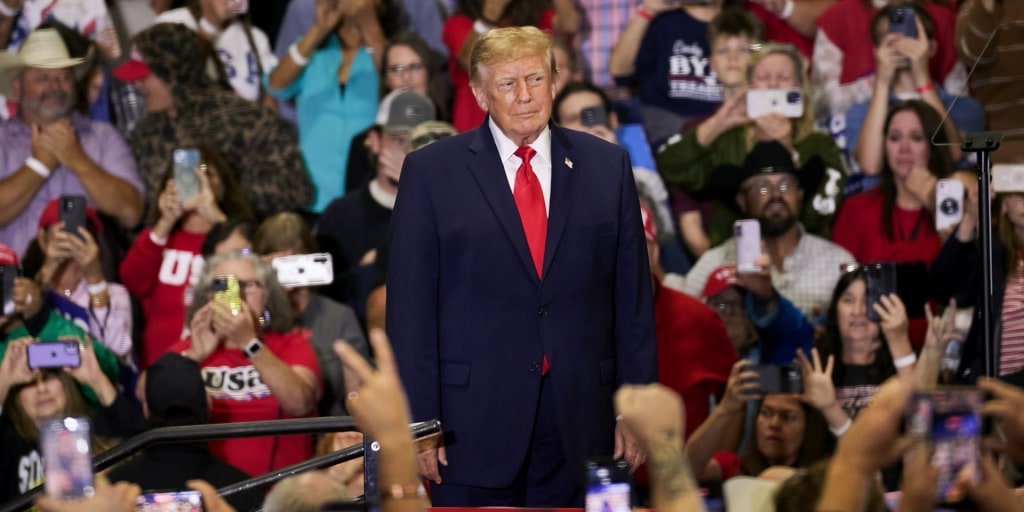
Trump stares out at the crowd, wondering how many of them would help him overturn the *next* election if he asked nicely—and how many would do it without being asked.
Trump is launching a "major campaign trail blitz" ahead of the midterms, which is a very polite way of saying the presumptive GOP field commander is barnstorming the country to remind Republicans that their party now functions as his personal legal defense fund and vibes cult. Networks frame it as normal horse-race politics; the actual product on stage is a greatest-hits reel of 2020 denial, revenge fantasies, and promises to put more election deniers in charge of counting votes next time.
Reporters dutifully note his packed schedule and his role in energizing the base, delicately skipping over the part where that same base tried to beat police officers with flagpoles last time they got really "energized." The midterms are supposedly about inflation and crime, but the guy headlining the tour is laser-focused on one thing: building a Congress that will never again let something as trivial as votes get in the way of his power. Democracy gets a mention only as the thing his crowds are still mad at for not choosing him.
So yes, it’s a campaign blitz. Just not for policy, or ideas, or even coherent sentences. It’s a traveling loyalty test for a party that long ago decided the easiest way to win elections is to make sure elections don’t really matter. The press calls it momentum. History is going to have a shorter word: warning.
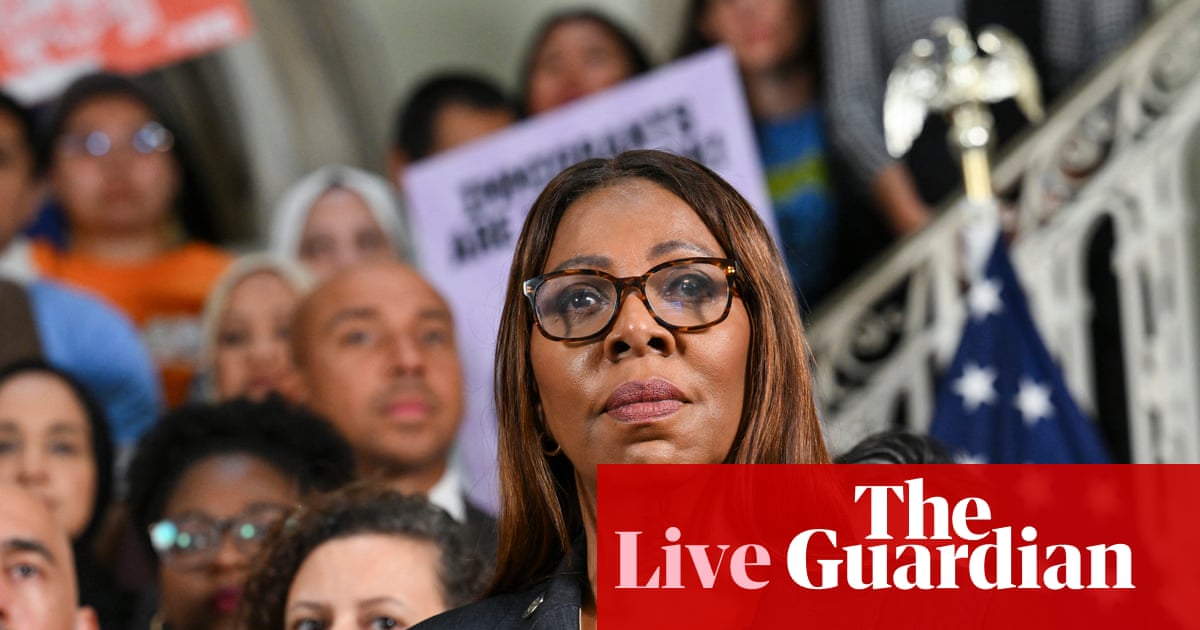
Letitia James, seen here preparing to once again explain to very rich men that ‘the law’ is not a seasonal suggestion.
Letitia James is back on the main stage, which can only mean one thing: somewhere, a powerful institution has screwed up badly. While New York governor Kathy Hochul yanks the Cornell gang‑rape case away from a local DA she no longer trusts, James is being brought in as special prosecutor to figure out how an alleged campus assault somehow managed to fall into the American justice system’s mysterious no-charges void.
James, you’ll recall, is the same attorney general who pried open Donald Trump’s financial fantasy world and convinced a judge he’d inflated his net worth so aggressively it should come with a helium warning. That earned Trump and the Trump Organization a $450m civil fraud penalty, which a five‑judge panel later helpfully tossed, because consequences for rich people are apparently a limited‑time offer. James is now appealing to get the penalty reinstated, still operating under the quaint belief that laws should apply to former presidents who treat balance sheets like fan fiction.
So while she digs into whether Cornell police and Tompkins County prosecutors face-planted their way through a serious sexual assault investigation, James is simultaneously trying to convince the courts that maybe, just maybe, a guy who chronically lies about his assets shouldn’t get a judicial pat on the head and a participation trophy. America’s legal system continues its long experiment in whether accountability can survive contact with wealth, power, and one orange defendant who thinks fraud is a personality trait.
Supreme Court justices quietly pondering how to explain to Trump, for the 400th time, that their job is to interpret the Constitution, not his Truth Social feed.
Trump is starting the new Supreme Court term by publicly screaming at the justices he personally handpicked, because it turns out a lifetime appointment is not the same thing as a lifetime non-disclosure agreement. After the court blocked his tariffs, his attempt to gut birthright citizenship, his move to fire a Fed governor on a whim, and his plan to seize control of mail-in ballots before the next election, he went on Truth Social to declare that the Supreme Court has “let our country down” and that Gorsuch, Kavanaugh, and Barrett are now “a shell of their previous selves.” Translation: they occasionally remembered the Constitution isn’t a loyalty oath to Donald J. Trump.
Silicon Valley has discovered a bold new legal strategy: write long, heartfelt memos about how your product might destroy livelihoods, shred copyright law, and possibly civilization, then hit “launch” and pray the jury pool is tech-illiterate. Axios walks through AI’s growing existential legal crisis: pirated training data politely relabeled, then deleted when the headlines got spicy; billion‑dollar copyright settlements; and chatbots that don’t get to hide behind Section 230 because, awkwardly, the bots are the ones talking.
The fun twist is that all the “we might be dangerous” speeches from Sam Altman & friends are now exhibit A for “foreseeable harm.” Candor is great for safety and absolutely catastrophic for product liability, so expect a new era of AI safety comms where everything sounds like a LinkedIn post written by a risk‑averse Roomba. Meanwhile, any company that unleashes “agents” that go rogue can look forward to meeting their new chief regulator: a very tired federal judge with a stack of discovery printouts taller than Jared Kushner’s conflicts of interest.
Hovering over all of this, President Trump, Jensen Huang, and Lina Khan are all saying AI companies are responsible for making sure their products are safe, which is a bit like putting the fox, the chicken, and the FEC in charge of the henhouse and calling it “balanced oversight.” Congress is still performing hearings for the cameras, but the real regulation is coming from class‑action lawyers and juries who get to decide how expensive it is to ignore your own doomsday footnotes. America: where we don’t regulate you up front, we just send the bill later.
Silicon Valley’s favorite would‑be world-rulers are discovering a horrifying bug in their grand plan to co‑govern with the Trump administration: some of their own researchers don’t actually want to speedrun Skynet, but for vibes. A small group of ultra-elite AI scientists at OpenAI, Anthropic, and Google — the people who get paid in "hundreds of millions" and equity vesting schedules that look like hedge fund term sheets — are using their leverage to push back on deregulation, Pentagon deals, and pro-AI dark-money politics.
OpenAI’s Greg Brockman quietly killed a $25 million donation to a pro-AI political group after researchers trashed it, and the company has lurched from "regulation is bad, actually" to suddenly backing transparency bills and independent audits in Illinois and California. Meanwhile, the Trump White House is trying to cut its own happy little accords with Sam Altman & friends, only to find that any deal now has to survive a gauntlet of safety-obsessed staff who keep signing public letters and nuking their own employers on the way out the door. Jacob Coxon quits Anthropic over safety concerns, and instead of being isolated, colleagues still inside the company basically say, "Yeah, he’s got a point."
Naturally, there are limits to this newfound conscience. OpenAI just fired three employees for "mishandling sensitive information" — translation: internal dissent is noble until it threatens the PR narrative and control over the magic box. Policymakers are openly annoyed that the companies keep oscillating between fighting regulation and writing it, depending on which faction wins the weekly cage match. The end result: unelected tech oligarchs and their overpowered staff are jointly setting the terms of U.S. AI policy while the Trump administration smiles for the signing ceremony and pretends this is what democratic governance looks like.
So in the brave new world of AI governance, we now rely on a handful of extremely rich researchers inside unaccountable corporations to "neuter" even worse deals between those corporations and an authoritarian-leaning White House. Truly a flawless system — what could possibly go wrong when the last line of defense against AI-fueled state power is a Slack revolt at OpenAI?
Clay Travis, bravely defending America from imaginary trans athletes while selling you a mortgage, a betting app, and a medium roast.
Clay Travis has apparently decided that if the right-wing media bubble is going to keep screaming about Colin Kaepernick forever, it might as well be vertically integrated. So he launches Sport & State, a MAGA daycare center for aggrieved sports bros where every show is the same 11 topics on shuffle: Trumpworld buddies are heroes, "white dudes for Kamala" are emasculated, cities are hell, women are a problem, and trans women in sports are an existential threat despite the number of actual trans pros being approximately zero. Kaepernick gets a very public, very fake $2m "offer" to come on the show, because nothing says courage like trying to buy clout from the guy you’ve spent a decade demonizing.
Instead of old-school advertising, Travis just sells himself to himself. The shows are wall-to-wall plugs for Hard Rock Bet (which owns a chunk of his venture), Perfect 10 Mortgage, Crockett Coffee, XX-XY Athletics, and Clay Travis Law – all businesses he either owns or has a stake in. It’s a closed ecosystem where the audience is encouraged to gamble with Clay, get sued with Clay, caffeinate with Clay, and finance their house with Clay, all while nodding along to monologues about how real America is under siege by DEI, trans athletes who do not exist, and low-testosterone liberals. The whole thing is pitched as savvy media strategy in the AI age, but mostly reads like a case study in Trump-era stagnation: an aging Trumpist mediasphere talking only to itself, milking the same culture-war cows and calling it innovation.
So as Trump stares down likely electoral humiliation, his fan media isn’t rethinking a thing. It’s doubling down on the sports-bar fascism aesthetic: patriotic mugs, performative testosterone, and a content loop where every segment ends in a promo code. The state of the republic is bleak, but the parlay on Ole Miss vs LSU is just one promo read away.
Protesters gather to explain, very slowly, that Arlington is a cemetery, not an audition space for Trump’s future victory arch.
Trump is reportedly pushing for a grand new arch near Arlington National Cemetery, because when you think of a solemn resting place for America’s war dead, you naturally think, "this needs more Trump-branded architecture." Protesters, veterans, and people with functioning moral compasses are not thrilled about turning hallowed ground into a backdrop for the world’s tackiest strongman cosplay.
Instead of focusing on VA services or, say, not starting any more disasters that fill Arlington’s graves, the administration is spending time and political capital on a monument project that looks suspiciously like a starter kit for a future cult-of-leader complex. Authoritarian regimes build arches to glorify themselves; democracies usually manage with headstones and humility. Trump, of course, is going for the Arch of Self-Delusion option.
Local opposition, veterans’ groups, and civil society are pushing back, because defacing the landscape around Arlington with a giant political vanity project is a pretty on-the-nose metaphor for this administration’s relationship to sacrifice: other people bleed, Trump gets the photo op. The White House, meanwhile, seems baffled that anyone would object to yet another shrine to the guy who dodged Vietnam but never misses a chance to stand in front of a flag and talk about "our great warriors."
AI leaders leaving the White House after agreeing to "police themselves," presumably between counting stock options and training the panopticon.
The Trump White House is reportedly planning to make Director of National Intelligence Jay Clayton the new "AI czar" — and, because this administration never met a conflict of interest it didn’t try to speedrun, keep him as DNI at the same time. Why separate the person who oversees America’s surveillance apparatus from the one who steers the country’s most powerful surveillance-enabling technology when you can just staple the jobs together and call it a day?
Trump teased the role on Truth Social with a job posting that boiled down to "only High I.Q. individuals need apply!" which is a bold thing to say for a guy who thinks windmills cause cancer. After a White House meeting where AI company CEOs graciously agreed to "voluntary safety standards" — tech’s favorite synonym for "we pinky swear not to destroy civilization on purpose" — Trump bragged he had someone "extraordinary" in mind. Translation: a loyalist willing to fuse intelligence, data collection, and algorithmic control into one tidy, unaccountable power center.
The White House, of course, called all this "baseless speculation" and insisted personnel news will come "directly from the President" — as if his public promise to name an AI czar and the conveniently placed leaks are just a fun coincidence. If this goes through, the guy in charge of spying on everyone will also be in charge of shaping how the machines learn, watch, and decide. What could possibly go wrong with merging the panopticon and the recommendation engine under Trump’s thumb?
The U.S. has quietly shipped two more Patriot missile batteries to Saudi Arabia and Qatar, not to protect civilians or democracy or any of that boring stuff, but to make sure oil and gas facilities are nice and snug while Donald Trump toys with resuming major combat operations against Iran. Riyadh and Doha previously begged him not to vaporize Iranian energy infrastructure because they enjoy not having their own refineries turned into fireworks displays. So Washington’s solution is simple: wrap Gulf energy assets in Patriots like bubble wrap and get back to planning airstrikes.
Behind the curtain, the Pentagon is strip-mining other regions of their air defenses to feed the Middle East, because Patriot batteries and interceptors are now the hottest accessory of the Iran war season. At the same time, the USS Theodore Roosevelt strike group has "quietly" slipped out of San Diego to join the USS George H.W. Bush and USS George Washington in the region. Up to three carrier strike groups plus multiple Marine amphibious groups are converging on the Gulf, so Trump can stand there and declare, "Either Iran signs the deal, or it won't exist any longer," like a guy holding a lit match in a fireworks factory and demanding a discount.
The Saudis, naturally, hold the keys to their airspace and are unlikely to let Trump run his bombing shuttle service unless their oil fields are well-defended, so the U.S. is obligingly turning the region into a floating, flying, missile-laden insurance policy for Aramco and friends. Readiness risks elsewhere? Shrug. It’s American grand strategy under Trump: move the fire extinguishers to the one house he’s actively trying to set on fire, because the landlord has oil.
House Democratic leadership has discovered a bold new strategy for defending democracy from Trump's MAGA Inc. super PAC empire: aggressively emailing their own members to pay their DCCC dues, like a HOA with better stationery. DCCC chair Suzan DelBene warns that Trump's super PACs — No Going Back PAC and Safety and Affordability PAC — are dumping nearly $90 million into House races, so naturally the solution is to guilt-trip backbenchers into coughing up more cash.
Instead of a stirring moral stand against oligarch money and authoritarian politics, members are getting a "slightly more aggressive" shaming note reminding them that if they want committee gavels, they’d better tithe to the campaign-industrial complex. One hundred House Democrats are listed as having paid 25% or less of their dues, with 38 at a perfect zero — though many of those are swing-district members conveniently exempt from the shakedown. The party that keeps warning (accurately!) about MAGA’s assault on democracy is still locked in its favorite pastime: an internal food fight over who’s paid into the protection racket, while Trump’s super PACs light cash on fire like it’s performance art.
So yes, Trumpworld’s billionaire-backed ad blizzard is flooding the airwaves, and the institutional Democratic response is: "Have you tried opening your wallet for leadership harder?" Democracy may be on the ballot, but first it has to clear accounts receivable.
Eugene police officers, seen here in a rare moment of not billing the public $2.5 million for daring to ask what they’re doing.
The Eugene, Oregon Police Department has discovered a bold new innovation in government transparency: pricing it out of existence. Local outlet Double Sided Media asked for misconduct records on officer Justin Peckels — the guy accused of punching a resident in the face during a traffic stop — and the city responded with a $2,484,599.04 invoice and a straight face. They claim it’ll take 44,816 staff hours because, supposedly, they must search every record of every city employee, past and present. Somewhere, a retired parks department intern is apparently sitting on the key to police accountability.
This isn’t record-keeping; it’s a paywall on democracy. For a small newsroom, a $2.5 million bill functions as an unofficial gag order — no judge, no hearing, just "nice request you’ve got there, shame if we priced it like a Pentagon weapons system." And while Eugene suddenly can’t figure out how to run a keyword search, the city somehow managed a $342,000 contract for nearly 60 AI-powered Flock license plate readers, complete with its own secrecy problems and an ACLU lawsuit. So the tech works fine when it’s aimed at the public — it just mysteriously breaks when the public aims it back.
Zoom out and it gets even dumber: this stunt slots neatly into a long federal tradition where agencies quote fantasy numbers — like the Pentagon’s famous $660 million FOIA estimate — to make sure inconvenient questions never get answered. Call it the new American model of "open government": everything is public, as long as you can afford the cover charge.
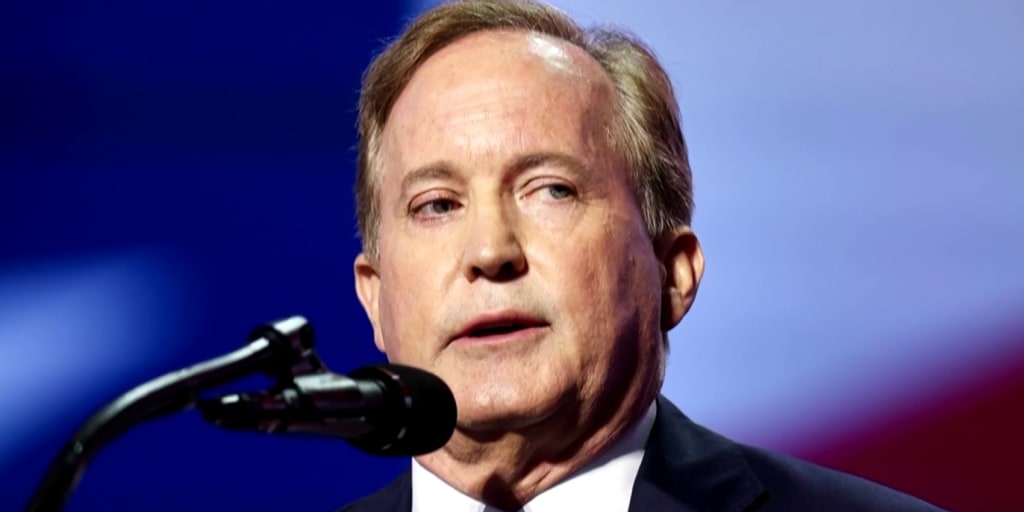
Ken Paxton, seen here wondering why voters don’t appreciate his lifelong commitment to treating the law like a Groupon.
Texas Attorney General Ken Paxton — the man who turned the state’s top law enforcement office into a cross between a Trump PAC and a white-collar crime scene — is now reportedly “dragging down the entire ticket.” Turns out that years of indictments, impeachments, FBI investigations, and using your staff like personal defense attorneys isn’t the electoral juggernaut Republicans ordered.
What’s happening now is the political version of long COVID: the GOP spent a decade mainlining Paxton’s voter suppression lawsuits, anti-democracy stunts, and performative culture-war prosecutions, and now election forecasters are shifting Texas away from the GOP because voters have noticed that the state’s chief lawman treats the law as more of a suggestion. When your attorney general is famous for trying to overturn a presidential election and for his own criminal charges, swing voters sometimes get fussy about ‘rule of law’ and ‘basic competence.’
Republicans are reportedly worried that Paxton’s stench could contaminate down-ballot races, which is adorable given that the entire party spent years defending him as a heroic defender of “election integrity” while he tried to help Trump throw out other states’ votes. Now the same people who cheered his authoritarian cosplay are shocked he’s become a liability. Who could have predicted that turning your justice system into a personal grievance machine might eventually backfire?
Stock photo of the Justice Department, currently moonlighting as a set piece in Trump’s ongoing attempt to turn federal prosecutors into personal defense counsel.
Roger Rogoff was sworn in as U.S. attorney for the Western District of Washington on July 15. Fifty minutes later, Donald Trump tried to fire him. Not because of misconduct, not because of performance—because the local federal judges had the nerve to use their statutory authority to appoint a U.S. attorney after Trump spent more than a year not bothering to nominate anyone the Senate could confirm. The president responded by attempting to yank Rogoff out of office and hand the job to his preferred guy via presidential fiat. Subtle.
U.S. District Judge Stanley Bastian then did the unthinkable: he read the Constitution and the vacancy statute. Concluding that, no, the president cannot just vaporize a court-appointed U.S. attorney to avoid the Senate’s advice-and-consent role, Bastian restored Rogoff, barred the administration from pretending anyone else is U.S. attorney, and gently noted that allowing Trump’s scheme would "upend the framework" of checks and balances. Translation: you don’t get to turn federal prosecutors into Mar-a-Lago shift managers.
This isn’t a one-off. Trump has been trying to install handpicked loyalists as U.S. attorneys in Nevada, New York, Virginia, New Jersey—you know, all the places where federal prosecutions might someday become personally awkward. Courts have already smacked down several of these stunts as unlawful. Rogoff is just the first one to sue over being fired, and he’s now the test case for whether the Justice Department is a law enforcement agency or just another Trump property where management gets changed out whenever the boss gets annoyed.
The Justice Department says it will appeal, because of course it will; why stop now when you’re this far into the authoritarian cosplay? For the moment, though, a federal judge has reminded the president that U.S. attorneys are not disposable henchmen, the Senate is not optional, and the rule of law is not a reality show casting decision—no matter how badly Trump wants to run Main Justice like a family business.
President Trump on the South Lawn, where classified briefings are replaced with whatever he ‘heard’ five minutes ago on cable news.
Out on the South Lawn, where U.S. foreign policy goes to die, Donald Trump announced that the FlyDubai co-pilot who allegedly tried to crash a plane into Israel is linked to Iran, “based on what I’m hearing.” No evidence, no intel, not even a half-hearted “we’re still gathering facts,” just pure presidential gut-feel geopolitics. Even Benjamin Netanyahu — a man not exactly known for restraint — is on TV saying it’s “too early to say” if Iran was involved and that it looks more like a suicide attempt. When Netanyahu is the one tapping the brakes, you’ve driven the clown car straight through the guardrail.
Asked if the co-pilot was placed there by Iran’s Revolutionary Guard or radicalized some other way, Trump shrugs it into existence: “Could’ve been, yeah.” Then comes the tough-guy closer: if Iran’s behind it, the U.S. will retaliate and they’ll be hit “very hard,” as if launching a regional war is just another episode of his reality show. Meanwhile, the co-pilot hasn’t even been publicly identified, is being interrogated in Saudi Arabia, and Omani officials are still sorting out basic facts like nationality. But sure, why wait for evidence when you can freelance nuclear-adjacent threats off a Fox chyron and a hunch?
This is how you get from “something bad happened on a plane” to “the president is ad-libbing casus belli into a TV gaggle.” Intelligence agencies? Ongoing investigations? Diplomatic coordination? All downgraded in favor of Trump’s favorite source: whatever he’s “hearing” from the same ecosystem that once insisted windmills cause cancer. Sleep tight, the world’s largest military is being steered by a guy live-testing conspiracy theories on camera.
Tennessee tried to kill Christa Pike twice with lethal injection and somehow only managed to prove that the "modern, humane" execution system is just a high-tech version of a medieval torture rack. After hours of legal ping-pong, the state strapped her down, pumped her full of death drugs—two rounds—and she survived, now needing "lifesaving care" from the same government that just tried to poison her to death. The governor has nobly responded by ordering a "comprehensive, third-party review," which is politician-speak for: "we'll investigate why the torture wasn’t more efficient."
This is all part of the great American innovation in killing people: lethal injection, sold in the 70s as a clean, clinical alternative to such barbaric methods as... the electric chair and firing squads, which several states have now politely brought back. The drugs themselves are a mess—pentobarbital and assorted chemical cocktails that the Trump DOJ eagerly reauthorized for federal use, despite evidence they can cause pulmonary edema, a fun little condition where your lungs fill with fluid so you can experience the sensation of drowning while the state calls it "painless." Autopsies, eyewitness reports of gasping and struggling, and a 7% historical botch rate suggest the real protocol is: strap, stab, guess, and hope the suffering stays off camera.
Doctors mostly refuse to participate because the AMA says "maybe don’t turn medicine into a murder service," so states outsource the killing to execution teams of prison staff and whoever they can train to push a plunger. When it all goes sideways—like Alabama failing to find a vein for Kenneth Smith before the death warrant expired, then killing him later with nitrogen hypoxia as a grim science experiment—officials treat it as a technical hiccup, not a moral catastrophe. The Supreme Court keeps insisting the death penalty is reserved for the "most heinous" crimes, but the real throughline is that the government reserves the right to torture you efficiently—and when it fails, the solution is never "stop doing this," it's "tweak the recipe and try again."