Hilcorp CEO Jeffery Hildebrand, seen here politely waiting for his turn to ask the federal government if it could maybe regulate the atmosphere a little less and his bank account a little more.
The Trump EPA has discovered a bold new climate strategy: don’t reduce pollution, just redefine it as too annoying for donors. The agency is moving to gut methane rules on so-called "stripper wells"—rundown, low-producing oil and gas wells that barely cough up 6% of U.S. output but spew about half the sector’s methane. That’s the greenhouse gas that traps 80 times more heat than CO₂, but also, crucially, threatens the profit margins of one very important billionaire: Hilcorp owner and recent Trump mega-donor Jeffery Hildebrand.
Hildebrand, whose company is already ranked among the industry’s top methane polluters, suddenly discovered his inner political animal right after the Biden administration passed strict methane rules that would cost him real money. He then shoveled millions into Trump’s campaign, his wife got an ambassadorship, he got a front-row White House seat and a chance to promise billions for Venezuela he doesn’t actually operate in, and now—what do you know—a former Hilcorp lobbyist is in charge of rewriting the EPA’s methane rules. That ex-lobbyist is helpfully workshopping policy with industry groups bankrolled by Hildebrand, producing a rollback tailor-made to rescue 700,000 leaky stripper wells from the horror of basic oversight.
The result: Hildebrand’s profits go up, his planes keep landing at Dulles before dawn, and the rest of us get to enjoy the accelerated heat waves, droughts, and wildfires that come from letting ancient, leaky wells burp methane into the atmosphere. Climate advocates point out that shutting these wells would cut emissions roughly in half while sacrificing just 6% of production—an obvious win for the planet. But the Trump-era EPA has done the math and reached a different conclusion: the only emissions that matter are the ones coming from a billionaire’s checkbook.
Republican candidates line up to prove who loves Trump, dark money, and alternative elector slates the most, while democracy quietly backs toward the exit.
Democracy’s slow collapse has reached the product-testing phase, with Tuesday’s primaries serving as a focus group on how much authoritarian cosplay Republican voters actually want. In Georgia, Trump and Brian Kemp are fighting over which loyalist gets to challenge Sen. Jon Ossoff: Rep. Mike Collins, who’s under a House Ethics microscope for allegedly misusing congressional funds on a staffer and his girlfriend, versus football guy Derek Dooley, who promises to "work with President Trump" while being marketed as a political outsider by the literal sitting governor. Collins, ever the eager subordinate, brags about writing the Laken Riley Act — the first immigration-enforcement bill Trump signed in his second term — like that’s not a giant neon sign flashing "we’re legislating off Fox News segments now."
Meanwhile, the Georgia governor’s runoff is a contest between Lt. Gov. Burt Jones — who earned his Trump endorsement by serving as a fake elector in 2020 — and billionaire Rick Jackson, who’s spent over $100 million trying to buy the title of "Trump’s favorite governor." Kemp, term-limited and suddenly very into continuity, backs the fake elector over the "outsider" he claims to love so much in the Senate race, because nothing says "respect for elections" like promoting a guy who literally tried to nullify one.
Alabama looked at this mess and said: we can launder some money through it. The GOP Senate runoff to replace Tommy Tuberville is awash in nearly $7 million in ads, with Rep. Barry Moore boosted by a crypto-industry-linked super PAC and Club for Growth cash, all breathlessly touting Trump’s endorsement like it’s a warranty sticker. Moore is being hit as a "D.C. swamp king" accused of "stolen valor," while his opponent Jared Hudson brands himself a "warrior who will fight alongside President Trump" — because apparently the job description for U.S. senator now includes LARPing as a member of Trump’s personal Praetorian Guard. The throughline in all these races is clear: pledge fealty to Trump, shrug at ethics probes and fake-elector schemes, let outside money flood the zone, and then call it "grassroots."
Markwayne Mullin explains that, yes, the best person to safeguard U.S. elections is the guy who tried to overturn the last one.
Homeland Security Secretary Markwayne Mullin — a man who still thinks Venezuela stole the 2020 election despite Fox News paying $787 million to admit that was nonsense — is now in charge of "protecting" U.S. elections. What could possibly go wrong when the guy who tried to block certification on Jan. 6 is handed the keys to the election security apparatus?
Instead of partnering with states to secure the vote, DHS has become the thing election officials need protection from. Local officials across the political spectrum are refusing to share voter data or security information with the feds because they’re pretty sure Trump’s people will use it to target them or undermine any result Dear Leader doesn’t like. As one Republican former clerk put it, "They've brought the fox into the henhouse" — which is generous, since the fox usually at least pretends not to be holding a can of gasoline and a match.
Trump has already said he wants the federal government to "take over" elections, and his DHS point person for elections, Heather Honey, comes with her own greatest-hits reel of election disinformation. So the new model is simple: discredit past elections, install true believers like Mullin and Honey, then demand that states hand over the data needed to challenge or overturn future results. Call it election security the way arson is climate control.
America once worried foreign adversaries might attack our elections. Now the concern is that the Department of Homeland Security — led by a guy who helped feed the Big Lie and literally arranged conspiracy-briefings at Mar-a-Lago — is gearing up to do the job from inside the building. Mission accomplished.
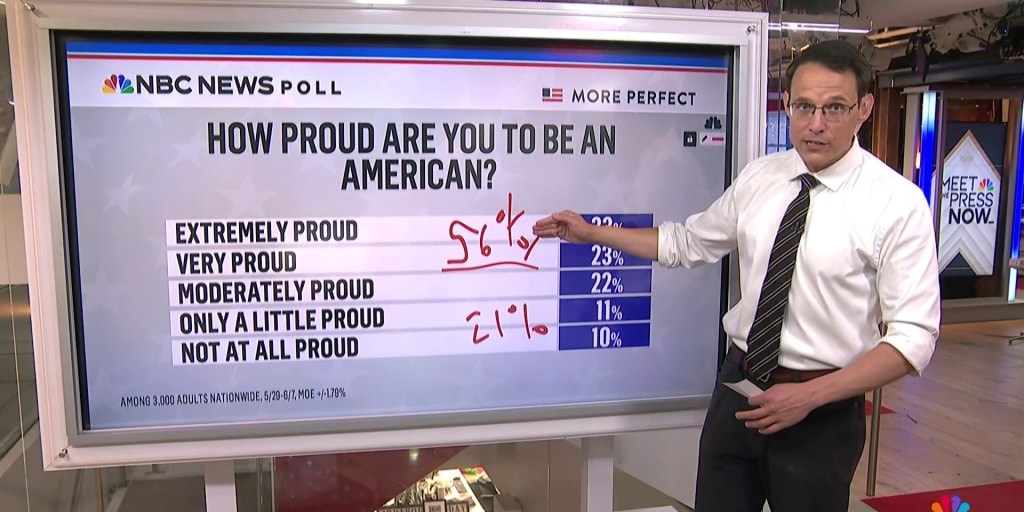
Steve Kornacki bravely explains, with charts, that years of coup cosplay, court-packing, and reality denial have somehow made Americans less proud of their country. Truly, a mystery for the ages.
Steve Kornacki, America’s most overqualified human spreadsheet, reports that American pride is at an all-time low, driven by a "massive" partisan divide. Apparently, when one party spends a decade insisting the country is a satanic hellscape run by pedophiles and stolen votes, people don’t walk away humming "God Bless America." Who knew.
Republicans, marinated in Trump’s permanent grievance tour, tell pollsters they love America but hate basically everything it does, while Democrats, after watching the Supreme Court auction off rights and Trump try to speedrun authoritarianism, are not exactly feeling the fireworks-and-apple-pie vibe either. The result: a country that still exists on paper, but whose citizens are increasingly split between "this system is rigged" and "this system didn’t rig hard enough."
So yes, American pride is cratering. When your recent civic highlights include a president trying to overturn an election, a Supreme Court acting as a theocratic wrecking crew, and a political movement that treats democracy as an optional feature, it’s less "shining city on a hill" and more "condemned building with a giant TRUMP sign bolted on the front."
Donald Trump thoughtfully considers which political rival’s family members to subpoena next, in his ongoing remake of the Justice Department as a personal hit squad.
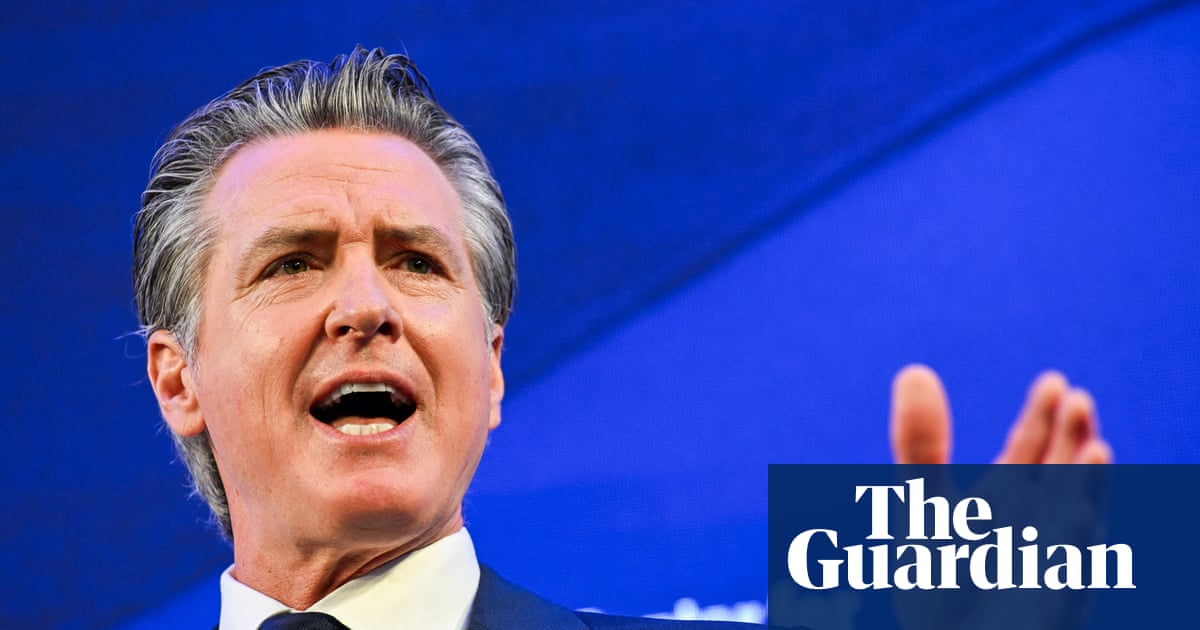
Gavin Newsom says the quiet part out loud: Donald Trump allegedly told his pet Department of Justice to go find a crime on him and, for good measure, on his wife Jennifer Siebel Newsom too. Federal agents have reportedly been knocking on doors of family friends and former staff, Hoovering up records and "abusing the grand jury process" like it’s just another loyalty test at Mar-a-Lago.
This isn’t some one-off tantrum; Newsom helpfully notes he’s merely the latest addition to Trump’s ever-expanding enemies list, joining James Comey, Letitia James, Tim Walz and pretty much anyone who’s ever said "no" to him. The alleged logic is simple: Newsom might run for president, he keeps calling Trump a liar, so obviously the next step is to sic federal prosecutors on his inner circle. Democracy, but make it mob movie.
Newsom says he’s fair game but calls out the administration for probing his wife’s finances while right-wing media and GOP hopeful Steve Hilton brand the couple a "grifter family" for the crime of caring about equal pay and gender equity. So the Trump White House is reportedly using the DOJ to run opposition research on a potential 2028 opponent’s spouse while screaming about "witch hunts" into Trump’s own criminal cases. Truly a banner day for law and order.
President Trump lovingly cradles a scale model of the giant illegal ego-tower he wants taxpayers to build, presumably because Mount Rushmore wasn’t available for renovation.
The Trump administration is apparently so committed to speedrunning late-stage empire that it’s now trying to build a 250-foot triumphal arch to itself in Washington, D.C., and do it without that pesky thing called Congress. In a letter to Interior Secretary Doug Burgum and National Park Service officials, Democrats calmly explained that, no, you cannot just grab federal money and federal land and erect a giant monument to Dear Leader because you’re feeling victorious on main today.
Lawmakers spelled out that Team Trump would be breaking at least three laws: the Commemorative Works Act, a 1912 statute that literally says you can’t slap random buildings on federal land in the capital without explicit congressional approval, and the Height of Buildings Act, which caps D.C. structures at around 160 feet. The arch is 250 feet, because of course it is. Senator Angus King called the scheme “stone-cold illegal,” which is a polite way of saying, have you people even met a lawyer? Officials who plow ahead could face suspension, removal from office, fines, and even criminal prosecution — all to build a giant concrete participation trophy for a president who lost the popular vote. Again.
An Interior Department spokeswoman, unfazed, called Trump’s triumphal arch “a project that all Americans can be proud of,” which is certainly one way to describe a law-defying, ego-stroking monument that violates appropriations rules and the basic idea that Congress controls the purse. The administration is essentially test-driving whether it can convert the National Park Service into the National Shrine to Trump Service and dare anyone to stop them. Washington’s skyline used to be defined by the Capitol and the Washington Monument; Trump would like to add a towering reminder that the rule of law is now just optional décor.
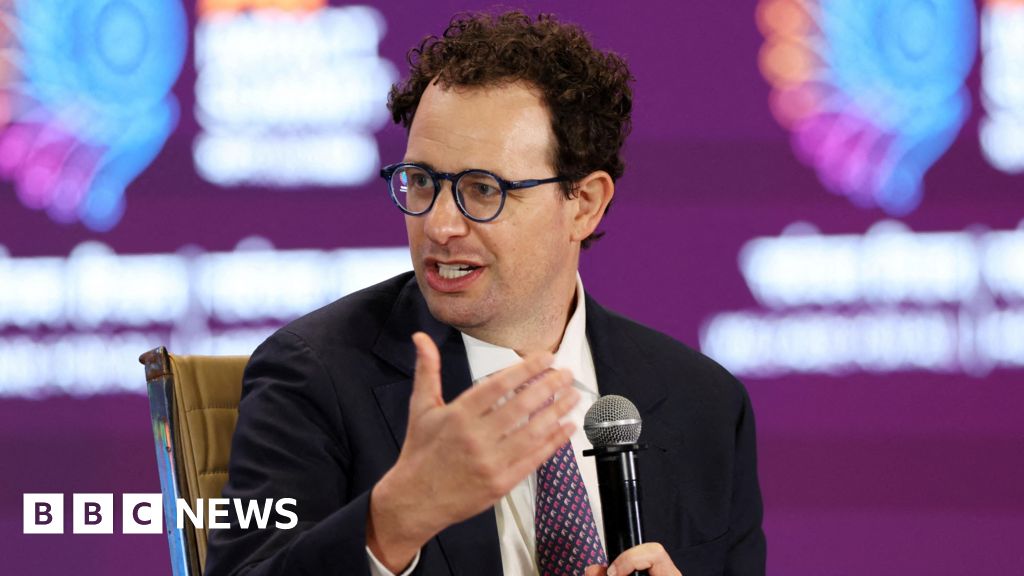
Anthropic CEO Dario Amodei politely explaining math to a government that thinks 'jailbreak' is a classified program and not just people being better at prompts than the Commerce Secretary.
The US government has decided that Anthropic’s new AI models, Fable 5 and Mythos 5, are so terrifyingly powerful that foreign nationals must be kept away from them like they’re the nuclear codes instead of glorified autocomplete. After getting "verbal evidence" of a supposed jailbreak, the Commerce Department — now led by Secretary Howard Lutnick, because of course the guy who turned bond trading into a blood sport is in charge of tech policy — effectively forced Anthropic to suspend access while refusing to explain anything in public.
Anthropic is now being summoned to Washington to show its homework and beg for permission to turn its own tools back on, while the White House, Commerce, and the company all suddenly develop a convenient case of "no comment" syndrome. Tech security leaders from Nvidia, Zoom, Mercedes-Benz, and former government officials are reduced to writing open letters asking the administration to maybe try "an open, scientific and transparent process" instead of vibes-based national security panic. Meanwhile, the same government that wants to micromanage AI usage is already being sued by Anthropic over how its models can be used by the Pentagon, because nothing says responsible governance like secret restrictions, power plays, and policy made via rumor.
Trump explains that the Strait of Hormuz will reopen right after he personally moves all the ships with his mind.
Trump went on camera to confidently announce that the Strait of Hormuz will be "completely open" by Friday, as if global shipping lanes are just another golf course he can overbook. After months of war with Iran that cratered oil markets and torched what was left of U.S. credibility, he’s now treating the reopening of one of the world’s most critical chokepoints like a grand reopening of a strip mall in New Jersey.
Rather than Congress debating war powers or the Pentagon briefing the public on de-escalation, we get the usual Strongman Weather Report: Trump simply declares that an international waterway will be safe and open on his personal timeline, because he says so. Meanwhile, diplomats and regional allies are left speed-running crisis management behind the scenes while he plays global traffic cop for oil tankers on live TV.
The surrounding coverage politely notes a "framework deal" and a "peace deal" with Iran, but the basic pattern is unchanged: Trump lights the house on fire, spends months pouring gasoline on the neighbors, then steps outside to announce that by Friday, everyone will be very grateful for his heroic decision to let the fire trucks through. America’s foreign policy is now a one-man scheduling app for international crises.
Myrtle Street, West Oakland, 1963: back when the neighborhood only had regular systemic racism, and not a federally turbocharged coal export terminal on top.
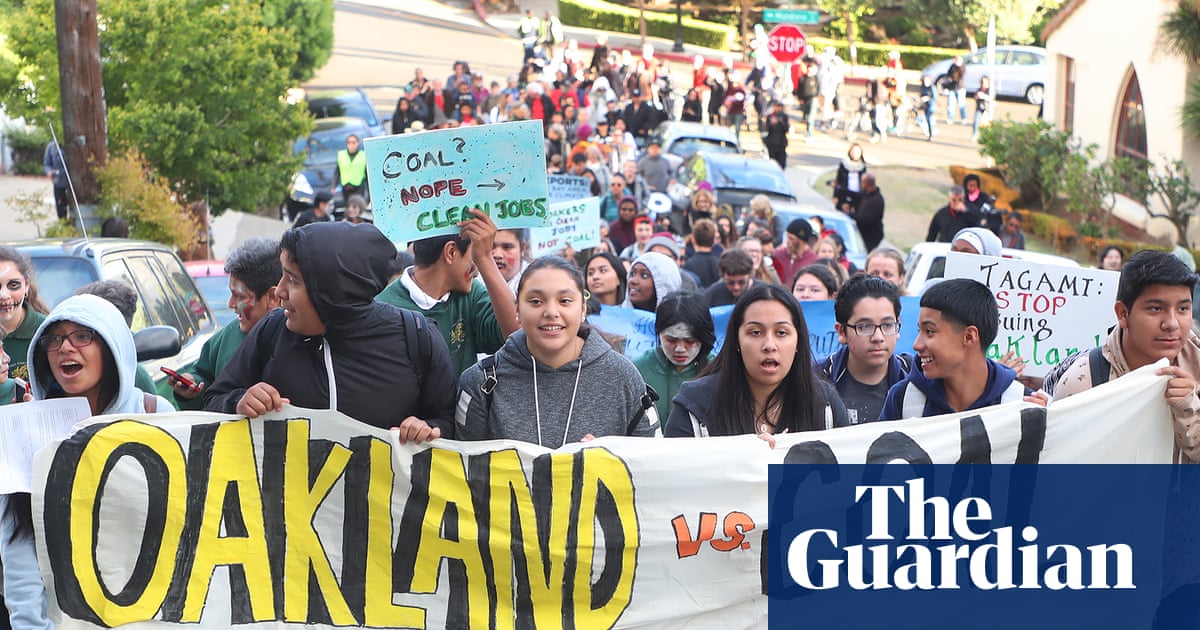
Donald Trump has discovered a bold new use for wartime powers: not to respond to an actual war, but to funnel $700m in taxpayer cash into dying coal projects, including a $75m coal export terminal in West Oakland. Because when you think "national defense", you obviously think "let’s dump more coal dust on a historically Black neighborhood already choking on pollution". The Defense Production Act was apparently not available for pandemics, infrastructure, or climate resilience, but it’s wide open for propping up Utah coal barons and one very lucky developer with a long-stalled scheme.
West Oakland, a community with a legacy of Black organizing from the Pullman Porters to the Black Panthers, also has the legacy America actually funds: redlining, toxic waste under homes, and childhood asthma courtesy of free-market exhaust. The city literally banned coal storage a decade ago, residents have been fighting this terminal for years, and the project’s been tied up in lawsuits. So naturally, Trump’s response is to ram it through by declaring it a pseudo-military priority and trying to break ground this summer, over the clear objections of local officials and communities who, according to the administration, have made the fatal mistake of being both liberal and alive.
Developer Phil Tagami originally said he wasn’t interested in coal, then flipped the moment Utah showed up with a deal to ship its fossil trash overseas. The project stalled in court, but Trump’s DPA cash drop is the resurrection spell. As California assemblymember Mia Bonta points out, this move "sentences West Oakland… to generational harm" – which, in Trump policy terms, reads like a feature, not a bug. Environmental justice groups are scrambling to respond while the federal government uses emergency powers as a personal coal stimulus package, turning a long-running local land-use fight into a national case study in how to weaponize the state against communities that refuse to quietly inhale and die.
So to recap: wartime powers, no war; "defense" spending, no defense; massive public subsidies, no public benefit – just another day in Trump’s fossil-fueled experiment in how far you can stretch executive power to own the libs and poison their kids at the same time.
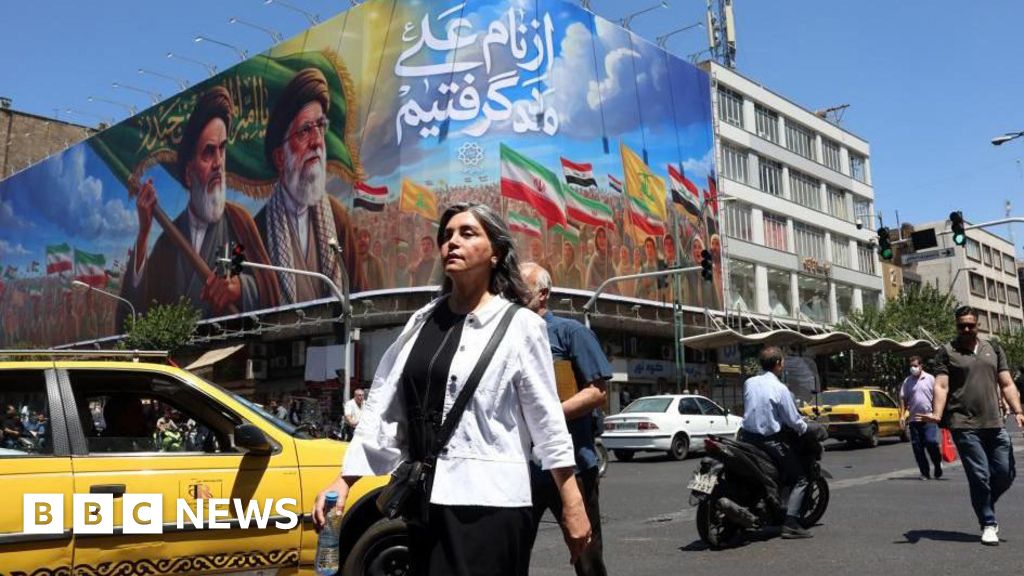
Billboard of dead Iranian leaders oversees the living reminder that Trump’s "short, sharp" war mainly assassinated restraint and common sense.
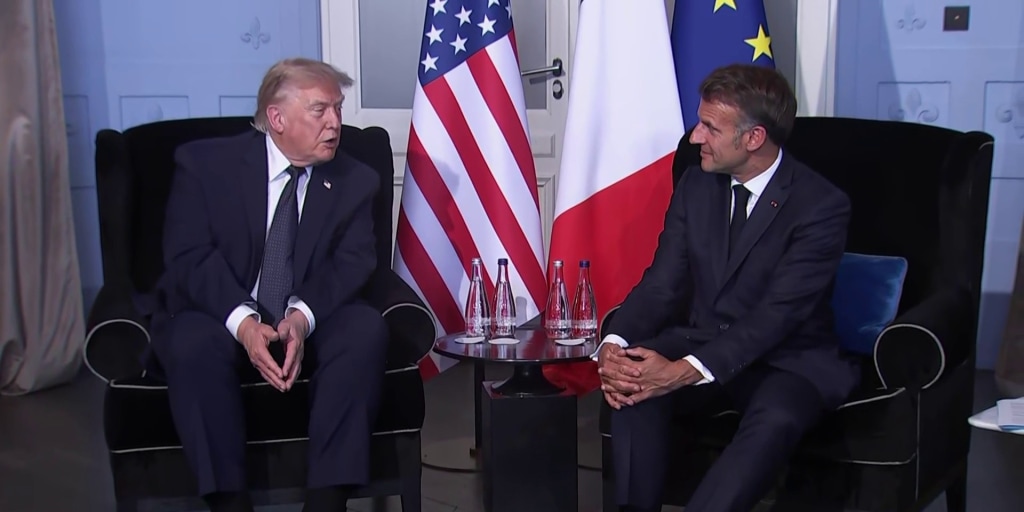
Donald Trump has finally "ended" his catastrophic Iran adventure, a war he and Benjamin Netanyahu kicked off while US and Iranian negotiators were literally at the table in Geneva. Because nothing says "good faith diplomacy" like secretly programming missile targets while your envoys talk about nuclear safeguards. The opening salvo: Israel assassinates Ayatollah Ali Khamenei, the US flattens a school in Minab, killing more than 150 civilians — at least 120 of them girls under 12 — and Trump calls it strength. Multiple investigations later, it turns out the only thing they decisively destroyed was whatever was left of America's moral standing.
Instead of the quick, triumphant regime change fantasy Trump and Netanyahu bragged about in their video speeches, Iran's government did that inconvenient thing where it survives. Khamenei is replaced by his son Mojtaba and a new generation of IRGC hardliners who are just as ideological and less cautious — so, stellar work all around. Tehran shuts the Strait of Hormuz, hits US bases and Arab neighbours, and suddenly the "short, sharp" war becomes a long, humiliating tutorial on the limits of US power. Defence Secretary Pete Hegseth blusters that American might has crippled Iran, while Iran methodically chokes 20% of the world’s oil and gas, fertilizer supply chains, and with them food security for millions, especially in sub-Saharan Africa. Totally normal foreign policy: launch a war, spike global hunger.
Now, after burning through "hard-to-replace" weapons stocks and torching US credibility with Gulf monarchies who are quietly shopping for new patrons, Trump is selling a two-page, 14-point memorandum of understanding as some grand statesmanlike achievement. The deal reopens Hormuz, lifts the US naval blockade of Iranian ports, and extends the ceasefire — i.e., it returns the world to exactly where it was 24 hours before Trump and Netanyahu decided to play regime-change roulette. All the real issues — Iran’s nuclear programme, sanctions relief, long-term security — are punted to future talks that could have just… continued on 27 February without the dead children, wrecked homes, and shattered alliances.
Israel, full partner in the war, is now sidelined from the deal and furious, while Iran’s regime is more entrenched than before. The US looks weaker, more reckless, and less reliable to its allies, and China has spent months watching Washington bleed credibility and munitions in real time. Trump’s big strategic masterstroke managed to kill a lot of civilians, empower hardliners in Tehran, destabilize the global economy, and end in a humiliating climbdown back to the status quo ante. But sure, tell us again how "peace through strength" is going.
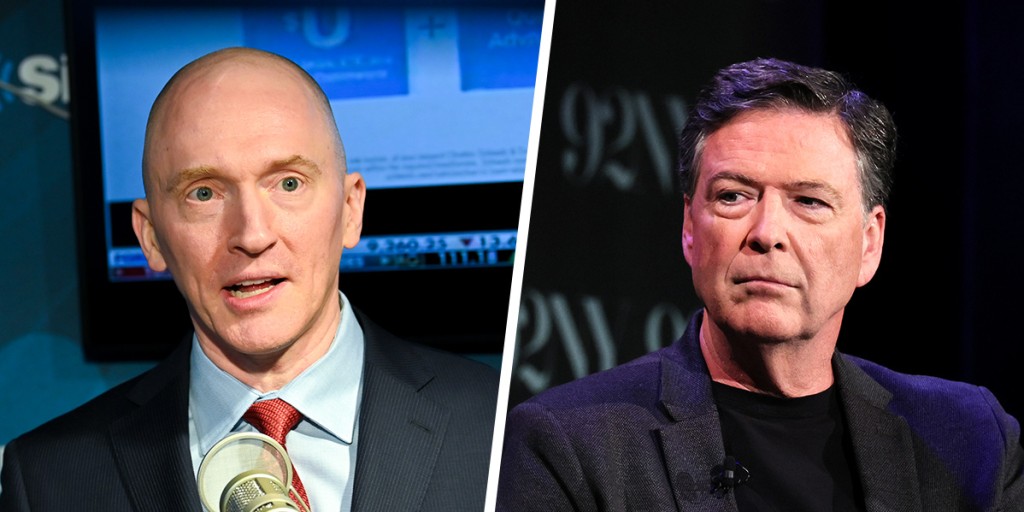
Carter Page, staring into the middle distance, perhaps wondering why the Supreme Court didn’t agree that ‘I waited too long’ is a compelling legal theory.
The Supreme Court has quietly told former Trump campaign adviser Carter Page to take his Comey fanfic lawsuit and file it directly in the circular bin. Page was trying to revive a case against James Comey and seven other former FBI officials over the spectacularly sloppy FISA warrants used to spy on him during the Russia investigation. Yes, those warrants were a mess — the DOJ’s own watchdog said so — but the courts pointed out a minor issue: Page waited so long to sue that the statute of limitations basically turned to dust.
The federal government already cut Page a check in a separate settlement, which the Trump administration’s DOJ used as a chance to issue a statement thundering that the whole thing was a “political sham from the get-go” against a man “never charged with a single crime.” Bold words from the same political universe that loved warrantless surveillance right up until it singed one of their own. Once again, FISA — the beloved toy of the national security state — is treated as perfectly fine for mass surveillance of random Americans, but a civil rights tragedy when it lands on a guy who used to sit near the Trump campaign’s craft services table.
Trump, naturally, folded this into his ever-expanding Russia “hoax” mythology, casting Page as the wronged hero of Deep State fanfic. But when it came time for the big legal showdown, the justices didn’t bite: no hearing, no dramatic showdown, just a one-line rejection. Page’s claims against the individual officials are dead, Comey’s lawyer isn’t even bothering to comment, and the only real legacy here is a bipartisan reminder that the government’s surveillance powers are both overbroad and incompetently managed — right up until someone important gets mad, and then it’s grievance merch for the base.
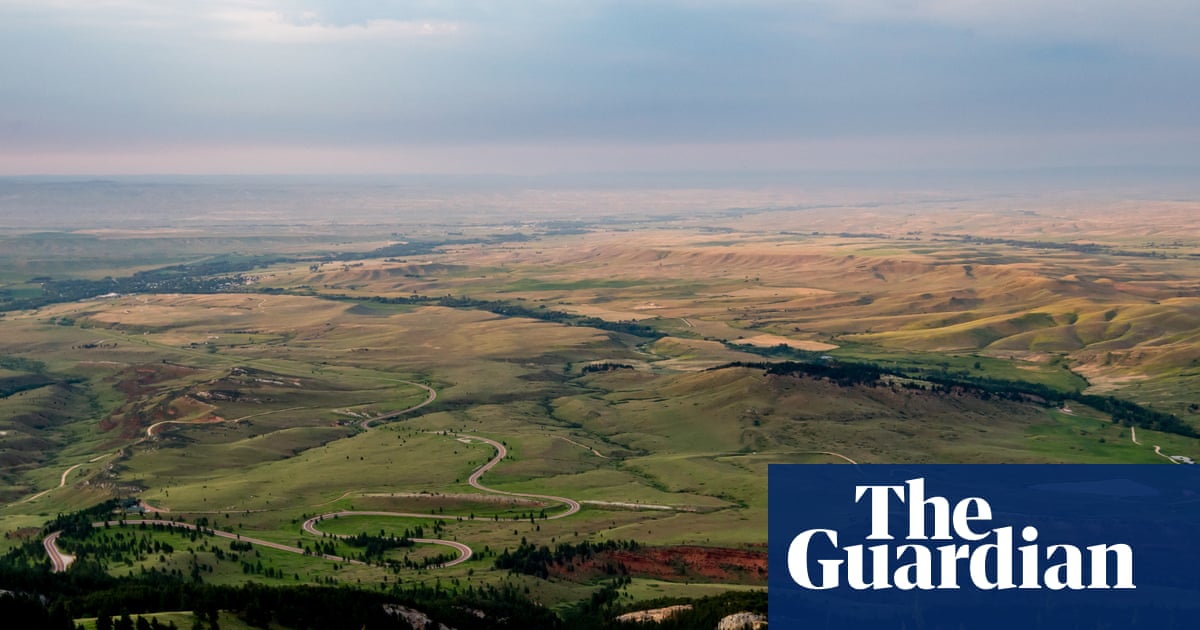
A grizzly bear contemplates the Founders’ vision of liberty: 800-horsepower side-by-sides doing donuts through what used to be its habitat.
Richard Nixon and Jimmy Carter – yes, those eco-warriors – once put basic limits on where off-road vehicles could chew through public lands so wildlife didn’t get turned into roadkill and ecosystems didn’t look like a Monster Jam parking lot. Trump just rescinded those orders, because if there’s one thing this administration hates more than facts, it’s the idea that grizzly bears shouldn’t have to dodge ATVs like they’re playing Frogger.
We’re talking tens of millions of acres of public lands and national parks thrown open to dirt bikes, trucks, ATVs, and snowmobiles. Scientists and conservation groups say this will shred already-fragmented habitat, push predators like grizzlies closer to humans (who then kill them by the hundreds of thousands every year), and wreck streams and endangered species like desert tortoises, lynx, sage-grouse, and western snowy plovers. The administration’s response? A fact sheet whining about “outdated and burdensome” rules, apparently referring to the radical notion that maybe half a million miles of existing roads on federal land are enough.
This isn’t a random one-off; it’s part of a very deliberate effort to turn public lands into a choose-your-own-apocalypse theme park for industry and thrill-seekers. Trump has already gone after the Endangered Species Act, expanded grazing and logging, opened protected waters to fishing and drilling, and now he’s handing what’s left of the backcountry to whoever has the loudest engine. Environmental groups can’t sue over the rescission itself, so they’re stuck waiting for the rulemaking process to spit out something sue-able while the Forest Service preps 5 million acres in Idaho and Montana for the great patriotic tradition of tearing up habitat in the name of “recreation.” Happy 250th, America – the grizzlies will be celebrating by trying not to get run over.
JD Vance, auditioning for 2028 while standing in the warm glow of a war his boss just sort-of-un-started.
The US and Iran have reached a "framework" peace deal to pause the 15-week war Trump helped light like a roman candle over the Strait of Hormuz. Iran says all war and military operations will end, including in Lebanon. Trump, ever the subtle statesman, announced the opening of Hormuz and the end of the US naval blockade but somehow forgot to mention that pesky sideshow where Israel is still bombing Lebanon.
Leaked drafts show this is less a peace deal and more a 60-day "we'll argue about nukes and sanctions later" holding pattern. Iran’s hardliners are furious that it doesn’t actually guarantee sanctions relief, compensation, or control of Hormuz, which is what happens when you negotiate with an administration that thinks foreign policy is just a TV pitch meeting with aircraft carriers.
Israel, which helped start the whole party by joining the US assault on Iran and then getting frozen out of the talks, has decided to cope by announcing its forces will just stay in their "security zones" in Lebanon, Syria, and Gaza indefinitely. So while Trump pats himself on the back for ending "his" war, his main ally is openly declaring a forever-occupation and daring anyone to call it what it is.
Back home, Vice President JD Vance is coyly teasing a 2028 presidential run and assuring everyone that Trump will absolutely bless whatever he does—because in this White House, foreign wars, peace deals, and even future elections are just supporting storylines in the never-ending Trump Cinematic Universe.
White House tech bros proudly unveiling the new "Ask No Questions" AI platform, now with 70% more unaccountable decision‑making.
The Trump administration quietly dropped a little 3,611-item surprise on GitHub: a federal AI use-case inventory that reads like a brainstorming session between Philip K Dick, George Orwell, and a Palantir sales rep. AI is now being used or planned for everything from scanning HHS grant applications for ideological purity, to routing new inmates into higher-security prisons based on "potential for misconduct", to eavesdropping on veterans’ crisis calls so a machine can decide how suicidal they sound. Meanwhile, the State Department killed off an AI project meant to forecast mass civilian killings, because obviously the one thing this government decided was too much was trying to prevent atrocities.
The best part? You’re not really allowed to know what any of this actually does. The official disclosures are mostly one-line descriptions with the informational value of a DMV receipt, public consultation is basically nonexistent, and the "high impact" label that’s supposed to trigger extra scrutiny is applied so inconsistently it might as well be assigned by dartboard. Agencies can quietly hand sensitive decisions over to opaque systems while the accountability layer consists of: hope, vibes, and the OMB CIO’s GitHub. But don’t worry — there are 70 AI translation projects at CBP now, so when your rights are being trampled at the border, at least the machine misunderstanding you will do it in your native language.
What we’ve got is a textbook Trump-era governance model: automate power, obscure responsibility, and pretend the main issue is "innovation" rather than a sprawling, barely-audited infrastructure for soft authoritarian control. AI could help democracy, sure. Instead, this crew is speedrunning the "black box bureaucracy" level, where an unaccountable state can shrug and say, "the algorithm made us do it" while quietly rewriting what due process and civil liberties mean in practice.
USCIS processing center, where Dreamer renewals go to sit in a pile until someone’s work permit quietly expires.
The Trump administration has finally found a way to cut unemployment: kick Daca recipients out of their jobs by not processing their paperwork. For 14 years, renewals took a few weeks; now people like Claudia and Cesar wait six months and counting, lose work authorization, and watch the careers they built since age four evaporate because some White House ghoul decided a backlog is a great deportation tool.
While Trump world loudly insists they’re only going after “criminals,” the numbers quietly rat them out: 77% of people shoved into deportation proceedings in 2025 had no criminal conviction. Hundreds of Daca holders have been arrested, some deported, all while USCIS spokesbot Zach Kahler serenely explains that Daca “does not confer any form of legal status” and that they’re just “safeguarding the American people” by more thoroughly vetting a group that already had to pass background checks and maintain spotless records.
Not content with weaponized delay, the administration is also trying to choke off any remaining livelihoods: proposed rules would block Dreamers from working unless their employers use E‑Verify and ban them from getting commercial driver’s licenses — because nothing says “strong economy” like sidelining half a million educated, fully integrated workers. Advocates call it a “mass delegalization effort”; the administration calls it Tuesday.
Meanwhile, Congress could pass the bipartisan Dream Act and end this bureaucratic hostage-taking, but why provide stability when you can let Trump methodically unravel temporary protections and push families back into the shadows? Dreamers did everything this country asked of them — study, work, stay out of trouble — and the reward is an “emotional rollercoaster” where the American Dream disappears the moment a renewal lands on the wrong desk at USCIS.
Artist’s impression of European digital sovereignty: a EU flag sticker carefully placed over an Amazon Web Services logo.
European judge Beti Hohler woke up one day to discover that the Trump administration had basically Thanos-snapped her digital life out of existence: Apple, Amazon, Visa, Mastercard, PayPal – all gone, not because she committed a crime, but because she had the audacity to serve as a judge at the International Criminal Court. Turns out in Trump’s America, your access to basic digital infrastructure is contingent on whether Washington likes your job description. Rule of law, but make it Terms of Service.
This is the same administration that cheers Elon Musk using X and Starlink as his personal foreign policy cosplay, leans on Anthropic to wall off advanced AI from foreigners, and openly talks about "cultivating resistance" inside Europe while sitting on the continent’s cloud, chips, and platforms. Europe’s big response? A "sovereignty package" that bravely declares it will sometimes, in very specific circumstances, consider the possibility of maybe not handing the most sensitive public data directly to Amazon and Microsoft – unless, of course, individual member states decide they’d rather not upset the White House or spook the investment fairy.
Brussels then completes the magic trick by adopting Washington’s own AI gospel: more, faster, bigger, screw the consequences. The Commission is racing to triple data centre capacity, bulldozing environmental and planning safeguards to create "datacentre acceleration zones" that just happen to be perfectly designed for the same US hyperscalers they claim to be weaning themselves off. Digital "sovereignty" apparently means asking Silicon Valley to colonise your grid and water supply slightly more quickly, but with European branding.
The result is a continent that talks about independence while still reading off the Silicon Valley cue cards that Trump’s people are happily weaponising. The administration gets to treat tech infrastructure like a sanctions joystick and a surveillance playground, while Europe debates what colour its handcuffs should be. Geopolitical vassalage, now available in cloud-native format.
JD Vance, pausing between memoir sales pitches and loyalty check-ins with Trump, thoughtfully considers whether to run for president in the post-democracy era.
Vice-president JD Vance has announced that he’ll decide whether to run for president in 2028 after the 2026 midterms, following a serious family conversation with his wife Usha and a less-serious reality show conversation with Donald Trump. He insists he doesn’t sit around plotting a White House run, which is adorable coming from a guy doing a book tour about his religious awakening while floating his presidential ambitions on national TV.
Vance says Trump will be "very supportive" of whatever he decides, which is a polite way of saying that the future of the Republican party will once again be determined by whatever mood the octogenarian strongman is in when Fox & Friends ends. He claims he never brings up 2028 with Trump, but says the president talks about it "a lot"—publicly and privately—because of course the man who tried to overturn an election is "very fascinated" by who gets to sit in his old chair next.
Meanwhile, the Washington Post reports Vance may delay deciding because his fourth child is due in July, reminding everyone that the would-be heir to Trumpism is busy expanding both his family and his political brand. On the shortlist of other 2028 hopefuls: Secretary of State Marco Rubio and Donald Trump Jr, because nothing says "healthy democracy" like a dynastic primary between the son, the courtier, and the guy who converted to Catholicism and to Trumpism with the same fervor.
Rural Georgia residents line up in the rain to ask their government for the radical privilege of not turning bald eagle habitat into a bitcoin-powered space heater.
In Coweta County, Georgia – where two-thirds of voters happily punched the ticket for Trump – hundreds of church-fresh residents are now standing in the rain to sign a petition because their Republican-run county commission decided "rural conservation" actually means "831-acre industrial AI playground for a real estate giant." The project's called Project Sail, because apparently "We’re Going To Drink Your Aquifer And Block Out The Stars" didn’t test as well in the focus group. Locals who never showed up to a meeting in their lives are now spending their weekends trying to force a rare countywide referendum just to get a vote on whether they want to be a cooling tank for server farms and crypto bros.
The commission, speaking through a PR flack, assures everyone they "welcome civic engagement" – right after ignoring a year of packed hearings and ramming through the rezoning anyway. Meanwhile, the developer, Prologis, has gone full corporate ghost, refusing to answer basic questions while other Georgia towns discover their utilities have been handing datacenters tens of millions of gallons of water for free. Residents are worried about noise, water, power costs, and losing bald eagles and dark skies; the political class is worried about offending the people who can write six-figure checks.
So now you’ve got Trump country quoting "taxation without representation" while begging a constitutional referendum process to save them from the very flavor of deregulation and corporate deference they’ve been voting for. Environmental groups are warning about sediment runoff and river damage; locals are watching Erin Brockovich’s datacenter briefings like it’s a true-crime series about their own backyard. If this revolt spreads, AI’s glorious future may have to contend with the terrifying prospect of rural voters discovering that "small government" doesn’t mean "let Silicon Valley drink your well dry and send you the power bill."
Trump gazes at a tariff chart like it’s Excalibur, while small business owners quietly file for refunds in the background.
Trump’s big, beautiful global tariff crusade has officially completed its journey from "historic realignment of world trade" to "line item on your accountant’s refund worksheet." After the Supreme Court ruled that His Majesty illegally abused the International Emergency Economic Powers Act, businesses are literally lining up for their money back while the White House quietly pretends this was all part of the plan. The so‑called "king" tried to rule by decree, and the courts responded with a very polite, very legal "absolutely not."
Now he’s rolling out a fresh batch of 10–12.5% tariffs on 60 countries under Section 301, allegedly over forced labor, but small businesses mostly greet the news with a shrug and an eye roll. They’ve seen this movie: Trump announces sweeping imperial economic edicts, judges strike them down, refunds eventually dribble out, and the only real winners are consultants who get paid to explain the latest chaos. The president will keep insisting that "trillions" in investment, soaring manufacturing, and every uptick in GDP are the divine fruits of his tariff genius, while business owners quietly factor in court challenges as just another cost of doing business in Trump’s America.
Meanwhile, the political class is busy arguing over who defeated the pretend monarch harder—Trump bragging about economic "wins" that mostly came from AI and datacenters, Democrats promising to reverse his damage once they get the keys back, and future heirs to the throne like JD Vance and Marco Rubio trying to decide how much cosplay-authoritarianism they’re willing to commit to. Out in the real world, however, tariffs have become background noise: a short‑term nuisance that will likely be undone by the next administration. For all the royal posturing, the system still occasionally works, which is why small businesses now treat Trump’s tariff stunts less like a serious policy regime and more like a recurring software bug in American democracy.
Artist’s rendering of American democracy: an airport departure board packed with one-way flights to anywhere with functioning institutions.
The Trump administration has finally found an immigration policy that works: driving Americans out of America. As Republican legislatures carve districts so aggressively that whole liberal neighborhoods basically vanish on paper, actual people with pro-democracy values are vanishing in real life too. At least 180,000 Americans voluntarily left in 2025, EU inflows are at record highs, and DHS proudly reports 2.2 million "self-deportations" – which now apparently includes U.S. citizens leaving with their undocumented family members. You know your democracy is thriving when the census starts to look like a before-and-after ad for authoritarianism.
The people heading for the exits aren’t random. They’re younger, more educated, more open-minded, and more committed to liberal democratic institutions – exactly the folks you’d want around when a twice-impeached, multiply indicted strongman is busy kneecapping checks and balances, gutting reproductive rights, and shrugging off sexual misconduct allegations against his pals. Women 15–44 are leading the Donald Dash, with 40% saying they’d move permanently if they could, while billionaires shop for golden passports and scientists ship their lab coats to countries that still fund research instead of culture wars.
Combine that with collapsing net migration, record numbers dreaming of leaving, and scholars of authoritarianism literally relocating as a group, and you get a neat feedback loop: the more Trump erodes democracy, the more the people most likely to fight back leave – which makes it easier to erode democracy further. It’s like gerrymandering the electorate by convincing your opposition to emigrate. The U.S. isn’t just losing brainpower; it’s bleeding out its democratic immune system, one visa application and Irish ancestry form at a time.