Two people hug at Pride while somewhere in DC a senior Trump aide drafts a memo explaining why this should be illegal between the hours of 9 and 5.
Across the US, hundreds of thousands of people spent the Stonewall anniversary doing something deeply un-American by Trump-era standards: existing in public while queer and happy. Cities wrapped up Pride month with parades, marches, and festivals, while the guy in the White House spends his workdays trying to turn "rolling back trans rights and DEI" into a full-time hobby with benefits. One side has glitter, homemade signs, and mutual aid tents; the other has Stephen Miller energy and a stack of draft executive orders.
NYC Pride’s theme this year was "For All of Us," which is a bold stance in a country where the federal government is aggressively testing out "For Some of You, and Definitely Not Them." Marchers like Carlos Duarte talked about love, peace, and visibility, while the administration quietly treats visibility as a policy failure to be corrected. So the streets fill up with rainbows and joy, and the government responds with paperwork, bans, and moral panic—because nothing terrifies authoritarians quite like people who refuse to be small and scared.
Behold: a perfectly good international bridge, heroically protected from use until the right donor gets paid.
The Gordie Howe International Bridge — a brand new, fully built, not-at-all-imaginary span between Detroit and Windsor — is just sitting there like a very expensive lawn ornament because Donald Trump decided on social media that it can’t open unless Canada gives the U.S. a piece of the action. Years of planning, billions in trade, the busiest land crossing in North America? All held up by a guy rage-posting about ownership stakes.
The bridge is jointly owned by Canada and Michigan, with Canada fronting construction costs and planning to recoup through tolls, which sounds suspiciously like a normal infrastructure agreement. That, of course, cannot stand. Enter Trump, demanding the U.S. get formal ownership or the bridge stays shut. The grand opening was scheduled, officials were literally on their way, and then — poof — canceled at the last minute because the president decided the border is now a bargaining chip.
Canadian politicians are politely pointing out that this sudden interest in bridge geopolitics might have something to do with the Moroun family, owners of the competing Ambassador Bridge, who’ve poured millions into Republican coffers and a Trump-aligned super PAC. So the busiest trade crossing on the continent is being kneecapped so a politically connected private bridge baron doesn’t face competition. Regulatory capture has evolved into physical capture of the actual bridge.
Truckers, manufacturers, and communities across the Midwest and Ontario are left watching a finished international bridge they aren’t allowed to use because the president is treating supply chains like a reality show prop. America First, sure — as long as “America” is defined as one billionaire family and whatever Trump posts before lunch.
Iran’s foreign minister explains, with a straight face, how exchanging missiles with U.S. allies is totally compatible with Trump’s ‘historic’ peace memorandum.
The much-hyped Trump–Iran "memorandum of understanding" is aging about as well as a Trump casino. Hours after fresh U.S. strikes on Iranian targets, Iran’s Revolutionary Guard returned the favor with drones and ballistic missiles aimed at Bahrain and Kuwait, because nothing says "durable ceasefire" like everyone immediately bombing each other again.
The deal Trump bragged about earlier this month was supposed to freeze tensions for 60 days while they sorted out tiny details like the U.S. blockade of Iranian ports, shipping in the Strait of Hormuz, sanctions relief, and Iran’s stockpile of highly enriched uranium. Instead, Kuwait is shooting down Iranian missiles, Bahrain has an eight-story residential building blown open near its international airport, and diplomats are standing in front of microphones insisting this is all fine and normal.
Bahrain’s Foreign Ministry called the Iranian attack a “dangerous escalation” and a “systematic pattern of repeated aggression,” which is diplomatic-speak for "this ceasefire is a joke and we all know who handed Iran the match and the gasoline." Meanwhile, Trump’s team gets to keep pretending that lurching between blockade, airstrikes, and photo-op agreements is some kind of genius strategy, rather than the world’s most expensive temper tantrum in the world’s most sensitive shipping lane.
Trump proudly announces his "big, beautiful" student loan overhaul, surrounded by people who will never have to take out a student loan in their lives.
Trump’s "big, beautiful bill" is finally kicking in for student borrowers, and by "beautiful" he apparently meant beautiful for debt collectors. The administration is scrapping the Biden-era SAVE plan — the most borrower-friendly option — and replacing it with a "Repayment Assistance Plan" that will have millions paying more each month, for up to 30 years, before they can even dream of cancellation. Interest rates are going up too, because if you’re already drowning, why not add a few cinder blocks.
Instead of fixing runaway tuition or predatory for-profit schools, the Trump team is doing the next best oligarch move: shrinking repayment options, tightening borrowing limits, and handing the entire federal student aid program to the Treasury Department — the same people who specialize in squeezing blood from stones through default collections. Education Secretary Linda McMahon (yes, the wrestling executive) assures everyone this will finally give Americans "functioning programs" after decades of mismanagement, which is a bold way of describing a system where a single mom could see her payment jump from $150 to $713 a month for daring to get an education.
Advocates warn this will slam lower-income and first-generation students, pushing them into the arms of private lenders or out of higher education entirely. The White House calls this fiscal responsibility; the real effect is telling millions of ordinary people that their choice is lifelong debt servitude or no degree at all. Streamlining, in Trump-world, means fewer options, higher bills, and Treasury waiting at the end of the tunnel with a collections bat.
Bill Cassidy, moments after realizing the Constitution is not, in fact, supposed to be a loyalty program for one guy in a gold-plated house.
Bill Cassidy, a Republican senator currently being tossed out of office by a Trump-backed challenger, has decided to try out this new, experimental concept called "the Constitution" on his way out the door. On Face the Nation, Cassidy accused Trump of treating Congress as "merely an appendage" in his prosecution of the Iran war, because apparently the president thinks Article I is optional fine print. Cassidy’s sin? Supporting a war powers resolution that mildly suggested maybe, possibly, Congress should be told something about the war the country is fighting.
After Trump reportedly berated Cassidy and three other GOP senators for their disobedience, Cassidy says his "Irish temper" kicked in and he raised his voice to match Dear Leader’s. The big constitutional showdown ended, of course, in peak Republican fashion: Trump grudgingly let Cassidy get a briefing from JD Vance and special envoy/Trump guy Steve Witkoff, and Cassidy then dropped his support for the resolution. Separation of powers, brought to you by a hastily arranged PowerPoint from the vice president and a real estate developer.
The soon-to-be-ex-senator didn’t stop there. He questioned Trump’s top domestic priority, the so-called Save America Act, which helpfully focuses on making it harder to vote instead of making life less unaffordable. Even more alarming to the MAGA court, Cassidy is threatening trouble for acting attorney general Todd Blanche over the Justice Department’s proposed $1.8bn "weaponization fund" — a handy pot of cash to pay Trump’s allies — and a plan to permanently shield Trump and his family from IRS audits. Cassidy’s response: leaders should be held to a higher standard, not made above the law. Bold talk from a man whose party is currently workshopping the slogan: "Rule of Law, But Make It Optional for Our Guy."
Artist’s rendering of the American story under Trump: red, white and blue columns collapsing like yet another "perfect" phone call transcript.
The Guardian helpfully reminds everyone that the American experiment was never exactly a Disney movie, more a joint venture between "town capitalists" and "plantation patriarchs" with a catchy freedom soundtrack. Fast forward 250 years and we’ve arrived at the logical sequel: Donald Trump, presiding over what the piece calls one of the most "indecently corrupt, violently inept" administrations in US history, as the country celebrates its birthday with Christian nationalism, flyovers, and a democratic narrative held together with duct tape and Pentagon contracts.
The old story about America as a steady march toward a "more perfect union"—the one Obama used to narrate from Seneca Falls to Selma to Stonewall—has been thoroughly mugged by reality: spiraling inequality, civil-rights rollbacks, militarized policing, and forever wars that nobody wants but contractors love. While conservatives scream about the 1619 Project "rewriting history" and liberals cling to the comfort blanket of incremental progress, the underlying point is brutal: the myth of virtuous American expansion and emancipation has collapsed under the weight of actual American policy. The fireworks are still scheduled, the speeches will be very patriotic, and the narrative that once claimed "the cause of America is the cause of all mankind" now mostly sells defense stocks and deportation flights.
So as Trump and his fellow myth-makers wrap themselves in flags and Jesus merch to celebrate 250 years of "freedom," the country is left with Frederick Douglass’s old question echoing louder than ever: what, exactly, is there to celebrate when the system keeps working exactly as designed—for the same kinds of people it always has? The pageantry is intact; it’s the legitimacy that’s rubble.
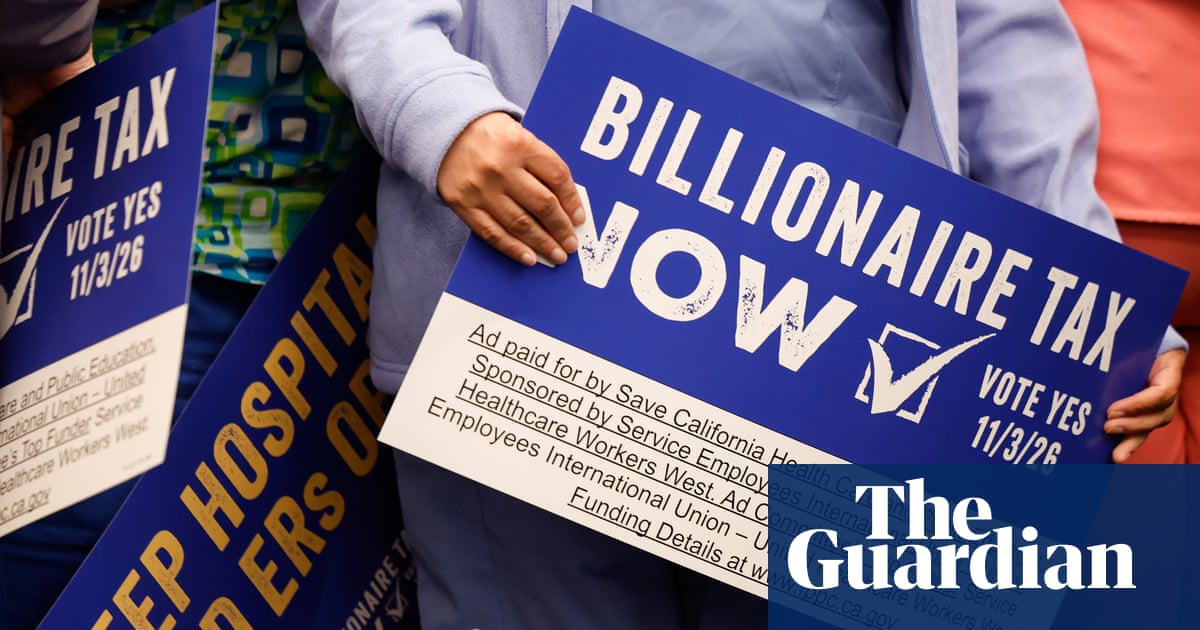
A billionaire nervously clutching his fifth superyacht as someone whispers the horrifying phrase: "restore the estate tax to 2000 levels."
America’s billionaire class is doing great, thanks for asking. While normal people get audited for mis-typing a W-2, Elon Musk and his fellow AI lottery winners are sitting on trillion‑dollar fortunes that barely brush the tax system. The top 1% now pays over eight percentage points less in taxes than they did around 2000, largely because both parties – with Trump’s Tax Cuts and Jobs Act as the crown jewel – punched so many holes in the code you could use it as a colander. Preferential rates for capital gains, pass‑through games, estate tax "reforms" that turned it into a rumor – it’s not a system, it’s a concierge service for oligarchs.
Instead of a flashy new wealth tax, the article notes we could just stop letting rich people rewrite the rules. Restore the estate tax to something resembling reality, end the step‑up in basis that lets dynasties pass on untaxed gains forever, tax capital gains like actual income, push the corporate rate back up from Trump’s 21% corporate love letter, and maybe, wild thought, actually collect what’s already owed. The IRS estimates that closing the "tax gap" could raise $7.5 trillion in a decade – money that could fund a functional safety net, aging population, and an AI future where humans still eat. Naturally, this all runs into a Republican Party whose core identity is screaming that billionaires are "overburdened" while the state is deliberately starved of the funds it needs to function. It’s not a bug; it’s the business model.
St. Paul students walk out against ICE, apparently under the mistaken impression that federal law enforcement shouldn’t function like an occupying army.
Trump sent thousands of immigration agents into Minnesota, killed two residents, deported hundreds, and apparently expected everyone to just bake a casserole and move on. Instead, neighbors built a block-by-block surveillance network on ICE, got kids to school past federal shock troops, and documented the administration’s little domestic war game, "Operation Metro Surge" – because nothing says "limited government" like flooding a state with armed agents.
Now those same people are doing what America’s institutions were allegedly built to do but no longer can: they’re running "democracy defense" trainings in church basements, teaching folks how to help every neighbor vote and how to respond when Trump inevitably screams fraud the moment he doesn’t like the numbers. They’re gaming out election sabotage scenarios because the president has already tried to delegitimize California’s elections and has packed the federal government with loyalists who think the Constitution is a vibes-based suggestion.
Meanwhile, the Department of Justice – remember when that meant something? – has charged nearly 40 people over a church protest and slapped 15 more Minnesotans with sweeping conspiracy charges for daring to resist ICE, a pattern Protect Democracy politely describes as part of a "disrupt" strategy to weaponize federal power against critics. So while state officials scramble to harden election procedures and fend off federal meddling, regular people are left to run the last functioning branch of government: the neighborhood. The plan is simple: precinct by precinct, block by block, out-organize the guy who’s trying to turn law enforcement and elections into his personal reality show elimination round.
Marco Rubio announces a ‘big, fast, effective’ response to Venezuela’s earthquakes, bravely attempting to reinvent USAID from the smoking crater where the administration left it.
The Trump administration just got its first big test of the "who needs professionals when you have vibes" doctrine. After literally kidnapping Nicolás Maduro in a January special forces raid and installing a more compliant Delcy Rodríguez, Trump and Secretary of State Marco Rubio are now trying to run a massive disaster response in Venezuela without the US Agency for International Development, which they helpfully gutted and folded into the State Department. Thousands of experienced aid workers? Laid off. Regional networks and NGO relationships? Shredded. But don’t worry, Marco says it’ll be "big, fast, effective" – like a used car ad, but for earthquake relief.
Trump is busy congratulating himself for this "happy country" where people are supposedly "dancing in the streets" between aftershocks and mass casualties, proudly noting that the US has "taken out millions of barrels of oil" and "paid for the war many times over." So yes, the official line is: we toppled your government, siphoned your oil, and now that 920+ people are dead in earthquakes, we’re generously sending $150m in disaster aid and some search-and-rescue teams so the interim regime we like doesn’t collapse on live TV. This isn’t humanitarian assistance; it’s a loyalty rewards program for compliant governments, with the State Department cosplaying USAID because Trump decided multilateral health cooperation and professional disaster infrastructure were for losers.
Experts politely point out that the US has already blown previous crises by torching international partnerships – like the Ebola outbreak the US learned about late after ditching the WHO – and that the old USAID mission in Colombia went from 144 staff to 14, taking decades of local ties down with it. Now the same hollowed-out apparatus is trying to manage a Haiti-level disaster while the White House frantically overcompensates to avoid another paper-towel-throwing moment. The administration calls it a "whole-of-government" response; everyone else recognizes it as a live-fire demonstration of how you turn a humanitarian tool into an extension of regime-change policy and oil accounting.
An ICE agent, soon to be supervised by Oklahoma’s finest export: a highway cop promoted to national deportation czar.
Donald Trump has decided that what America’s sprawling deportation force really needs is a former Oklahoma state trooper with a Marine Corps background and a Truth Social fan club. Enter Lance Schroyer, currently senior adviser to DHS Secretary Markwayne Mullin, now tapped to run ICE — the agency already under fire for its “aggressive immigration tactics”, which is NPR-speak for raids, terrorizing communities, and creative constitutional interpretation.
Trump hailed Schroyer as a “PATRIOT” with decades of experience “locking up the worst of the worst”, which in Trump-world now apparently includes anyone whose paperwork isn’t in a three-ring binder. Mullin, a fellow Oklahoman and former congressman who’s been turning DHS into a regional franchise of the panhandle, cheered that Schroyer will help fulfill the president’s “mandate” to “target, arrest, and deport illegal aliens.” Policy nuance has left the chat; mass targeting is the brand.
Schroyer has been overseeing “coordination of immigration enforcement” from inside DHS, which is a polite way of saying he’s already been helping run the crackdown; now they just want to slap a Senate confirmation on it for legitimacy cosplay. ICE hasn’t had a Senate-confirmed director since the Obama era, but sure, this is the guy we’re going to normalize. The nation’s premier deportation agency is being handed to a loyal enforcer from the Markwayne Mullin orbit, because nothing says independent law enforcement like a tightly knit Oklahoma patronage circle with a mandate to hunt down immigrants.
State Department mock-up of the new ‘patriot passport,’ thoughtfully redesigned so your travel documents now double as limited-edition Trump fan merch.
The White House has unveiled the new “patriot passport,” a limited-edition US passport thoughtfully redesigned so that when you travel abroad, foreign officials can immediately identify you as a citizen of a country run by a guy who watermarks his own face on federal documents. The original stern headshot of Donald Trump has been upgraded to an even sterner three-quarter-length portrait of him leaning over the Resolute Desk with balled fists, because nothing says 250 years of democracy like a leader posed like he’s about to negotiate a plea deal.
Trump’s portrait is now surrounded by text from the Declaration of Independence, with his signature and “United States of America” underneath, as if Jefferson’s ghost were quietly sobbing in the corner. On the facing page, the Founding Fathers sign the Declaration while, on the opposite side, modern America’s founding father of tacky authoritarian branding glowers over them. The back cover now boasts a "Freedom 250" gold flag, because if there’s one thing this administration understands, it’s that freedom must be heavily logo’d.
This rollout pairs nicely with Trump’s planned 250th anniversary solid-gold coin, featuring the same image and the words “FIGHT FIGHT FIGHT” – his post-assassination-attempt rally chant, now repurposed as official state merch. Senators Elizabeth Warren and Ron Wyden have pointed out that some of the coin’s gold may be linked to illegal mining and exploitation, and that the whole project is “more befitting a monarchy than a democracy.” The administration’s response appears to be: exactly. Why settle for a republic when you can have a commemorative personality cult starter pack – complete with passport, coin, and the creeping sense that you’re living through the world’s tackiest soft launch of American monarchy?
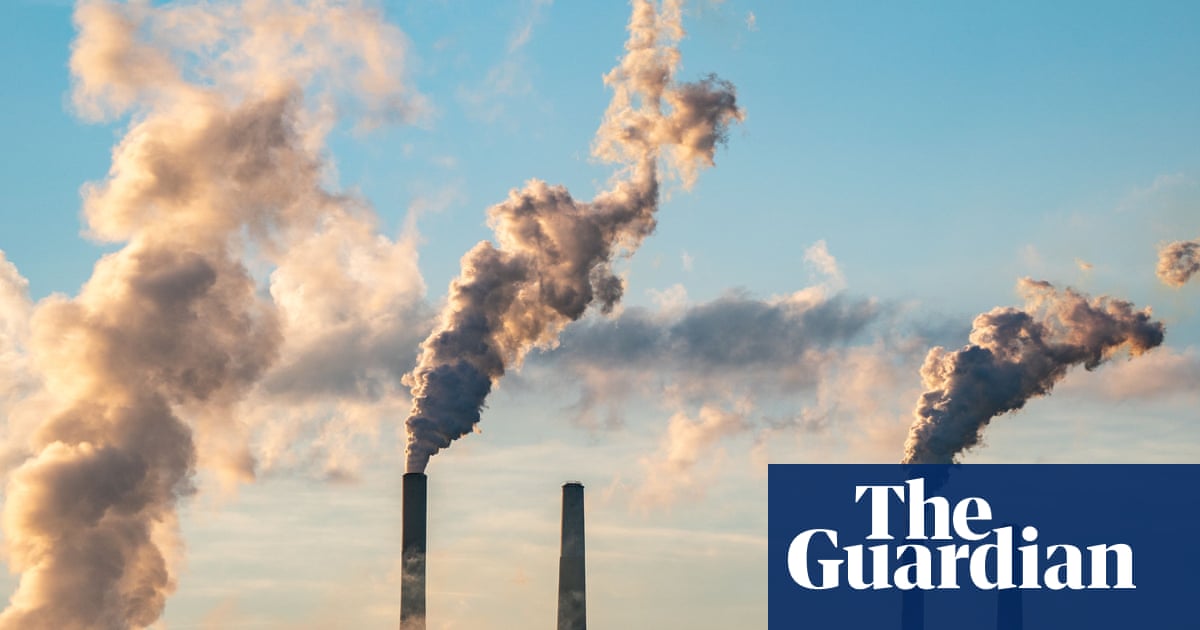
EPA leadership gazes proudly at a smokestack, wondering how many hospital visits per quarter really count as overregulation.
A federal appeals court just told Lee Zeldin’s Trump-run EPA that its attempt to abandon Biden’s tougher soot pollution rule “lacks merit,” which is lawyer-speak for please stop embarrassing yourselves. The court left in place the 2024 standard cutting allowable fine particle pollution from 12 to 9 micrograms per cubic meter — the kind of boring little number that translates into 4,500 fewer premature deaths, thousands fewer asthma attacks, and fewer hospital visits, which the administration apparently found offensively pro-human.
Instead of implementing the rule, Trump’s EPA eagerly teamed up with 25 Republican-led states and assorted industry groups to argue that maybe the government should consider the real victims here: coal plants and manufacturers whose profits might be mildly inconvenienced by people not dying as fast. An EPA spokesperson even complained the rule would cost “hundreds of millions, if not billions” to Americans, generously redefining “Americans” to mean “corporate balance sheets.” Meanwhile, environmental groups are stuck celebrating a court decision that forces the environmental agency to do its own job and stop literally catering to polluters while millions keep breathing unhealthy air.
So the current state of environmental policy: the Clean Air Act, medical science, and basic survival on one side; Trump, Zeldin, and the coal lobby on the other. The courts, for now, are still siding with lungs over lobbyists — but the EPA is “reviewing the decision,” which is bureaucratic for how else can we stall this while people choke on soot?
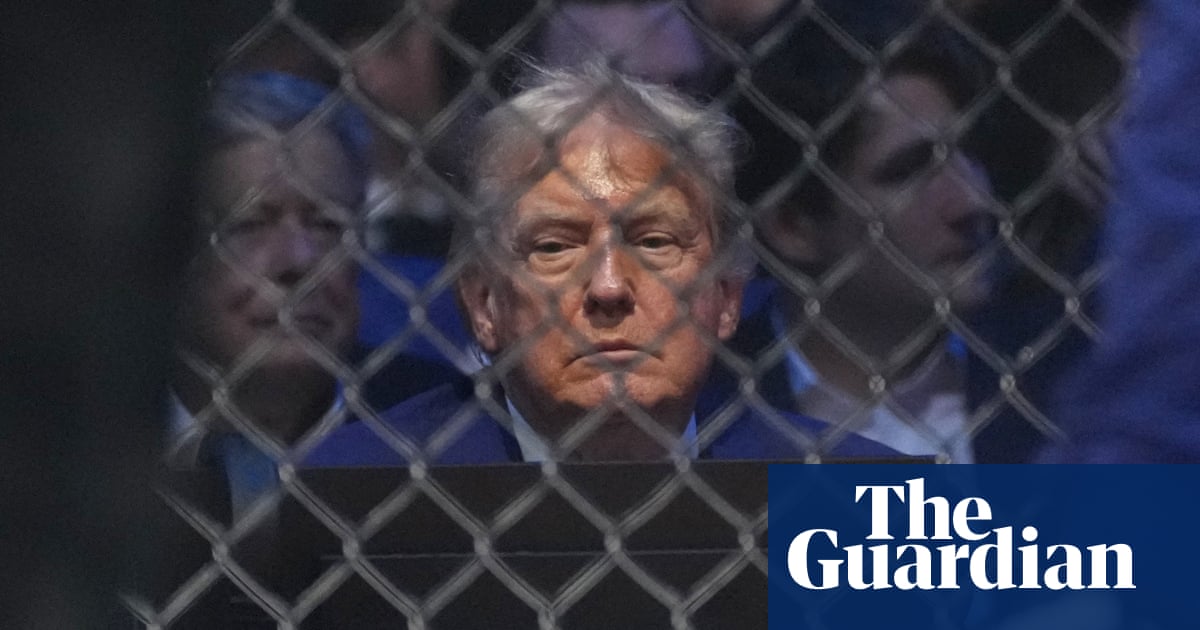
Live from the White House Octagon: one president, several Nazis, a drone or two, and American democracy tapping out in the first round.
The Trump White House decided the presidency wasn’t enough of a circus and hosted a UFC event on the lawn, because why merely erode democratic norms when you can ground-and-pound them on pay-per-view. According to the DOJ, a group of far-right, Christian-extremist, Nazi-curious twenty‑somethings allegedly chose this presidential fight night as the perfect venue for a drone-bomb-and-sniper assassination plot targeting Trump and other officials. Phase one: a protest to distract cops. Phase two: drone-borne explosives over the crowd. Phase three: marksmen picking off "high‑value targets" as panicked VIPs flee toward the kill zone. A second wave would storm the White House. One of them called it "a fucking bloodbath" – so, you know, just wholesome Christian nationalism vibes.
The alleged ringleaders marinated in TikTok, encrypted chats and Q‑adjacent fantasies about an "Epstein class" of elites, mixing antisemitism, infant‑sacrifice delusions, and Hitler fanboying into one big accelerationist stew. They used a left‑wing AIPAC-tracking site to pick targets, then wrapped it all in Bible cosplay about "shepherds" and "lions’ dens" while fantasizing about kicking off a second American Revolution. The same movement that Trump weaponized is now so radicalized it’s trying to kill him for not being extreme enough – which is one hell of a customer service problem for authoritarian politics.
The Trump administration’s response has been to both claim credit and shrug it off. JD Vance praised the FBI, then immediately minimized the plot as "not that advanced" – always reassuring to hear about a foiled drone and sniper massacre at the White House described like a half-finished book report. Right-wing media, meanwhile, frantically tried to rebrand the far-right conspirators as secret leftists because one of them repeated Trump’s own Epstein conspiracies back at him. While scholars point out there’s now an "ideological civil war" inside the Christian nationalist right – Israel hawks vs. America First antisemites – the throughline is clear: Trump’s movement mainstreamed the paranoia, the Christian nationalist rhetoric, and the conspiracy infrastructure. Now the monster is pointing its rifles at the ringmaster while everyone pretends this is just another news cycle instead of a flashing neon sign that the democracy death spiral is accelerating.
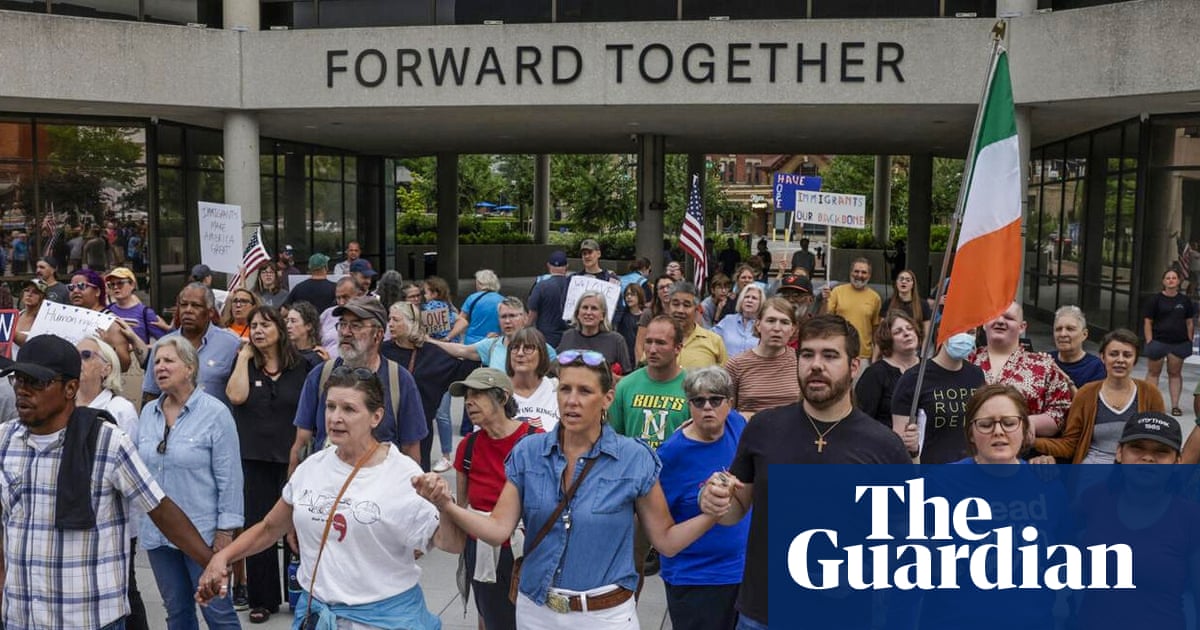
Springfield residents at a vigil discovering that in Trump’s America, the real crime is Haitians opening too many successful businesses.
Springfield, Ohio’s Haitian community went from cheering their first World Cup in half a century to wondering how fast they need to disappear before ICE shows up, courtesy of a 6-3 supreme court ruling doing PR work for Stephen Miller’s vision board. The court’s conservative supermajority happily paused lower-court protections so the Trump administration can yank Temporary Protected Status from about 350,000 Haitians and thousands of Syrians, and potentially set up a mass "de-documentation" campaign against up to 1.3 million people. You come here after an earthquake and state collapse, rebuild a dying Rust Belt town, pay taxes, keep factories running, and in return you get deportation papers and a presidential smear campaign about eating pets.
This is the same Springfield Trump turned into a racist carnival attraction in 2024 by falsely claiming Haitian immigrants were snacking on cats and dogs, which of course summoned bomb threats and white-supremacist marches like moths to a tiki torch. Now, after years of Haitians opening businesses, boosting municipal revenue, and literally keeping the local high school soccer team competitive, the federal government has decided the real emergency is that these families might continue living normal lives. Even Ohio’s Republican governor Mike DeWine is calling the ruling a “mistake” while noting that Haiti is run by gangs, its government barely functions, and the economy is rubble—so naturally that’s where we’re sending people back.
For extra moral whiplash, Justice Amy Coney Barrett—who adopted two children from Haiti—joined the majority to make sure other Haitian kids can be "reunited" with gang-controlled streets, kidnapping, and state collapse. Locals at a vigil are left asking how someone who flies the banner of Christian compassion can sign off on a policy that, as one Springfield resident put it, sends people "back to their deaths". But the Trump administration gets its white-nationalist policy win, the court flexes its loyalty, and a thriving Midwestern community is told that learning English, getting jobs, and following the rules was just a temporary condition. Welcome to TPS under Trump: Temporary Protected Status, permanently revoked.
Trump, mid-rant, explaining that a Truth Social post now counts as a legally binding amendment to every trade deal on earth.
Donald Trump hopped on Truth Social to announce that if any European country dares to tax digital services from US tech giants, he’ll slap a 100% tariff on “any and all Goods” they send to the US. Not content with basic trade brinkmanship, he also declared that his tariff tantrum would “supersede any other prior trade deals” – because why let months of actual negotiations get in the way of a post written in all caps to defend Apple, Google, and Amazon’s delicate feelings.
European countries like France, Spain, Italy and the UK have modest digital services taxes – we’re talking 2–3% on enormous, data-hoovering platforms – that apply to all big companies, not just American ones. These taxes are already raising serious money, so naturally Trump has decided they’re an intolerable assault on the sacred right of US tech monopolies to profit everywhere and pay taxes nowhere. The EU, which just signed a deal with the US capping most tariffs at 15%, is now politely explaining that no, a Truth Social meltdown does not magically rewrite the agreement, and yes, they will "respond swiftly and decisively" if he tries.
So while European governments are trying to figure out how to tax digital behemoths that operate like unregulated infrastructure, the President of the United States is threatening a full-scale trade war to make sure those companies never have to chip in for the societies they profit from. It’s less "America First" and more Tax Justice Last, Share Price First – with the entire transatlantic economy held hostage to Trump’s latest attempt at being the world’s most aggressive corporate lobbyist.
JD Vance at the Nixon Library, explaining that the real Watergate scandal was consequences.
Vice President JD Vance went to the Nixon Library and, instead of quietly reflecting on the whole "criminal conspiracy to obstruct justice" thing, decided to hold a TED Talk on why Watergate would barely trend on X today. According to Vance, if Watergate happened now it would be a 12-hour story, and the real lesson is that the same sinister "deep state" that took down Nixon also tried to take down Trump. The minor historical detail that Nixon was brought down by his own appointees, a special prosecutor, a functioning Justice Department, and Republicans who still remembered what shame felt like did not make the cut in his remarks.
The article points out that Vance is less wrong about history than he is accidentally honest about the present: scandals now burn out faster than a Truth Social IPO. Presidential insider trading, donor pardons, government-as-telethon branding schemes, sweetheart contracts for friends, and even elective surgery on national landmarks all blur into one continuous outrage montage that voters are told to treat as "just vibes." Vance's message is clear: the problem wasn’t that Nixon committed crimes; the problem was that anyone cared enough to stop him. Watergate as a blip isn’t a prediction — it’s the governing model.
Trump Republicans in Louisiana carefully weighing which candidate will more eagerly blow up the filibuster to "save" elections from voters.
Louisiana Republicans are holding a Senate primary runoff to determine which candidate will more enthusiastically help Donald Trump light what’s left of American democracy on fire. On one side, you’ve got Rep. Julia Letlow, proudly endorsed by Trump and promising to back his so-called SAVE America Act — a sweeping election-law overhaul that she says is so vital the Senate should nuke the filibuster to pass it. On the other side is John Fleming, a founding member of the House Freedom Caucus and former Trump administration official, arguing that he’s actually the real MAGA conservative because he’s been voting hard-right since before it was cool.
The big ideological split? Not policy — both basically agree they’d torch Senate rules to push Trump’s election agenda — but who has the more authentic brand of devotion to the Dear Leader. Letlow pitches herself as Trump’s chosen “fearless champion,” while Fleming insists he can still win over Trump’s base even though Trump already picked someone else, because apparently being called “fantastic” in a phone call now counts as a governing credential.
Just to keep things classy, Fleming boosted an AI-generated deepfake video mocking Letlow’s dead husband and her succession to his House seat, then shrugged that “parody ads are OK” before quietly deleting it. In a normal political party, that might be disqualifying; in today’s GOP, it just earned him a mild scolding and helped consolidate the Trumpist establishment — Steve Scalise, Clay Higgins, and a tele-rallying Trump himself — behind Letlow. The result is a runoff where the central question isn’t whether to undermine democratic safeguards, but which candidate gets to do it under official MAGA branding.
Giorgia Meloni and Donald Trump pretend to be strategic partners, moments before he tells TV audiences she begged him for a selfie and she reminds him that, unlike his legal cases, Italy still has a constitution.
Giorgia Meloni spent years sanding down her post-fascist edges so she could be the respectable face of the European right and Trump’s favorite continental cosplay partner. She got the photo ops, the White House invite, the whole "I’m a serious stateswoman" starter pack. Then Trump did what Trump always does: turned foreign policy into a petty loyalty test and a personal humiliation game, this time over war with Iran and a Pope who had the audacity to not be sufficiently bloodthirsty.
The Italian government, bound by a constitution and a public that doesn’t love endless Middle East wars, said US planes couldn’t use the Sigonella base for combat ops without parliament signing off. Trump responded by raging at Pope Leo XIV on Truth Social for being "weak on crime"—because nothing says strategic vision like subtweeting the Bishop of Rome during a shooting war. When Meloni didn’t fall in line behind his papal tantrum, he escalated: bragging on Italian TV that she had "begged" him for a photo and that he only agreed out of pity. She, having a shred of self-respect and a looming election, fired back on video: the story was "completely fabricated" and, minor detail, Italy does not beg.
Then NATO Secretary General Mark Rutte wandered into the minefield, boasting on Fox News that some 500 US aircraft had taken off from American bases in Italy in support of "Operation Epic Fury"—the US-Israeli Iran campaign—promptly detonating Rome’s domestic politics. Italy’s defense ministry called his description "fallacious" and "totally misleading", insisting they’d only allowed technical and logistical flights, not combat missions, while Meloni’s government keeps insisting it never authorized direct military action from Italian soil. NATO then helpfully "clarified" that Rutte just meant allies had honored existing basing agreements, which is the diplomatic way of saying: everyone’s trying to pretend this isn’t exactly what it looks like.
So now Meloni is stuck between a furious electorate, a war she can’t be seen as endorsing, and a US president who treats alliances like condo board feuds: you’re either worshiping him or you’re dead to him. Ministers floated boycotting the US Embassy’s July 4th party in solidarity, then quietly backed down to the very brave position of "everyone do what you want". The next NATO summit in Ankara will put Trump and Meloni in the same room again, where the leader of the free world will presumably decide the fate of transatlantic relations based on who flatters him more: the Italian prime minister, the French frenemie Macron, or whatever cable host he watched in the motorcade on the way over. This is what happens when global security is run like a Real Housewives reunion.
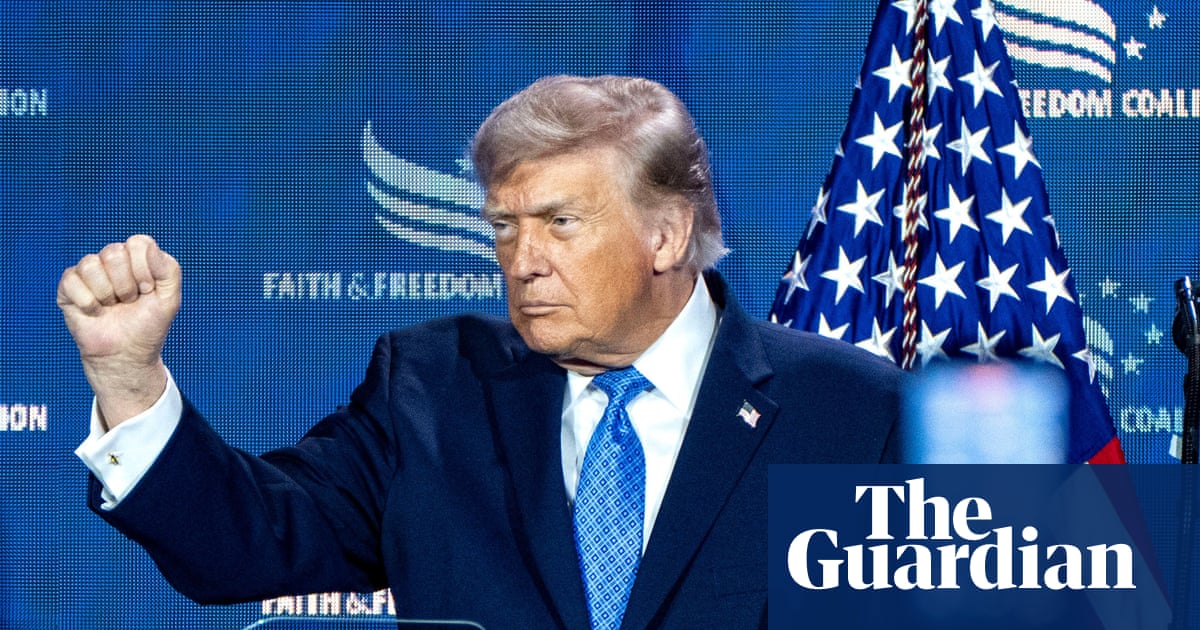
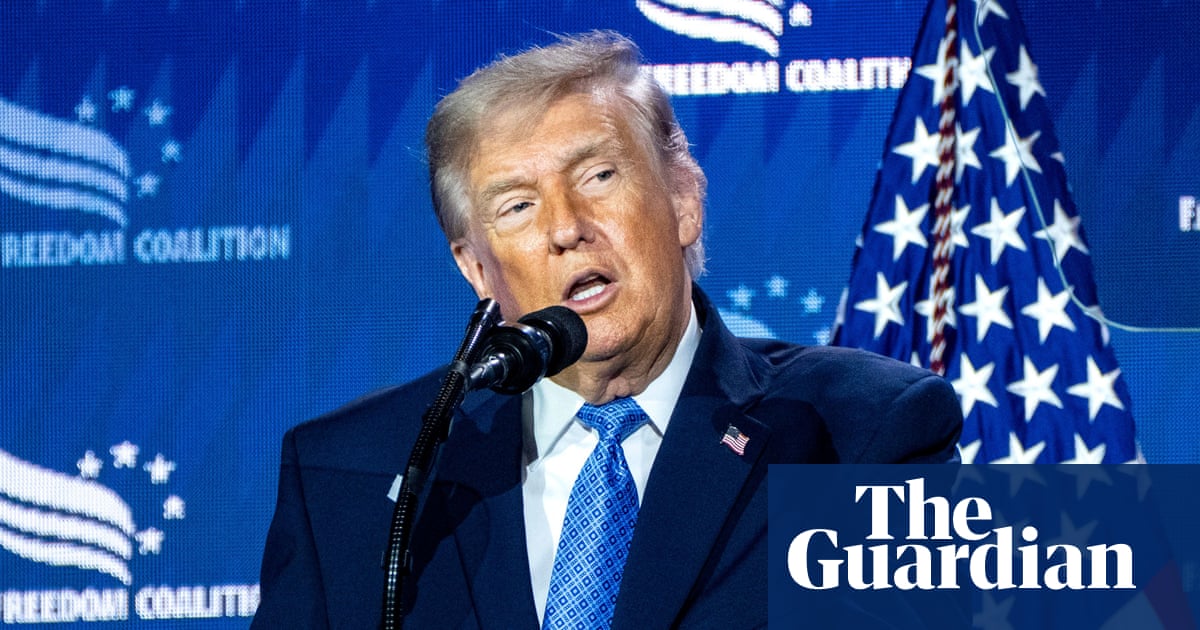
Devout patriots patiently wait for the part of the sermon where the president explains why voting against him is a communist assassination plot.
Donald Trump went to the Faith & Freedom Coalition’s "Road to Majority" conference and delivered what was basically a live-action John Birch Society fanfic. Fresh off defending his war in Iran and recycling lies about election rigging, he unveiled the GOP’s new midterm message: Democrats are "godless communists" plotting to close your churches, "kill your people" and usher in the violent persecution of Christians, all because some leftwing candidates won New York primaries. Policy platform? No. Just a sermon about how the other party is an existential threat and possibly a death cult.
Never one to skip self-promotion, Trump briefly auditioned as Best Communist Ever, bragging he’d be "the greatest communist in history" because he could hand out free rent, houses and food before the country collapses and "everyone will suffer or die." Then he calmly asserted that assassinations are a "very important element" of his opponents’ ideology and called them "animals"—a totally normal thing for a sitting president to say about domestic political rivals in a country that keeps having assassination attempts.
Republican strategists, watching Trump trail in the polls after breaking his promises on prices and foreign wars, have decided the solution isn’t "govern better" but "scream Marxist" at anyone to the left of Joe Manchin. House Speaker Mike Johnson chimed in, warning that "mini-Mamdanis" are popping up everywhere and that the "insurgent left" is "openly running as Marxists, communists"—because nothing says serious governance like turning a Muslim socialist mayor into the new Goldstein for the Christian right. Reagan at least pretended the communist menace was overseas; Trump and Johnson have cut out the middleman and labeled half the country an internal enemy.
So the official midterms message from the party in power is: ignore the war, ignore the prices, ignore the broken promises. Focus instead on the apocalyptic fantasy that your atheist, trans-loving, mosque-adjacent neighbors are about to burn your church and assassinate you in the name of Marx. American democracy isn’t just being undermined by bad policy; it’s being slowly dissolved in a vat of weaponized paranoia and Cold War cosplay.
Healthcare.gov helpfully displaying plans that now cost more than your mortgage, courtesy of the Trump–GOP ‘affordability’ strategy.
Republicans have finally found a way to make the Affordable Care Act less popular: remove the “affordable” part. After President Trump and the GOP in Congress refused to extend enhanced ACA subsidies, premiums did what everyone except the administration’s pet think tanks predicted — they exploded. Double and even triple-digit increases from 2025 to 2026 have pushed 5 million people off marketplace coverage, because it turns out Americans can’t pay a second rent every month just to see a doctor.
The Trump administration is trying to spin this as a heroic crusade against "fraud," borrowing talking points from the Paragon Health Institute, a conservative outfit apparently convinced that millions of people spontaneously committed identity theft just to get a checkup. Actual health policy experts point out the obvious: when Congress spent billions on enhanced tax credits during the pandemic, enrollment doubled because people could finally afford coverage. Then Republicans let those credits expire, Democrats shut down the government trying to save them, and now 5 million fewer people have insurance — which the White House is treating as a victory, presumably for the freedom to go bankrupt from a broken arm.
The result: ACA enrollment is down 13% in a single year, from 24.2 million to 19.2 million, and the administration is patting itself on the back for "cleaning up" the rolls. It’s a neat trick — engineer a price spike, shove millions off coverage, and then blame imaginary fraudsters instead of your own policies. The marketplace isn’t collapsing, it’s being methodically sabotaged by people who think health care is a luxury and suffering is a moral teacher, as long as it happens to someone else.