The Trump White House has decided the First Amendment is less a constitutional guarantee and more a VIP lounge policy, and CNN, MS NOW, and Politico are apparently wearing the wrong shoes. Administration lawyers are in court defending the president’s right to slap future bans on disfavored outlets, arguing they’ve failed to meet his "professionalism" standards — a bold claim from a government run by a man who rage-posts at 3 a.m. like a banned Reddit mod.
Instead of just admitting they don’t like critical coverage, the Justice Department is now moonlighting as the Professionalism Police, insisting that access to the people’s house depends on sufficiently flattering the guy currently using it as a TV studio and legal crime scene. The message is clear: cover Trump the way Fox & Friends does, or enjoy your view from the sidewalk.
This is not press relations; this is a test run for state media. When the government starts deciding which reporters are "professional" enough to ask questions, what they really mean is "which ones won’t mention the indictments, the grifts, or the coups." The Constitution says freedom of the press; Trump says freedom for the press that likes me. Guess whose lawyers your tax dollars are paying for.
The Leader of the Free World woke up today and decided the best use of his office was to blast Sen. Tom Cotton’s personal cell number onto Truth Social because Cotton isn’t moving fast enough on the Sunshine Protection Act — the extremely normal, definitely top-tier national security priority of making daylight saving time permanent.
Instead of, say, governing, Trump publicly singled out a Republican he calls "a friend" and effectively handed his followers a digital pitchfork, all because the man is insufficiently enthusiastic about changing what time the microwave says it is. This is what passes for a legislative strategy now: not persuasion, not negotiation — just presidential doxxing as constituent outreach.
Authoritarianism doesn’t always arrive with tanks and uniforms; sometimes it shows up as a president casually weaponizing his mob against his own party over a scheduling preference. If this is how he treats "friends" on a bill about daylight, imagine the fun when the stakes involve voting rights, criminal investigations, or war.
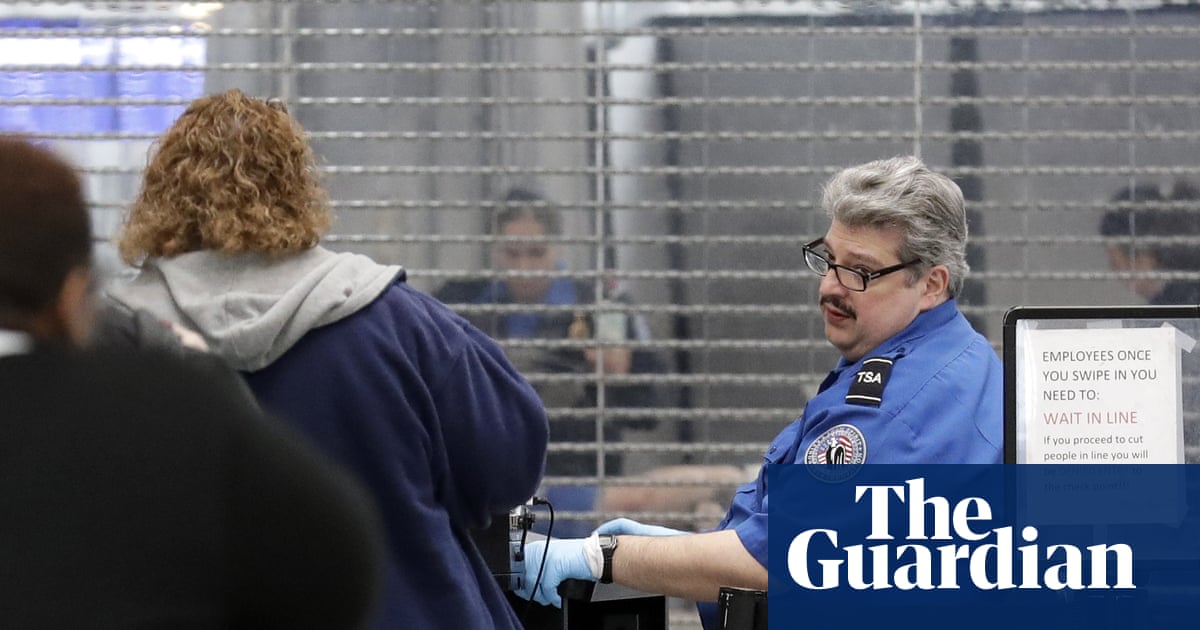
TSA officers heroically defending America from the nation’s most dangerous contraband: ergonomic seating.
The Trump-era TSA has bravely identified the real threat to aviation security: chairs. Airport security officers who check your ID and boarding pass will now be banned from sitting down, because nothing says "vital national security function" like forcing underpaid workers to stand on concrete for hours until their joints revolt. A TSA spokesperson wrapped this in corporate hostage-speak about "alertness" and "hospitality", as if the agency just discovered Disneyland, but with more pat-downs and fewer basic ergonomics.
The union representing TSA officers calls this what it is: a "disregard for employee rights and safety" and part of a broader pattern of contempt for the people actually keeping planes from exploding. This comes after a 76-day Trump shutdown where officers worked without pay, watched colleagues quit, and saw security lines balloon while the president used their livelihoods as a bargaining chip, then swooped in with a late pay order like a game show host handing out consolation prizes.
Meanwhile, the administration is busy pushing to privatize airport security checkpoints at more airports, and the union is lawyering up to fight it. So the sequence is: underfund, shut down, deny chairs, burn out the workforce, then claim the public sector "doesn't work" and hand the keys to private contractors. The AFGE is openly calling this a "regime" trying to "take out our workforce through whichever means possible"—which, under Trump, apparently includes weaponized OSHA violations masquerading as patriotism.
A commercial flight narrowly avoids turning into a murder‑suicide because an Israeli plumber, Yaniv Hayoun, tackles a pilot who stabbed his co‑pilot and allegedly tried to crash the plane. In any functioning reality, this would be a story about aviation security, mental health screening, and a guy who literally wrestled death out of the cockpit.
Instead, we get Trump on Truth Social, filming a little campaign trailer about it. He calls Hayoun a hero, says he "did an amazing job" and, of course, adds that he's "my kind of guy" — because even a thwarted mass‑casualty event has to be framed as an extension of the Trump Cinematic Universe. A man stops a potential mass killing; Trump’s first instinct is to fold him into the personal brand like a new flavor of Trump Steaks.
The actual savior here is a random plumber who, without a motorcade, Secret Service, or a taxpayer‑funded golf cart, physically stopped a pilot from allegedly crashing a plane. Trump’s contribution? A video on his failing social network and a chance to remind everyone that courage, like everything else, must be routed through his ego for validation. Public safety as content, heroism as merch-adjacent messaging — the show never ends.
Trump hopped onto Truth Social to announce that 20 million seniors on Medicare will be getting a one-time $90 check, because apparently we’re doing Medicare, but make it sweepstakes. The money is coming from the Medicare Improvement Fund, which he helpfully rebranded as a “pointless ‘Slush Fund,’” then proceeded to treat exactly like a slush fund — yanking out roughly $2 billion so he can mail everyone a small bribe and slap his name on the envelope.
This isn’t about strengthening Medicare or lowering costs long-term; it’s about turning a policy tool into a campaign coupon book. Instead of using the fund for actual program improvements, the White House is converting it into a one-time payout so Trump can pose as the benevolent game-show host of American healthcare. Seniors get a short-lived $90 band-aid, Trump gets to brag he “gave” people money that was already theirs, and Medicare’s long-term finances get quietly used as set dressing for another episode of The Apprentice: Budget Office.
The administration is calling this responsible stewardship; what it really looks like is a taxpayer-funded campaign mailer that happens to arrive as premiums bite and elections loom. Transforming a technical improvement fund into a presidential tip jar for political credit is less "Medicare reform" and more forever-grifting with extra paperwork.
Trump unveils his new jobs program: give billions to a foreign steel conglomerate with a bankruptcy kink and hope voters don’t own calculators.
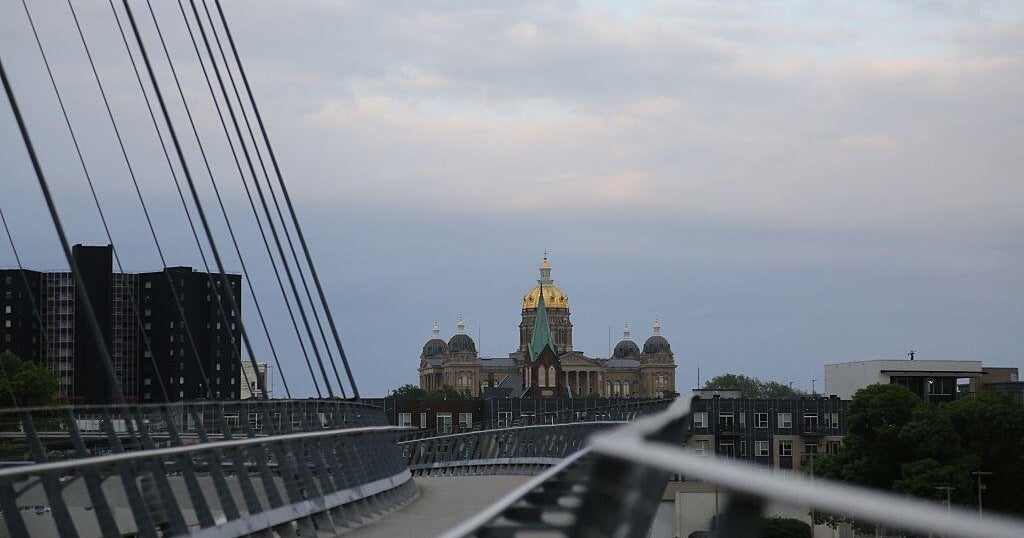
Iowa Republicans just discovered a bold new interpretation of "America First": hand $1.36 billion in tax breaks to a foreign-owned steel company with a bankruptcy habit and rumored Russian state-bank funding, less than two weeks before early voting in one of the tightest House races in the country. Lawmakers were hauled into a one-day special session, given barely any time to read the details, and told the "deal is done" — not by Iowa officials, but by Trump’s Commerce Secretary Howard Lutnick from the White House. State Senator Kevin Alons called it "political extortion" and then, in a moving display of spine removal, voted for it anyway.
The math is its own punchline: about $777,000 in tax credits per permanent job over 10 years, for a company whose last big U.S. steel dream in Minnesota ended in bankruptcy, abandoned promises, and a name change. Supporters insist critics are ignoring 6,000 temporary construction jobs, because nothing screams "sound economic planning" like counting short-term hard-hat gigs to justify a decade-long corporate subsidy. Meanwhile, Iowa farmers are getting crushed by Trump’s trade wars, but the state is forking over more than a billion dollars to an India-based conglomerate in a district where Republican Rep. Mariannette Miller-Meeks won her last race by 798 votes.
So to recap: Trump announces the "largest steel plant in U.S. history" in a swing district, the White House declares the deal finished before Iowa legislators even see it, a rushed special session converts taxpayer money into election-year talking points, and everyone’s supposed to pretend this is economic development and not a giant, publicly funded campaign ad. Foxconn Wisconsin walked so Mesabi Metallics Iowa could trip over the same rake — this time with bonus geopolitics.
Dayton airport Trump fans patiently await the arrival of the man who made their gas more expensive, their groceries pricier, and their government more unaccountable—but hey, at least his name is on the building.
Ohio, once Trump’s favorite MAGA theme park, is suddenly full of former believers staring at their gas receipts and grocery bills and realizing that the dear leader with his name stapled to every federal building somehow forgot to make food and fuel affordable. Kelly Savage-Radich, a lifelong Republican who twice voted for Trump, is now contemplating selling a family car and delivers the updated Rust Belt liturgy: “Trump? I think he’s a disaster.” The branding empire is intact; the household budget is not.
The economic rage is welded to something darker: the killing of Renee Good in Minneapolis, an American citizen shot dead in the street during an ICE operation, followed by the Trump administration’s favorite policy outcome: absolutely no accountability. Voters who grew up hearing “Don’t tread on me” are now watching a president whose entire governing philosophy is “Actually, we’ll tread on whoever we want.” The message to Trump’s base is clear: your freedoms are sacred right up until they inconvenience the security state.
As Trump jets into Montgomery County to campaign for Jon Husted and Vivek Ramaswamy, Republicans are discovering that having an unpopular authoritarian mascot is bad for business. Trump is underwater in Ohio polls, GOP turnout is sagging, and even a billionaire hype merchant like Ramaswamy is losing to a Democrat. Meanwhile, the party’s moral compass is represented by Rep. Max Miller, currently under House ethics investigation for domestic and child abuse allegations, trying to hang on to his seat against a union ironworker. The Ohio GOP spent a decade building a one-party state; now they’re learning what happens when the strongman at the top can’t even deliver cheap gas, let alone justice.
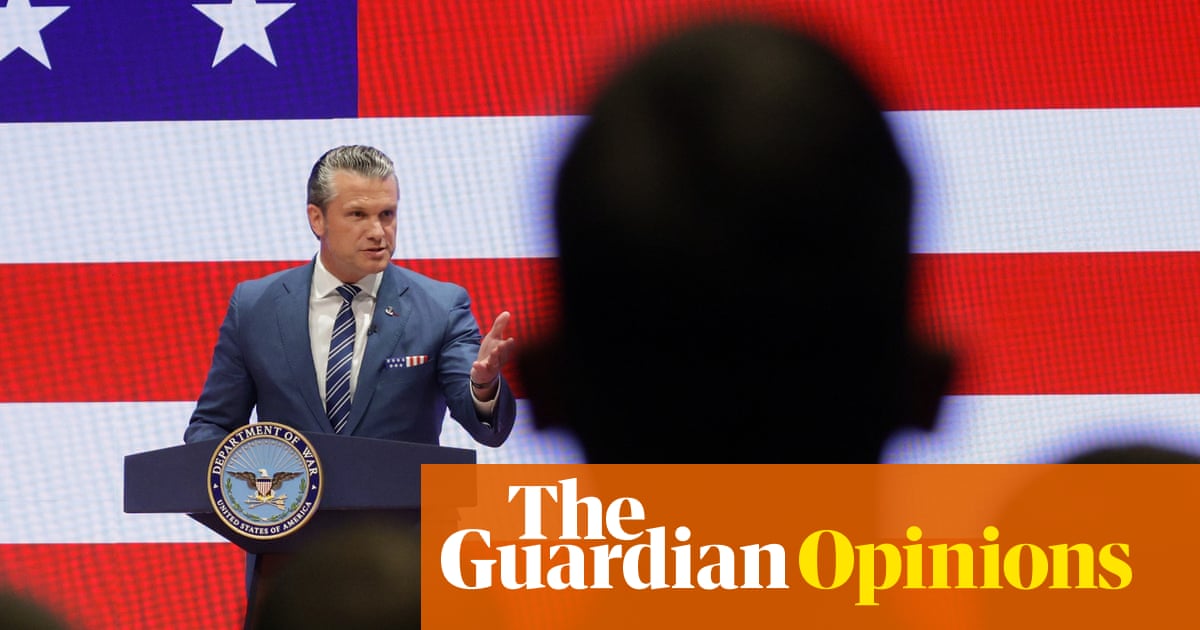
Pete Hegseth at the Pentagon, bravely defending America from the grave threat of insufficient Christianity in its nuclear arsenal.
The Trump administration has decided that if you're going to flirt with theocracy, you might as well put a ring on it. Defense secretary and failed Fox News pastor cosplay enthusiast Pete Hegseth has announced a brand-new Pentagon Office of Religious Affairs that reports directly to him. He swears it won’t "compel religious participation" while simultaneously turning the US military into a Christian nationalist cosplay convention—complete with "full armor of God" rhetoric, crusade talk about Iran, and Pentagon prayer services where he prays for "overwhelming violence" against enemies who "deserve no mercy." The separation of church and state is now more of a suggestion than a principle.
This is not some lone zealot with a Bible and a bad haircut; it’s a full-blown project. Hegseth is platforming extremist pastor Doug Wilson, a man who openly says women shouldn’t be allowed to vote and dreams of a Christian theocracy on a 250-year rollout plan, like fascism but with a long-term subscription model. Hegseth brought Wilson to lead worship at the Pentagon and boosted his "wives should submit" sermon clips online. Meanwhile, Josh Hawley proudly markets himself as a Christian nationalist while trying to kill off abortion medication, Speaker Mike Johnson is neck-deep in dominionist ideology, and JD Vance is on podcasts saying he’s fine if his politics help trigger the end times.
So yes, the administration is building a literal steel wall on the southern border while quietly bulldozing the metaphorical wall between church and state. The Constitution gets demoted to background décor while the Pentagon experiments with becoming a ministry of holy war. Christian nationalists are no longer whispering at the edges of power—they’re running offices, shaping policy, and treating the US military like their personal revival tent.
JB Pritzker at a ‘No Kings’ protest, bravely suggesting that maybe, just maybe, the presidency shouldn’t be a hereditary authoritarian cosplay gig.
Trump has been back in power for 20 months and, predictably, a lot of Democratic officials responded to an openly vengeful president by auditioning for the role of Most Reasonable Hostage. JB Pritzker, billionaire governor of Illinois, chose a different lane and basically told Trump he’d have to go through him to get to his state. Within a month of the inauguration he was already rolling out the Nazi Germany comparisons, which, given the "No Kings" protests he’s marching in, is less Godwin’s Law and more basic pattern recognition.
While a few others joined "Team Fight" – Gavin Newsom jamming a legislative wrench into Trump’s immigration machine, Janet Mills promising to see him in court over anti-trans discrimination – plenty of Democrats wandered over to "Team Cave". New York City’s mayor is out here trying to "build a productive relationship" with the guy fantasizing about weaponizing the federal government, and Chuck Schumer helped broker a bipartisan deal to end Trump’s record-breaking government shutdown, a nice reminder that institutionalists will keep setting the table even as the arsonist lights the drapes.
Pritzker, who helped build Illinois’s Holocaust Museum and has actually listened to survivors, is out there saying the quiet part loud: you don’t give an authoritarian an inch. Now he’s being floated as a 2028 presidential contender, because in the United States of Late Capitalism your choices are increasingly between billionaires who want fascism and billionaires who are at least willing to call it fascism on camera. Progress, allegedly.
The Trump crew snuck off to Camp David for a few quiet hours of "how many wars can we restart before lunch" brainstorming, and somehow forgot to tell the American public they were workshopping major combat operations in Iran and a Saudi-led offensive in Yemen. Last time they did this, Israel went to war with Iran days later, so naturally they're running the sequel with Vice President Vance in the big chair and the usual cast of hawks and sycophants: Marco Rubio, Pete Hegseth, Steve Witkoff, John Ratcliffe, and Gen. Dan Caine.
Trump is publicly musing that either Iran signs his deal or "it won't exist any longer," which is a totally normal way to talk about a sovereign state and not at all how a guy threatens to bulldoze a failing golf course. Meanwhile, Saudi Arabia is shopping for American airstrikes on the Houthis in Yemen, and U.S. officials say Trump is "leaning against it" but could change his mind — because nothing says responsible wartime leadership like a president treating regional conflagrations as a vibes-based decision. The White House, of course, "declined to comment," because why would a democracy need to know what its government is plotting when it comes to expanding a forever war?
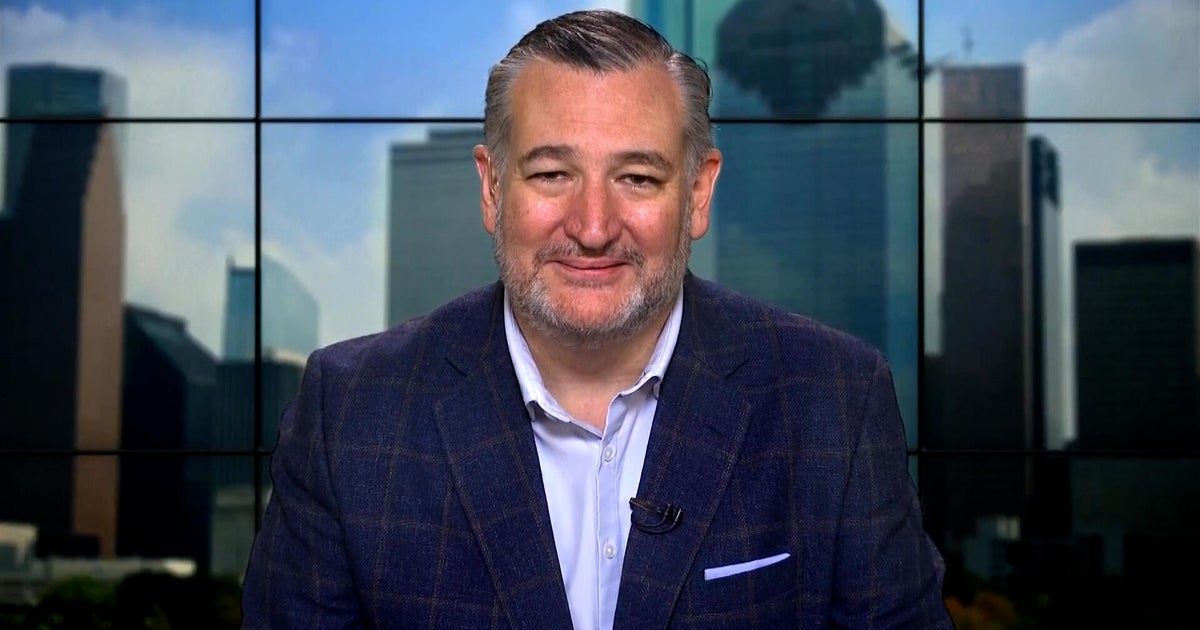
Ted Cruz explains that democracy is fine, actually, as long as the right people keep the whistle and own the stadium.
Ted Cruz sat down with CBS to talk about the truly urgent crisis facing America: making sure college athletes’ NIL deals are handled in a way that keeps the NCAA oligarchy sleeping soundly at night. While students juggle classes, unpaid labor, and now actual contracts, Cruz is here to ensure that whatever happens, the power structure doesn’t feel too uncomfortable.
From there, the conversation drifts to the upcoming midterms and Donald Trump’s latest approval ratings, where Cruz does his usual routine: treat Trump’s standing in the polls like it’s a weather report instead of the ongoing referendum on a would-be strongman and his party’s years-long project of breaking every guardrail in sight. Toss in some chatter about Ken Paxton and his political orbit, and you’ve basically got a highlight reel of the modern GOP: culture-war filler on top, corruption-adjacent chaos underneath, and a lingering question of how many more institutions they can run through the woodchipper before anyone in power decides that maybe this isn’t normal.
Saudi Arabia is gearing up for a major counteroffensive against the Iran-backed Houthis along the Red Sea coast, and the Trump administration has bravely decided that it will not bomb Yemen — at least not this week. Instead, the U.S. is doing the classy neo-imperial thing and providing everything short of pulling the actual trigger: intelligence, targeting data, and over 200 suggested Houthi targets for the Saudis to hit themselves. It's like DoorDash for airstrikes.
Trump, ever the decisive wartime leader, reportedly got very close to ordering U.S. strikes at the personal request of his dear friend Mohammed bin Salman, then backed off, torn between helping his favorite autocrat and accidentally starting another Middle East sideshow. CENTCOM, meanwhile, is worried this Yemen adventure might distract from its main hobby: obsessing over Iran. So the compromise is classic Trump-era foreign policy: maximum involvement, minimum accountability. The U.S. claims it’s "not going to take kinetic action for now" while literally handing over a kill list and watching from just offstage.
So no, the U.S. isn’t officially joining the war. It’s just helping pick the targets, shape the battlefield, and prop up an "internationally recognized" Yemeni government that mostly exists on PowerPoint slides and diplomatic talking points. Call it what it is: outsourced bombing with American fingerprints all over the map — but none of that pesky congressional authorization, public debate, or moral responsibility getting in the way.
Trump DOJ lawyers furiously scrolling Westlaw, searching for any case that doesn’t describe their favorite voter-fraud statute as "very, very weak."
The Trump administration’s war on imaginary noncitizen voting just ran into a small obstacle: the Constitution. A federal judge in Miami, David S. Leibowitz, tossed the case against Chelsea Cox, a Jamaican national accused of illegally voting, and ruled that the decades‑old federal law she was charged under, 18 U.S.C. § 611, is unconstitutional. His radical theory? That states, not whichever president is screaming on Truth Social this week, get to decide voter qualifications. Wild stuff.
Leibowitz notes that the Justice Department’s entire defense of the statute rests on a single “very, very weak” Supreme Court case, then calmly dismembers it while pointing out that the text and original public meaning of the Constitution don’t give Congress the power to criminalize noncitizen voting this way. To really twist the knife, he even brought in conservative legal superstar Paul Clement, who politely agreed that Congress probably overstepped. When a Bush-era solicitor general is side‑eyeing your favorite voter‑fraud talking point, the vibes are not great.
This ruling only applies to Cox’s case, but it’s a brick through the window of Trump’s DOJ narrative machine, which has been desperately trying to turn a statistically rare practice into a national emergency. Federal prosecutors are already racing to appeal, because nothing says "law and order" like stretching federal power to chase a handful of ballots while shrugging at actual attempts to overthrow elections. States like Florida can still go after Cox under state law, and the administration may try to deport her, but the big federal showcase prosecution meant to prove Trump’s conspiracy theories? That just got laughed out of court, footnote by footnote.
A federal judge just told the Trump administration that, no, it cannot bulldoze its way through Big Bend National Park today in the name of "border security." U.S. District Judge Kathleen Cardone barred DHS from building any border barriers or doing any "construction or ground disturbing activities" in the Big Bend sector, which is legalese for: put the backhoes down and step away from the habitat.
The administration had already "paused" construction in August while CBP Commissioner Rodney Scott promised to chat with local stakeholders, which in Trumpworld usually means listening politely and then doing whatever Stephen Miller’s ghostwritten email says. Instead, local outrage and environmental concerns actually translated into a courtroom loss for DHS — a rare moment when the rule of law briefly taps the brakes on the anti-immigration demolition derby.
This is a temporary block, so the wall-obsessed crowd will surely be back to argue that a national park is just an underperforming golf course waiting to happen. For now, though, Big Bend gets a reprieve from becoming the latest monument to Trump’s forever-grifting "border security" branding exercise.
Nothing says "public service" like commemorative Trump pistols for the fan base and a regulatory environment designed to get them shipped to your doorstep with Prime-level convenience.
The Trump administration is quietly trying to turn the gun market into QVC with background checks, proposing an ATF rule that would let many Americans buy firearms fully online and have them shipped straight to their doors. Even the gun lobby is spooked, which is how you know it’s not about "freedom" so much as new and exciting ways to bypass whatever thin guardrails still exist.
Enter Donald Trump Jr., because of course he’s here. Junior sits on the board and holds a stake in GrabAGun, the self-described "Amazon of Guns" that just so happens to be perfectly positioned to profit from this remote-sales revolution. They even rolled out a new logistics subsidiary, PEW Logistics, to help gun makers go direct-to-consumer months before ATF unveiled the proposal. Democratic Sens. Chris Murphy and Richard Blumenthal are now asking the DOJ if Trump Jr. got an early peek at the regulatory gold rush and tailored his business moves accordingly.
So we’ve got a president’s son, a gun company boasting to investors about monetizing a rule change, and a Justice Department that recently decided the federal ban on handgun sales to 18–20-year-olds is unconstitutional and won’t be enforced. Regulatory policy, but make it insider tip sheet for the First Failson’s portfolio. It’s not a conflict of interest, it’s a business model.
David Flippo, seen here wearing the "my staff did this to me" hat that his staff definitely did not design, approve, photograph, post, and then magically un-wear for him.
Nevada Republican and Trump mascot David Flippo got caught doing the one thing the GOP swears it hates: faking toughness. His campaign repeatedly claimed he earned a Bronze Star with valor, which he now blames on nameless staffers who allegedly "confused" his awards. Tiny snag: for years Flippo strutted around in a custom hat featuring a Bronze Star flanked by two V-shaped emblems that veterans say very clearly signal a Bronze Star with valor. Hard to blame the interns when the lie is literally stapled to your forehead.
Veterans who actually earned their decorations are, shockingly, not amused. A retired Air Force master sergeant says he "cannot conceive" of any honest reason for Flippo's hat design, and a former Army Ranger flatly calls it what it is: "He lied." Flippo has now quietly retired the incriminating hat while also refusing to answer questions about those cute little V devices that magically appeared and then disappeared as soon as reporters noticed. Honesty, courage, accountability — just not the kind of valor this guy seems interested in displaying.
All this is unfolding in a supposedly safe Trump +14 district where Flippo has somehow managed to make a House race competitive by combining stolen valor cosplay with a separate scandal over the mysterious $2.5 million he’s pumped into his campaigns. So the pitch to voters boils down to: I moved here this year, I dressed up my service record, I won’t explain my money, and also please send me to Congress to talk about "integrity" and "supporting our troops." The hat may be gone, but the grift is still very much on.
President Trump, seen here celebrating another successful transfer of money from his fans’ wallets to his golf courses.
President Donald Trump, self-declared "crypto president," is once again turning the Oval Office into QVC for broke gamblers. This time, you can almost eat dinner with him—if you become one of the top 185 holders of his $TRUMP meme coin by November 12. The prize: "The Most Exclusive Dinner in the World" at his Virginia golf club with Trump and three mystery "legends" (translation: they’re still checking who’s not under indictment or in arbitration). Tiny catch: the website clarifies that no one gets a private meet and greet with Trump himself, because even when you’re literally paying in worship tokens, access to Dear Leader is strictly tiered.
The top 29 crypto whales get a VIP reception "with your favorite President and one of the Legends," and the top four bag a gold Trump-branded watch, because nothing says "sound monetary policy" like a consolation prize from a timeshare seminar. The site is very proud to announce that no gifts will be accepted, as if the entire arrangement isn’t already one giant, blinking, blockchain-shaped ethics violation. The White House, naturally, punted all questions to the event host, who then did the traditional Trump-era thing: refused to answer anything.
This is all built on Trump’s $TRUMP meme coin, launched three days before his second inauguration and briefly pumped to more than $74 a token for a $15 billion market cap before crashing to about $2, neatly mirroring his approval ratings and the collective IQ of anyone calling this "utility." More than a million investors have reportedly lost around $3.8 billion as the coin cratered, but Trump himself has allegedly cleared about $635 million from the scheme. So yes, the "crypto president" is doing wonders for the blockchain economy—specifically the part where a head of state mints a personality cult coin, lets his followers eat the losses, then raffles off proximity to his golf cart like it’s an off-brand Chuck E. Cheese prize counter.
If you ever wondered what it would look like if a presidency fully merged with a casino loyalty program and a Ponzi-adjacent meme token, congratulations: we are now running the executive branch like a Telegram pump-and-dump channel with Secret Service protection.
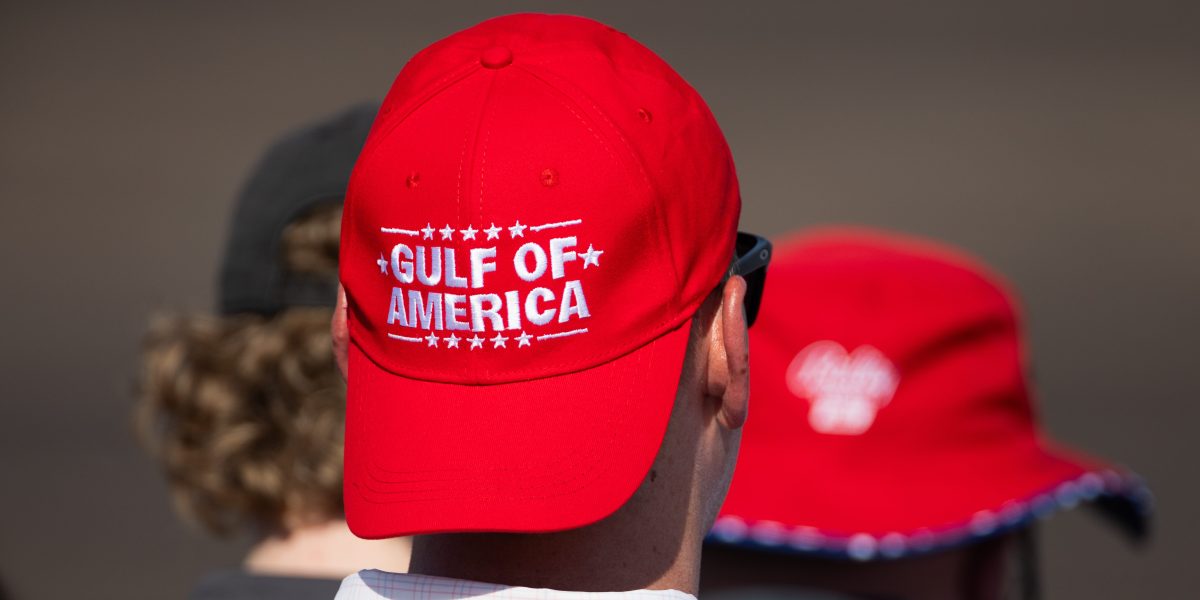
Nothing says "land of the free" like a man in a "Gulf of America" hat cheering on a president whose fans are busy rewriting maps and muzzling public radio.
The Trump-era brain trust has reached its natural conclusion: Alabama passed a "Gulf of America" law to patriotically rebrand the Gulf of Mexico, and the University of Alabama at Birmingham looked at this toothless stunt and said, "What if we used it to threaten journalists?" WBHM, Birmingham’s public radio station, was told it must use "Gulf of America" on air or staff could face discipline or termination, despite the law not mentioning media, not including penalties, and being about as enforceable as Trump’s attention span. The station’s own Journalism Code of Integrity explicitly promises independence from university interference, so naturally the university stepped in to enforce Trump’s geography fan fiction.
WBHM’s executive director Will Dahlberg warned listeners that the school was forcing the change, then resigned. UAB responded in the time-honored authoritarian style: by telling him to leave immediately. The timing is, as lawyers say, "Oh come on." The law itself only applies "when practicable" and to "state and local entities," but UAB decided to interpret that as "rewrite your news scripts to match Trump’s branding exercise" even if it means rejecting or illegally editing NPR and AP content. Rather than say, "The government doesn’t get to put words in reporters’ mouths," the university eagerly volunteered to be the local enforcement arm for Trump’s executive-order cosplay.
So we now have a public university using a symbolic renaming law as a pretext to compel speech from journalists, in direct conflict with decades of Supreme Court precedent on compelled speech and press freedom. China jails reporters; Alabama just makes them say "Gulf of America" under threat of losing their jobs. Different methods, same energy. And Trump, who literally praised China’s "friendly" press corps while banning U.S. outlets from the White House, must be thrilled to see his "American greatness" branding exercise trickle down into campus-level authoritarian cosplay.
Utah Gov. Spencer Cox bravely defends children from the corrupting influence of Toni Morrison while asking you to buy his book about how open-minded and reasonable he is.
Utah Gov. Spencer Cox is on a national media tour selling his new book, Off Ramp: How to Be a Peacemaker in an Age of Contempt, which is bold branding for a guy who signed one of the country’s most extreme book-banning laws and then wondered why the people whose books he helped yank off shelves aren’t lining up for his autograph. While Cox does the civility cosplay circuit with Jon Stewart and think-tank panels, Utah schools have now banned 44 books statewide—Toni Morrison, Stephen King, Jodi Picoult, Sarah J. Maas, the usual suspects who apparently pose a grave threat to teens that TikTok somehow does not.
The same governor who wants to gently guide America out of “contempt” has backed extreme GOP gerrymandering, yanked fluoride out of drinking water, rebranded Pride Month as “Fidelity Month,” and sided with data centers over his own constituents. But sure, buy his book about healing divisions. Local bookstores noticed the farce: a beloved Salt Lake shop tried a standard signed-copy promo and was met with such intense backlash from longtime customers that they canceled it—because partnering with the guy who greenlit mass school censorship to sell a book about peace is a little too on-the-nose, even for 2026.
Veteran bookseller Ken Sanders, who literally advertises “We Buy Banned Books,” took one look at Cox’s jacket copy praising his “dedication to depolarization” and responded like a human lie detector: “Oof. That ain’t you, babe.” When your home-state book community reacts more strongly to your civility memoir than to an actual bomb threat they once received over drag queen story time, it might be time to admit the only speech you’re really interested in protecting is the kind that comes with a royalty check.
Former Maine Gov. Paul LePage, once known as "Trump, but with a colder climate," is now gingerly trying out the role of independent thinker. In a House debate for Maine’s 2nd District, LePage broke with the Trump line on the Iran war, tariffs on Canada, and immigration — you know, some of the greatest hits from the "Make Foreign Policy Up on Twitter" era. Apparently even LePage has figured out that threatening war with Iran, slapping pointless tariffs on your largest trading partner, and terrorizing immigrants doesn’t play quite as well when you’re trying to win over a swing district instead of auditioning for Fox News.
His opponent, Democrat Matt Dunlap, gets to stand there as the designated normal person while LePage tries to thread the needle: "Yes, I loved Trump, but not that Trump. I liked the vibes, not the policies that wrecked supply chains, freaked out our allies, and turned immigration into a televised cruelty contest." It’s the new GOP strategy: loudly worship Trump’s brand while quietly backing away from the actual things he did. The party that spent years cheering on trade wars and saber-rattling is now pretending it always had nuanced thoughts about tariffs and foreign policy. Bold move for a guy who helped build the circus to now complain about the elephants.
So no, this isn’t a sudden attack of conscience. It’s just one more Republican trying to survive in the political ecosystem Trump poisoned, hoping voters will forget who handed him the bottle in the first place. Trumpism without consequences remains the product on offer — just with slightly fewer tariffs on maple syrup.