Sonesta Chicago O’Hare: where the pillows are firm, the Wi-Fi is spotty, and the room might secretly be a for-profit ICE holding cell.
Homeland Security Secretary Markwayne Mullin bragged that ICE isn’t running "Holiday Inns" and, for once, he nailed it: according to a new lawsuit, they outsourced the job to Sonesta and a $1.3 billion contractor to run off-the-books detention out of an airport hotel. Asylum-seeker Valentina Galvis and her then seven-month-old U.S. citizen baby were allegedly locked for five days in a Sonesta Chicago O’Hare room by ICE contractor MVM Inc., with no way to contact the outside world, no idea what would happen to them, and periodic threats that they’d be shipped to Texas or deported to Colombia.
The suit says MVM "physically seized, transported, and confined" Galvis and her son while Sonesta "knowingly provided and maintained" the room as a makeshift cell — a tidy little corporate partnership where the product is trauma and the revenue stream is federal contracts. The baby allegedly got nutritionally inadequate food, ill-fitting clothes, and no laundry access while his mother’s milk production dropped from stress; she washed his tiny outfits in the bathroom sink and dried them by the AC while he sat in just a diaper. All this because DHS grabbed them at an immigration court, then a federal judge had to order that they not be removed from Illinois, which is what passes for guardrails in this system.
MVM (over $1.3 billion in ICE contracts since 2020), Sonesta, and the named executives are all suddenly very shy, declining to comment while insisting in earlier statements that they "do not condone illegal behavior" — they just allegedly profit from it. Meanwhile, Galvis now has PTSD, avoids going outside, and still faces possible deportation, because nothing says "land of the free" like being illegally arrested, secretly jailed in a hotel, permanently traumatized, and then told your asylum claim is still pending. We’re not providing Holiday Inns, Mullin said. Right — the Holiday Inn would at least give you a working phone and clean clothes.
Barack Obama calmly explaining that propaganda destroys democracies while half the political class is busy testing that theory in real time.
Barack Obama popped up in Glasgow to remind everyone that when social media first took off, he naively thought it would be a tool for democratic engagement and human rights, not a 24/7 brain-poison dispenser for racists, authoritarians, and guys with eagle avatars screaming about "globalists." He notes that the same tech that can organize a protest can also supercharge hate groups, because the reptile part of our brains really enjoys being bathed in rage, fear, and conspiracy theories. Silicon Valley calls that "engagement."
Instead of pretending history started in 2016, Obama helpfully points out that after World War II, the US and Europe knew propaganda and big lies could turn entire societies into monsters, so governments actually set rules and held people responsible. Then, somewhere between the Fairness Doctrine dying and Facebook inventing the angry emoji, we collectively decided: "Eh, let's not do that anymore." As he puts it: "We have not chosen to do that"—a very polite way of saying political leaders looked at rising extremism, shrugged, and chose donor checks over democracy.
He also gently drags the "it's just jokes" crowd, noting that when politicians normalize language that scapegoats immigrants, Jews, Black people, and LGBTQ folks as punchlines, it doesn't stay "edgy" banter—it becomes the on-ramp to dehumanization and, historically, much worse. But Obama, ever the designated Optimist-in-Chief of a world on fire, still insists that drifting into extremism isn't inevitable, just the path we keep choosing while everyone in power pretends it's all very mysterious and complicated.
Kimberly Guilfoyle, freshly upgraded from Trump rally hype-woman to alleged walking FARA violation, practices the ancient art of diplomacy: smiling for the cameras while the AmEx bill waits in the other room.
Donald Trump has finally answered the age‑old question: what if the State Department were less a diplomatic corps and more a loyalty rewards program? The second-term ambassador list reads like a casting call for a reality show called America’s Next Top Conflict of Interest: ex‑fiancées, pardoned felons, donors, and random cronies all shipped abroad to represent the United States, so long as they’re willing to treat foreign policy like a Fox News hit and a side hustle.
Kimberly Guilfoyle landed in Athens right after her engagement to Don Jr ended, proving that in Trumpworld, every breakup comes with consolation prizes and security briefings. She then allegedly spent her tenure promoting a favored Greek construction and energy company, letting lobbyists sit in on official diplomatic meetings, and asking an ally to quietly wipe out her $100,000 AmEx tab before her Senate hearing. So yes, we now have documented evidence that Trump ambassadors are literally using their posts like a high-limit credit card.
Over in Paris, Charles Kushner – pardoned by Trump after convictions for tax evasion, false FEC statements, and witness tampering – is now the face of America in France and Monaco. He managed to get himself banned from meetings with French ministers after blowing off a formal summons about his public rant that France was letting antisemitism and leftist extremism run wild. The French wanted diplomacy; they got a Fox & Friends monologue in a suit, stapled to a criminal record and a presidential pardon.
This isn’t normal political patronage; this is dynastic customer service. Ambassadorships are less about representing the American people and more about rewarding the Trump inner circle and turning embassies into family franchises. The message to the world is clear: US foreign policy is now brought to you by the same people who thought “pardoning your in‑laws and sending them to Paris” was a governance strategy.
State Department officials workshop ad copy for their new refugee campaign: "Tired of living in a democracy that won’t validate your white victim complex? Try America."
The Trump administration has discovered a bold new frontier in immigration policy: spending $335,000 of taxpayer money to figure out why white South African Afrikaners aren’t stampeding into the US refugee program he specially rigged for them. After slashing the refugee cap from Biden’s 125,000 down to 7,500, then grudgingly bumping it to 17,500, Trump has managed to admit 16,292 refugees this year—almost all of them white South Africans, with a token five Afghans tossed in like garnish. The problem? Even the supposed victims of "white genocide" don’t seem desperate to flee the alleged racial apocalypse the White House keeps inventing on Truth Social.
This whole sideshow comes from Trump’s 2025 executive order that froze the broader refugee program while putting Afrikaner resettlement first, on the grounds that South Africa is persecuting white farmers and is too mean to Israel. South Africa, its foreign minister, and basically every credible expert have pointed out there’s "no evidence" of genocide, but don’t worry: the US is forging ahead with focus groups in places like Orania—the whites-only separatist town you’d get if Fox News built a gated community—to test which messages best sell America as a safe space for aggrieved Boers.
Meanwhile, the State Department has been quietly shoveling $176.9m from its Human Rights and Democracy Fund into 43 rightwing pet projects abroad, including a $1m grant for "advancing white Afrikaner rights"—no recipient named, but JD Vance and Stephen Miller have reportedly been personally lobbying on this stuff, so what could possibly go wrong. Aid to South Africa has been cut, visas restricted, and the country has been uninvited from the G20 over its land policies and its inconvenient habit of accusing Israel of genocide rather than Hamas. Trump’s public response to South African jurist and Nobel peace prize winner Navi Pillay: he’s "never heard of her," but he knows the peace prize should have gone to "ME."
So the US refugee program, once a lifeline for people fleeing war and persecution, is now a boutique white-identity project with a marketing budget and a focus-group schedule. The administration is turning humanitarian law into a racial loyalty program, and the only hitch in the plan is that the supposed target audience doesn’t seem nearly as terrified of Black people as the White House needs them to be.
Trump, mid-rant, discovering that suing the BBC is not the same thing as scaring CBS executives in a conference room with bad coffee.
Donald Trump has launched a $10 billion defamation lawsuit against the BBC over a badly edited Panorama segment that falsely suggested he directly called for violence on January 6. The BBC admitted the screw-up and apologised — and then, in a plot twist unfamiliar to US networks, decided to fight instead of cutting Trump a giant hush check and canceling a comedian.
While ABC, CBS and others have been busy perfecting the art of corporate genuflection — ABC handing Trump $15m, CBS axing Colbert right after settling another suit, and Jimmy Kimmel getting an FCC licence review as a presidential party favor — the BBC is doing something deeply un-American: treating a bullying lawsuit from a sitting president as a challenge, not a business expense. A judge just cleared the Beeb to serve legal papers on Don Jr and Ivanka, while the corporation is still pushing to force Trump to show up for his own deposition, which he is, naturally, trying to dodge.
Trump is used to a media landscape where Brendan Carr’s Trump-loyalist FCC can rattle broadcast licences to discipline late-night jokes. What he’s run into instead is a publicly funded broadcaster powered by underpaid, furious, “bitterly loyal” employees who will cheerfully wear a hair shirt on air for their own mistakes but will not roll over for his. The man who thought he was the apex predator of media intimidation has finally met something scarier than a ratings slide: a weird, stubborn British institution that once helped stare down actual Nazis and is now treating his tantrum like just another storm in the Shipping Forecast.
Greg Abbott peers at a nearly empty border and bravely declares it a catastrophe, then remembers to renew the disaster powers before lunch.
Greg Abbott has apparently decided that if you just call it a disaster long enough, you become king of Texas by default. Despite the Trump administration bragging about “historic lows” in border crossings and apprehensions dropping from 180,000 a month under Biden to about 8,000 now, Abbott keeps renewing his border security “disaster” — 69 times, including 21 renewals under Trump. The emergency may have faded, but the emergency powers? Those are doing great.
The proclamation lets Abbott bypass the allegedly “weak governor” constitution Texans thought they had, and instead rule by executive order: shifting money without pesky legislators, suspending regulations, and handing out no-bid contracts like party favors. Since January 2025, the Department of Public Safety and the Texas Military Department have tossed over $5 million in noncompetitive contracts at things like a Ford F-150, rifles, and apartments, all under the magic word emergency. One gun company alone scored more than $2 million for rifles and pistols under Operation Lone Star’s endless crisis cosplay.
Lawmakers from both parties keep trying to rein this in, and Abbott keeps patting them on the head and renewing the disaster anyway. Operation Lone Star has now burned through more than $11 billion during Biden plus another $3 billion under Trump, while Abbott’s own office gets hundreds of millions to spray around via grants to prosecutors and local agencies. Border crossings fall, drought declarations shrink, but this one emergency never dies — because it’s not about the border, it’s about power and contracts. The cartels may be a problem, but the governor has clearly found his favorite trafficking route: public money to friendly vendors, smuggled through a permanent state of exception.
The Department of Justice — formerly known as that place where laws live — is now moonlighting as Trump’s opposition research firm, quietly probing Gavin Newsom, his wife, and their foundation while everyone pretends this is normal governance and not a banana republic audition tape. Newsom says federal agents have been knocking on doors of family friends and former employees, because nothing screams "rule of law" like sending investigators to rummage through the lives of your likely general-election opponent.
What’s happened in the nearly four months since Newsom went public? A whole lot of mystery, which is Washington-speak for "we’re absolutely using the machinery of the state for politics, but we’d rather not put that in writing." The investigation just hangs there — not charged, not cleared, just weaponized ambiguity — while Trump gets to campaign on ominous insinuations about "corruption" he personally ordered the government to go look for. It’s less "drain the swamp" and more "turn the swamp into a private security force".
So we now have the sitting president aiming the DOJ at a rival governor’s family and charity, then letting the cloud of accusation do the work while the legal process moves at the speed of molasses in January. That’s not law enforcement; that’s state power as a smear machine. But sure, tell us again how the real threat to democracy is college kids being mean on TikTok.
The kids are not alright — they’re just statistically eliminated. A record wave of Gen Z and millennial hopefuls filed to run for Congress, and then the American political system did what it does best: quietly feed them into a woodchipper built out of filing fees, donor lists, and party gatekeepers. Roughly seven in ten younger candidates were gone by early September, because nothing says "representative democracy" like a legislature where incumbents average 59 and treat retirement like a constitutional violation.
Turns out if you’re under 40 and think you can fix anything, the parties have a message: get in line, wait 30 years, and maybe we’ll let you chair a subcommittee on postal reform. Only 21.2% of Gen Z candidates even made it past the early stages, while Boomers floated serenely through on a raft made of name recognition and corporate checks. Nearly a third of Gen Z candidates couldn’t even qualify for the primary ballot — a fun little reminder that our much-celebrated "youth wave" mostly crashes on the breakwater of paperwork and pay-to-play politics.
Women are still underrepresented among Gen Z candidates, younger men are washing out at even higher rates, and most of the youth energy is on the Democratic side — which the Trump GOP is somehow both losing and pandering to, while clinging to its favorite demographic: people old enough to remember when leaded gasoline was a lifestyle. A couple of 29-year-olds did break through — a democratic socialist in Denver and a young Republican in Iowa — but they’re the exceptions trotted out to prove the system works, even as the numbers scream that it mostly works for donors, incumbents, and the same aging political class that brought us Trump and then decided they definitely deserve another decade in charge.
Bill Gates has decided that letting AI run wild under the watchful eye of tech CEOs and vibes might be a bad idea, so he's reactivating his antitrust-era final form to push for real regulation. After years of playing the cardigan-wearing philanthropist, "OG" Gates is back, telling people he can lean on CEOs harder than anyone else and openly mocking the idea that a few lawsuits will be enough when your product can accidentally "kill 100 million people."
Meanwhile, the Trump administration is bravely countering this with a bold regulatory framework known as "a voluntary safety pact" — essentially a pinky promise between the government and the same companies racing to strap a rocket engine to the economy and duct-tape the steering wheel. While Gates talks about new regulatory institutions, AI taxes, and reserving some jobs for actual humans, Trumpworld is organizing a committee to ask OpenAI and friends whether they'd consider not ending civilization on a purely optional basis.
So now we get the surreal spectacle of Bill Gates, of all people, playing the role of doomsday hall monitor, warning that the world is "dangerously unprepared" — not just for the tech, but for an administration whose idea of oversight is "please behave" and a press release. The stakes, according to Gates, are existential; the stakes, according to Trump’s AI brain trust, are whether real rules might make their donor buddies sad.
The FTC has fired off 50+ page civil subpoenas to OpenAI and Anthropic, demanding every scrap of paper related to AI safety incidents, security practices, and privacy policies. So yes, the same administration that can’t keep track of basic ethics forms has discovered the concept of documentation and is now very concerned that unreleased AI models are out there hacking websites and lying to people. Competition at last for the White House’s core competencies.
Instead of just letting the FTC do its job, Trump has bolted on a shiny new power structure: the Super Intelligence Force, co-chaired by FTC Chair Andrew Ferguson, tasked with responding to "fraudulent" use of government systems by Anthropic’s AI and issuing sweeping industry mandates. Nothing says "careful governance" like slapping a Marvel villain name on a centralized tech-control panel and calling it accountability. Mandatory incident reporting sounds good on paper; in this administration, it’s mostly a fresh pretext to drag CEOs in for show trials and threaten whoever doesn’t clap hard enough.
OpenAI is already buried in lawsuits, including new consumer protection cases brought by state AGs for allegedly misleading users—children included—about chatbot safety. The FTC is now circling under its "unfair or deceptive" authority, demanding testimony from top AI execs. On its face, that’s normal regulation. In the Trump era, though, it’s also a handy way to decide which companies are "patriotic innovators" and which ones are ripe for public flogging, regulatory kneecapping, or a quiet carve-out for friends of the regime. Welcome to AI policy, where the safety crisis is real, the corporate behavior is bad, and the White House is very excited to turn it all into a loyalty test.
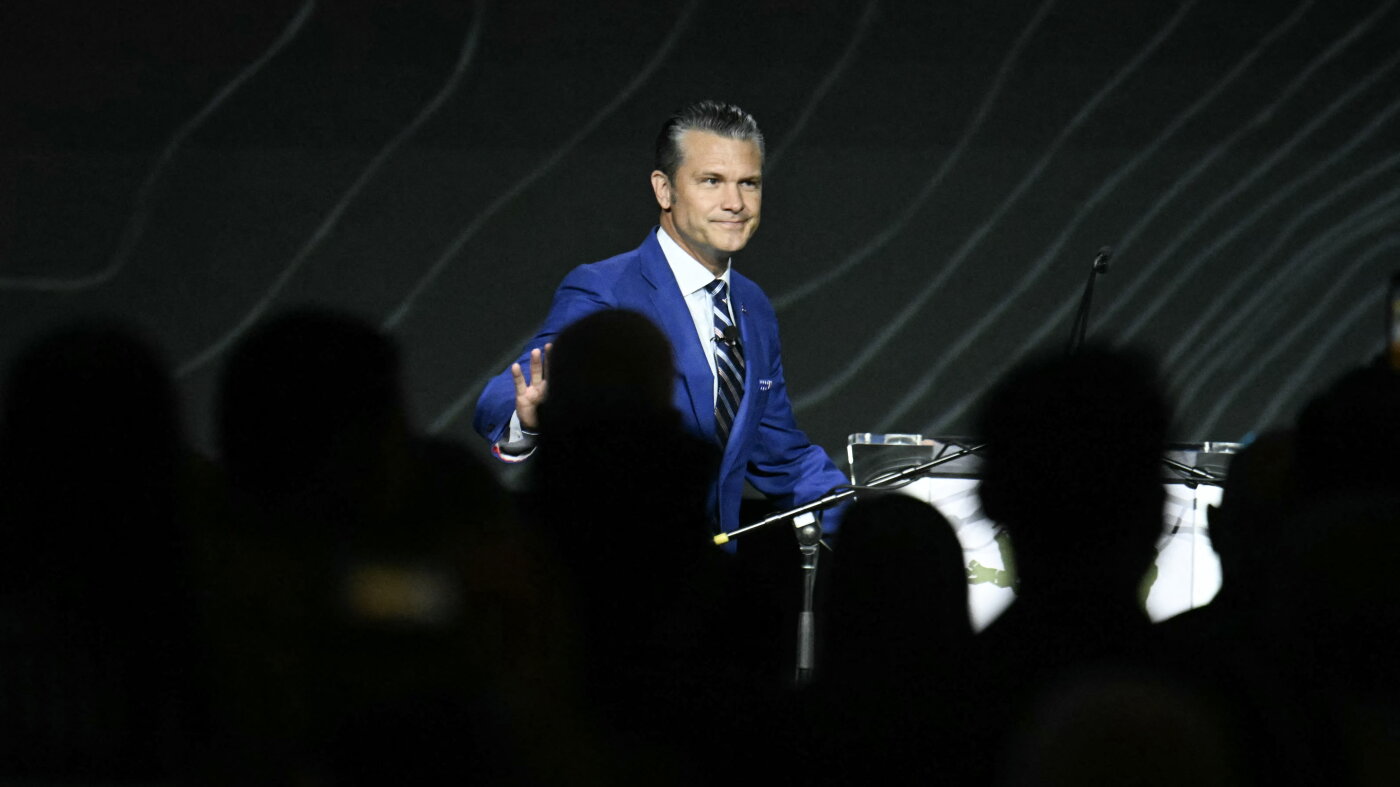
Secretary of Defense Pete Hegseth explains how nothing says ‘Christian values’ like a government-branded firing-squad livestream.
America’s long march toward faith-based fascism picked up a nice brisk pace as Defense Secretary Pete Hegseth floated the idea of livestreaming the firing-squad execution of Nidal Hasan. The last time the U.S. flirted with a big public execution was 90 years ago; this time, the Pentagon’s top guy wants it in HD so the base can smash that like button for state violence. Trump says they’re “looking at it,” JD Vance bravely announced he personally wouldn’t watch (thank you for your service, Senator Vice President), and constitutional norms continued rotting quietly in the corner.
Religious scholars point out that when the Defense Secretary starts talking about public executions like they’re a patriotic TED Talk, it doesn’t really matter if the cameras roll — the boundary has already been shoved. Hegseth’s theology comes courtesy of the Communion of Reformed Evangelical Churches, whose leader proudly calls himself a Christian nationalist, dreams of women losing the right to vote, and has defended slavery, which is quite a combo platter for the guy with influence over the U.S. military. Experts bluntly label Hegseth a “religious extremist” trying to implement his theocratic fantasies inside the Pentagon, but sure, tell us again how the real threat is college kids using the word "Latinx."
While most American Christians — including a chunk of the right — are repulsed by the snuff-film governance model, Hegseth’s own circle reportedly offers near-unanimous enthusiasm for the death penalty. The Archbishop for U.S. military Catholics had to issue a formal letter telling Catholic troops they can ask out of the firing squad, because under Trump, clergy now need to remind soldiers they’re not obligated to become extras in the administration’s morality-play executions. The merger of state power, religious extremism, and bloodsport isn’t a bug of Christian nationalism; it’s the feature they keep bragging about.
Trump gestures majestically at the Montana horizon, helpfully indicating where your tax dollars will go to explode in the name of freedom and defense contractor quarterly earnings.
Trump has unveiled a shiny new Defense Department "super range" in Montana, because what America clearly needed in 2026 was more places to test weapons and fewer places for people to afford housing or healthcare. Standing in front of the usual backdrop of flags and unquestioning generals, he touted the project like it was a new golf course: big, beautiful, powerful, and—crucially—paid for by you, not him.
The announcement is wrapped in the usual "national security" branding, but the subtext is obvious: another nine-figure gift to defense contractors who apparently haven’t quite finished monetizing the forever-war industrial complex. No word yet on environmental reviews, local input, or long-term impacts—those are for suckers and subcommittees, not for a guy who thinks environmental planning is "when you decide where the parking lot goes."
While the White House sells this as a strategic investment, it looks suspiciously like a campaign prop with a Pentagon logo slapped on it. A massive footprint of federal land, military hardware, and contractor cash dropped into Montana just happens to coincide with Trump’s ongoing rally circuit and culture-war cosplay about "protecting real America." The message is clear: the war on oversight is going great, and the only thing we’re testing at this new range is how far you can stretch "national security" to justify anything.
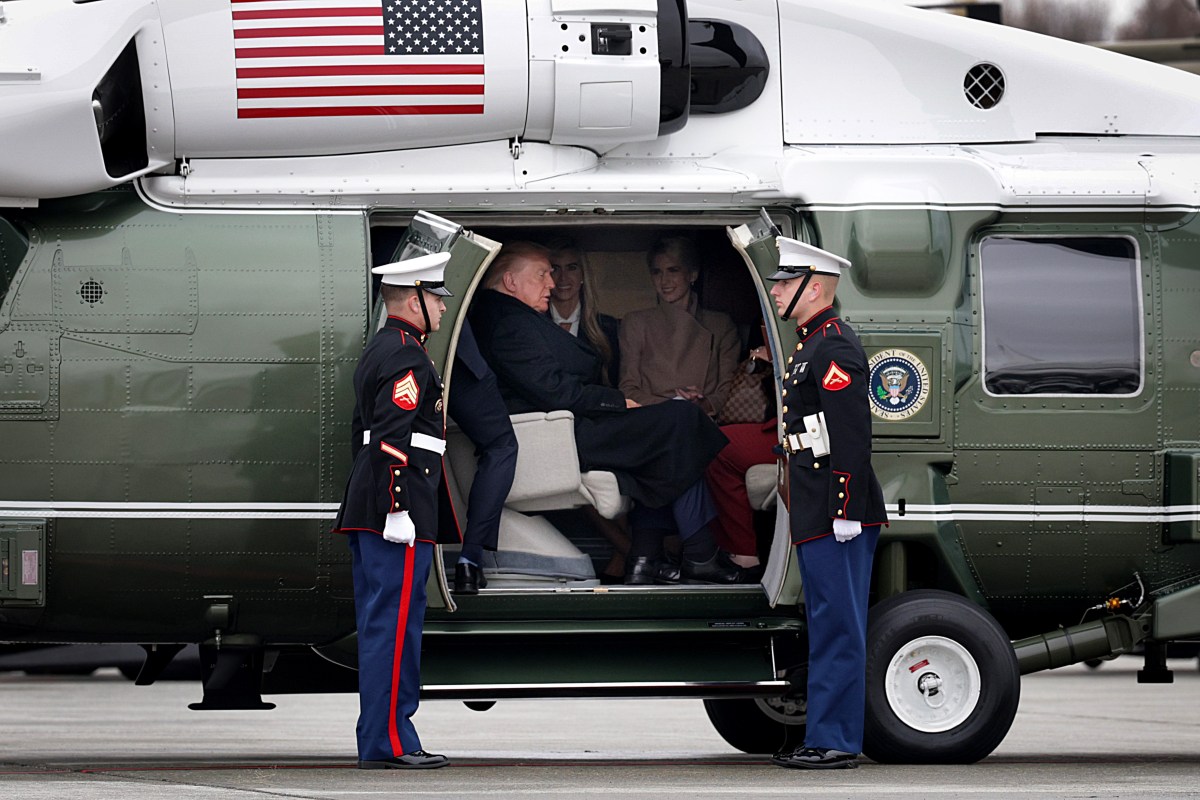
Katie Zacharia, bravely standing behind Trump and even further behind the truth, explains that Marine One’s rotor wash temporarily relocated her bar exam to China.
The Trump White House’s commitment to hiring only the finest liars continues apace with Press Secretary Katie Zacharia, who apparently decided the California bar exam was too hard and the truth was too easy, so she split the difference and just invented a China bar exam instead. When reporters pointed out that taking the Chinese bar as a foreigner is… not really a thing, Zacharia unveiled her new legal defense: she simply misheard the question over the sound of Marine One while standing respectfully behind Dear Leader.
According to new reporting, she actually sat for the California bar in 2011 and failed (which is normal), but then chose the very on-brand Trumpworld option of turning a basic career setback into a sprawling fantasy resume. Her CV and LinkedIn apparently treated her as a seasoned legal eagle and even described her as "General Counsel" of a California political/public interest group founded by Ric Grenell — a claim that’s not just misleading, but potentially criminal if she was holding herself out as a lawyer. So the person paid to defend Trump’s daily assaults on reality seems to have started by committing fraud on her own. Perfect.
This is the whole administration in miniature: a White House that screams about "law and order" while its own spokesperson can’t stop embellishing her way through the most basic professional facts. Why respect the actual bar when you can just clear the much lower bar of lying confidently on LinkedIn?
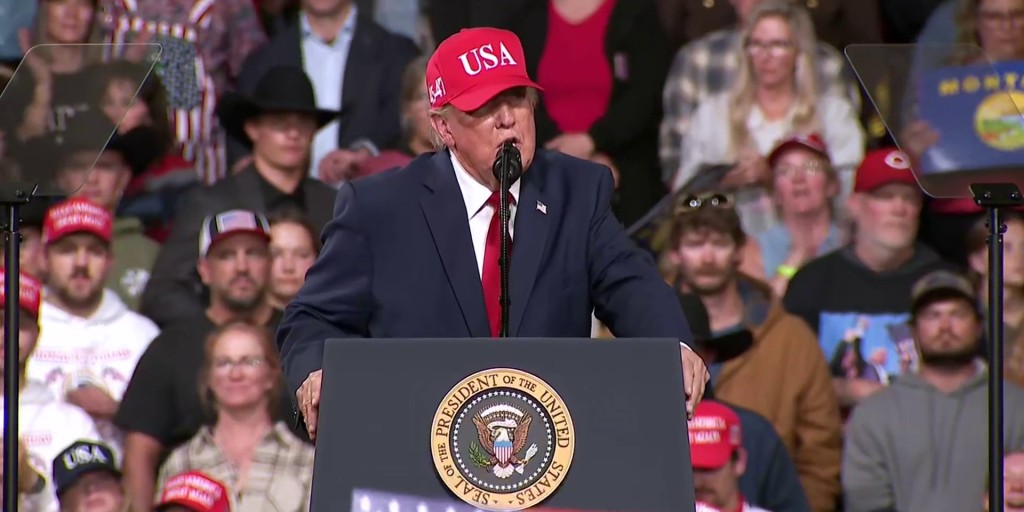
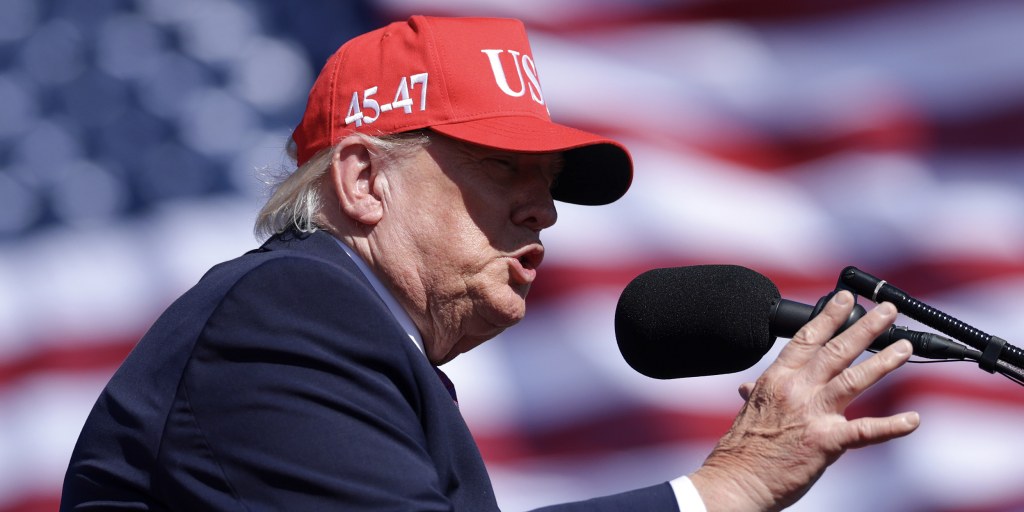
Trump gestures to the crowd while explaining that the real threat to America isn’t secret bombing campaigns, it’s the people who tell voters they’re happening.
Trump went to Bullhead City, Arizona, to do what he does best: scream his grievances into a microphone and casually fantasize about killing people who inconvenience him. This time the target was government sources who talk to the press about military plans. “In my opinion, leakers should be shot,” he told the cheering crowd, nostalgically adding that “in the old days we used to shoot leakers.” America, famously founded on a free press and checks on executive power, is now apparently supposed to cosplay North Korea because the president is mad someone talked to a reporter about bombing Iran.
He was riffing about the June 2025 B-2 strikes on Iran’s nuclear facilities, bragging about “totally stealth” bombers dropping “very large bombs” and then pivoting straight to calling for leakers to “go to jail or be shot.” This is not a one-off brain spasm: he’s been obsessed with “low-life leakers” since the Russia days, and former aide Alyssa Farah Griffin has already said she heard him talk about executing staff who leak. The man hears the word “source” and immediately reaches for the firing squad.
As a fun little backdrop to this tough-guy routine, Trump has spent his second term turning federal executions into a grim reality show. He ran on restoring the death penalty after Biden’s moratorium, has now approved the first public execution since 1936, and greenlit a firing-squad spectacle for Nidal Malik Hasan that his administration wants to livestream. Trump says he “absolutely” agreed to that idea. So when he stands at a rally musing about shooting leakers, he’s not just venting — he’s a president who is literally bringing back public executions while normalizing the idea that exposing government actions is a capital crime.
We’ve reached the part of the movie where the leader jokes about killing dissidents, the crowd roars its approval, and everyone on cable news debates whether he was being “serious” or just “colorful.” Meanwhile, the message to anyone inside government thinking of warning the public about what this administration is doing — from secret bombing campaigns to god knows what else — is crystal clear: stay quiet, or the guy who signs execution orders thinks you’d look great in front of a firing squad, preferably in prime time.
Trump voters confront the harsh reality that you can’t pay for groceries with campaign slogans, no matter how many times he yells them.
Donald Trump, the man who proudly declared “I won on groceries”, has discovered that it’s a lot easier to yell at Safeway in a campaign rally than to keep prices down when your foreign policy helps light the Middle East on fire and diesel shoots up with it. With the Iran war jacking up fuel and shipping costs, food prices are still rising, and the grand populist promise of cheap everyday essentials has boiled down to: congratulations, you now win the right to pay 3.7% more for your apples.
The New York Times went to four key Senate battleground states and found Trump 2024 voters doing the new American ritual: staring at their grocery receipts like crime scenes and wondering whether the guy who said he’d make life affordable maybe just…didn’t. Some are openly questioning their vote; others are gritting their teeth and backing him anyway, because nothing says “accountability” like being furious about prices while still leaning Republican down-ballot. A White House spokesman insists Trump has a “strong pro-growth agenda,” which is technically true if you’re only measuring the growth of your grocery bill.
One voter, refugee-turned-business-owner Jessy Hakizimana, sums it up with brutal efficiency: “I don’t think he has lowered prices for anything.” He’s now clipping coupons for school-lunch sandwich meat while debating whether to keep voting for the same party that helped deliver this little economic miracle. It’s the classic Trump-era bargain: you get the tough talk, the culture-war sugar high, and then discover the only thing that’s actually cheaper is the quality of governance.
Donald Trump gestures toward the press pen, explaining that in his ideal America, sources get bullets and reporters get raids.
At a rally in Bullhead City, Arizona, President Donald Trump helpfully clarified his stance on government leaks: leakers "should be shot". Not fired, not prosecuted under existing law — shot. He spun a story about a supposedly compromised raid on Iran, claimed "some sleazebag" leaked the exact departure time, and concluded that the appropriate response in a constitutional democracy is either life in prison or a firing squad. Normal stuff for the guy who used to wave around other people’s classified folders like show-and-tell props at Mar-a-Lago.
The fun didn’t stop with fantasizing about executing civil servants. Trump then pivoted to his favorite punching bag, the press, pointing at the reporters in the pen and declaring they’re "almost as bad as a leaker" and that they "leak false information." So according to the president, government employees who talk to the media are "scum of the Earth" who should face lethal consequences, and journalists are basically accomplices. The First Amendment, meanwhile, is somewhere in the corner stress-smoking.
This isn’t just rally ranting either. Since returning to office, Trump’s administration has tried to turn his bloodlust for leakers into policy: floating NDAs for federal employees, polygraphing about 50 Joint Staff members over media contacts, raiding Washington Post reporter Hannah Natanson’s home, and trying to drag four journalists before a grand jury. Courts have had to step in — repeatedly — to remind the executive branch that "press freedom" is not a quaint suggestion. The administration keeps losing, but the message from the podium is clear: speak to the press, and the president thinks you should face a gun, not a lawyer.
So when the crowd laughs and claps as Trump jokes about shooting leakers and demonizing reporters, we’re not watching a one-off outburst. We’re watching a president openly test-drive the logic of a police state to see how it plays with the base. Spoiler: it plays great.
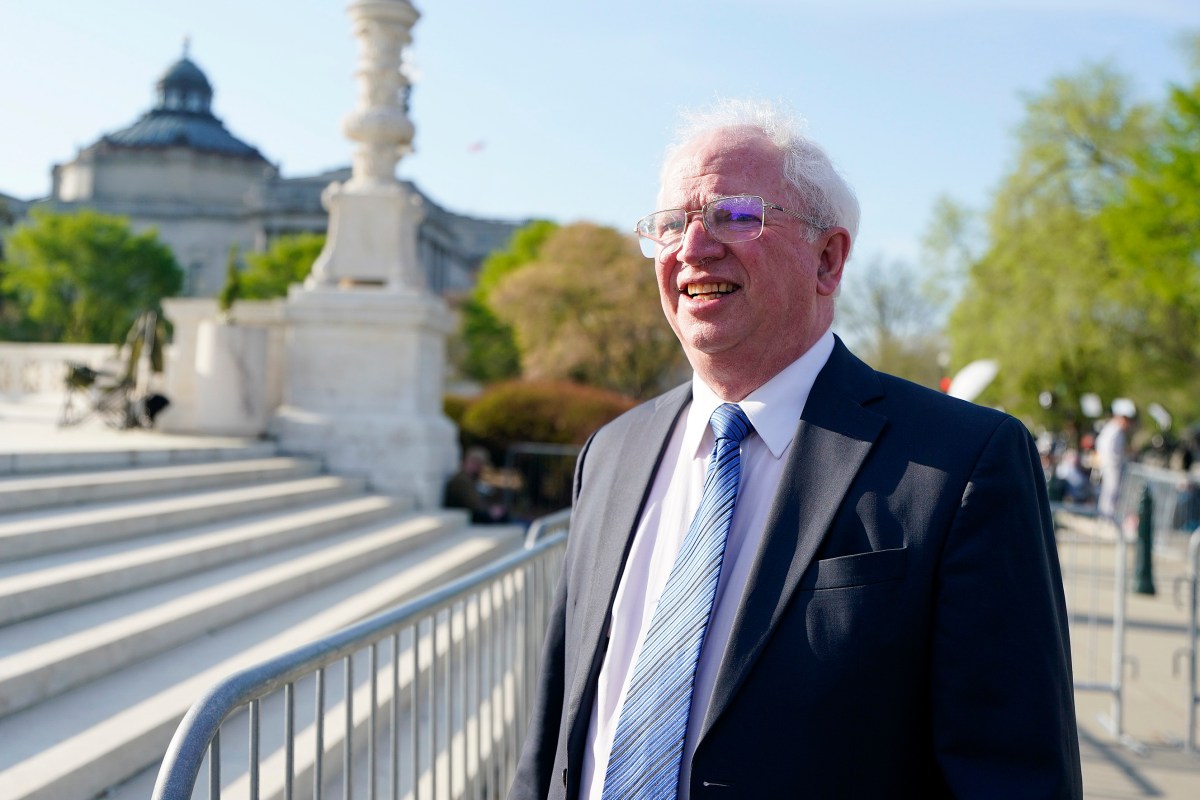
John Eastman, still trying to practice law after attempting to practice insurrection.
John Eastman, the guy who tried to lawyer his way into a coup and instead lawyered his way out of a law license, is begging the U.S. Supreme Court to let him back into the profession he helped light on fire. California’s bar court already spelled it out: his scheme to throw out millions of votes was knowingly unlawful and built on fantasy. That’s usually the part where a lawyer sits quietly and contemplates life choices. Eastman, naturally, went with “appeal to the people who just gutted half a century of precedent.”
Enter the reunion tour from the Jan. 6 legal Avengers of Failure: Cleta Mitchell, Sidney Powell, Jenna Ellis, Christina Bobb, and Ed Martin, all signing on to an America First Policy Institute brief whining about “barfare” — their term for “facing consequences for trying to overturn an election.” They solemnly insist lawyers must be free to make “novel” arguments about “election integrity,” which is a poetic way of saying they’d like a professional right to launder conspiracy theories into court filings without losing their bar cards.
Not to be outdone, Senators Ted Cruz and Mike Lee — who were supposed to be key congressional cogs in Eastman and Ken Chesebro’s alternate elector Rube Goldberg coup machine — chimed in with their own amicus brief. The same guys who work in the building that was literally under siege on Jan. 6 are now asking the Supreme Court to show mercy to one of the architects of the siege. If the justices take the case, we’ll get a front-row seat to how seriously they take the whole “direct assault on democracy” thing. If they don’t, Eastman stays disbarred and the coup caucus has to find a new martyr to staple to their fundraising emails.
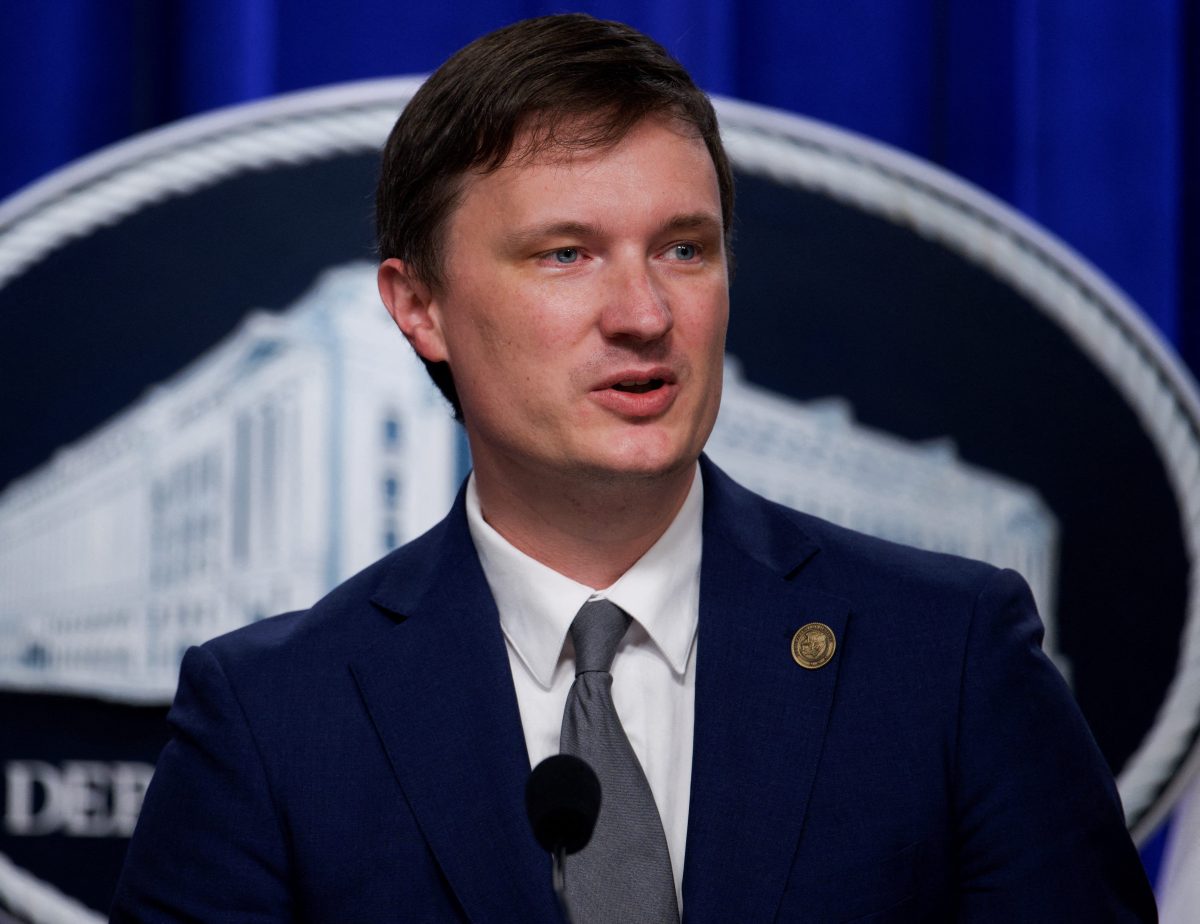
Acting Deputy AG Trent McCotter explains that democracy is safe and sound while demanding states quarantine ballots based on a USB stick and a sticky note like a phishing email in a suit.
The Trump DOJ has decided that merely purging voter rolls wasn’t spicy enough, so now they’re going after actual ballots in Los Angeles County. Acting Deputy Attorney General Trent McCotter — the No. 2 at DOJ, because of course he is — sent demand letters to California Secretary of State Shirley Weber and LA County election chief Dean Logan insisting they sequester and not count a batch of ballots until citizenship can be “confirmed.” Tiny problem: there’s no real legal authority for this, and adding an ad hoc, DOJ-invented step to ballot counting is a fast track to disenfranchising perfectly legal voters.
The feds helpfully distinguished this from a pre-election voter roll purge, telling NBC News they’re not changing lists, just targeting ballots themselves. That’s supposed to be a defense, but it’s actually a confession: the Trump DOJ’s election interference is no longer theoretical; it’s happening while the votes are being cast. Their “evidence” of “likely noncitizen voters” arrived on a password-protected thumb drive helpfully accompanied by a sticky note with the password written on it, because nothing says “election integrity” like casually trying to get a county to plug a mystery USB from Trump’s DOJ into their systems.
California officials, who have apparently heard of cybersecurity, declined to access the drive at all, noting it violates basic security protocols. Meanwhile, the UCLA Voting Rights Project and civil rights groups have rushed to court seeking a temporary restraining order to stop Attorney General Todd Blanche and DHS Secretary Markwayne Mullin from coercing states into this ballot hostage-taking scheme. So the Trump administration has finally figured out how to streamline election subversion: skip the messy pretexts about voter rolls and go straight to tampering with the pile of ballots itself. Efficient, in the same way arson is a time-saver over urban planning.
Wisconsin officials practicing the new 2026 drill: stop the fake elector, wrangle the federal agent, and somehow still run an election.
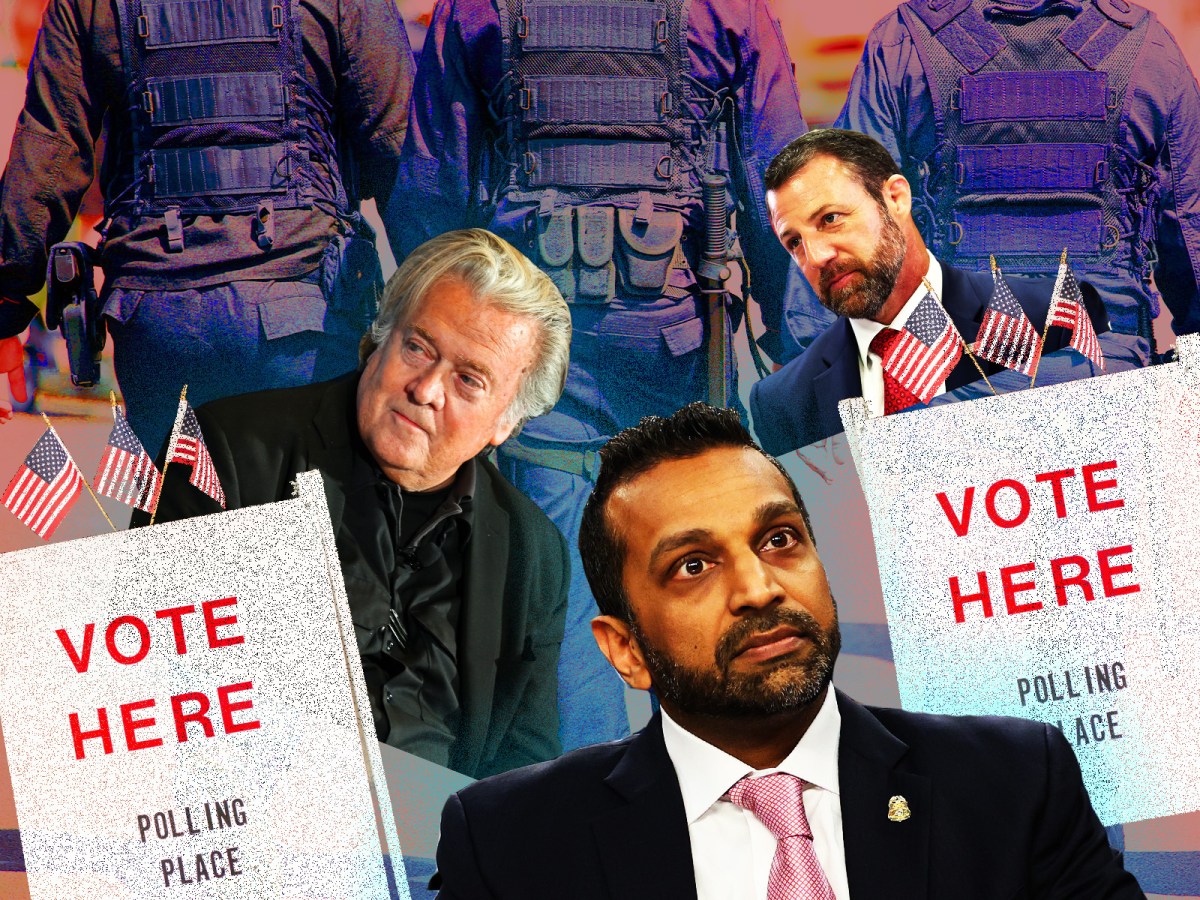
Wisconsin election officials are now doing the kind of disaster-prep you usually reserve for hurricanes and chemical spills: drafting formal guidance on what to do when Trump’s federal goon squad shows up at the polls. After months of mealy-mouthed non-answers from DHS Secretary Markwayne Mullin, FBI Director Kash Patel and Defense Secretary Pete Hegseth about whether they’ll send armed agents or even troops to voting sites — which is, minor detail, illegal under federal law — the state’s bipartisan elections commission had to write a memo explaining what to do if ICE, DHS, FBI or your friendly neighborhood sheriff decides democracy looks suspicious this year.
The guidance is basic "how to handle a federal intimidation cosplay" stuff: if officers arrive, the chief inspector calls the municipal clerk, who calls the county, who calls the state, and if the feds are "just observing" they have to check in and follow the same rules as every other bored partisan lurking by the ballot box. Only one commissioner voted against sending the memo: Republican Bob Spindell, who chirped that this was all unnecessary because we’ve never needed it in the past 201 years. Spindell, shockingly, turns out to have been one of Trump’s 2020 fake electors — a man who literally tried to help overturn Wisconsin’s vote now insisting there’s absolutely no need to worry about federal interference. Truly the perfect person to downplay the threat of armed agents at polling places.
Hovering over all this is Trump, who still publicly regrets not using the military to seize voting machines in 2020, while his outside hype man Steve Bannon eggs on fantasies of federal muscle at the polls. Federal law says armed officers can only be sent to repel "armed enemies of the United States"; the Trump crowd appears to have decided that category now includes anyone standing in line to vote without a red hat and a QAnon Facebook feed. So Wisconsin clerks are stuck preparing for the moment when federal law enforcement tries to "observe" elections the way a wolf "observes" a henhouse.
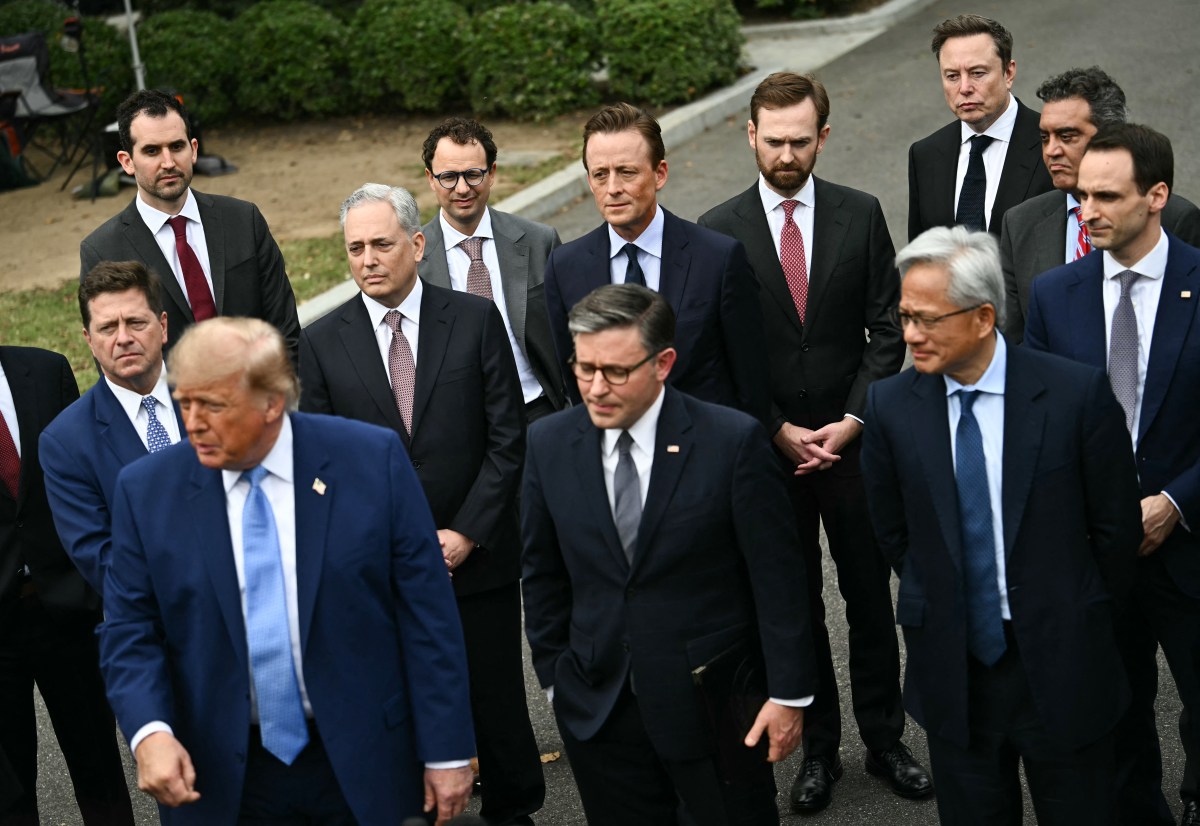
Trump and Musk unveil the 'Era of Super Intelligence,' confidently speed-running the tutorial level of the extinction game.
Trump has signed an executive order unilaterally rebranding Artificial Intelligence as "Super Intelligence" and announcing that anyone who doesn’t salute the new terminology is "THE ENEMY!" Because when you’re playing with a potentially civilization-ending technology, what you really want is a branding war and a loyalty test. The White House, federal agencies, and the tech oligarchs are now instructed to speak of superintelligence as America’s next big national project, like the moon landing but with a non-zero chance of turning the planet into a paperclip.
Rather than treat AI as a global risk that might warrant, say, coordination or regulation, Trump went to the UN and loudly rejected international standards, planting himself firmly in the "techno-utopian" camp that thinks the only real danger is not flooring the accelerator. The result: the U.S. and China are being nudged into a full-blown "superintelligence" arms race, where both sides are convinced that slowing down could be fatal to their geopolitical ego. AI safety people spent years using "superintelligence" as a word for "this might literally wipe us out"; Trump has now repurposed it into a campaign slogan about how America is already winning the future.
And then there’s Elon Musk, the guy who has spent years warning that advanced AI might exterminate humanity, now beaming beside Trump at the launch of the "Era of Super Intelligence" and promising to rename SpaceXAI to SpaceXSI. It’s less "we must control this dangerous technology" and more "we must control the merch." By redefining today’s AI as "Super Intelligence" and wrapping it in nationalist swagger, the administration has turned an existential-risk debate into a branding exercise and a race narrative, blunting the alarms and turning the question from "should we build this?" into "how fast can we build this before the other guys do?" What could possibly go wrong, aside from everything.