The Supreme Court building, where hard questions about torture and fake courts are swiftly resolved by pretending they don’t exist.
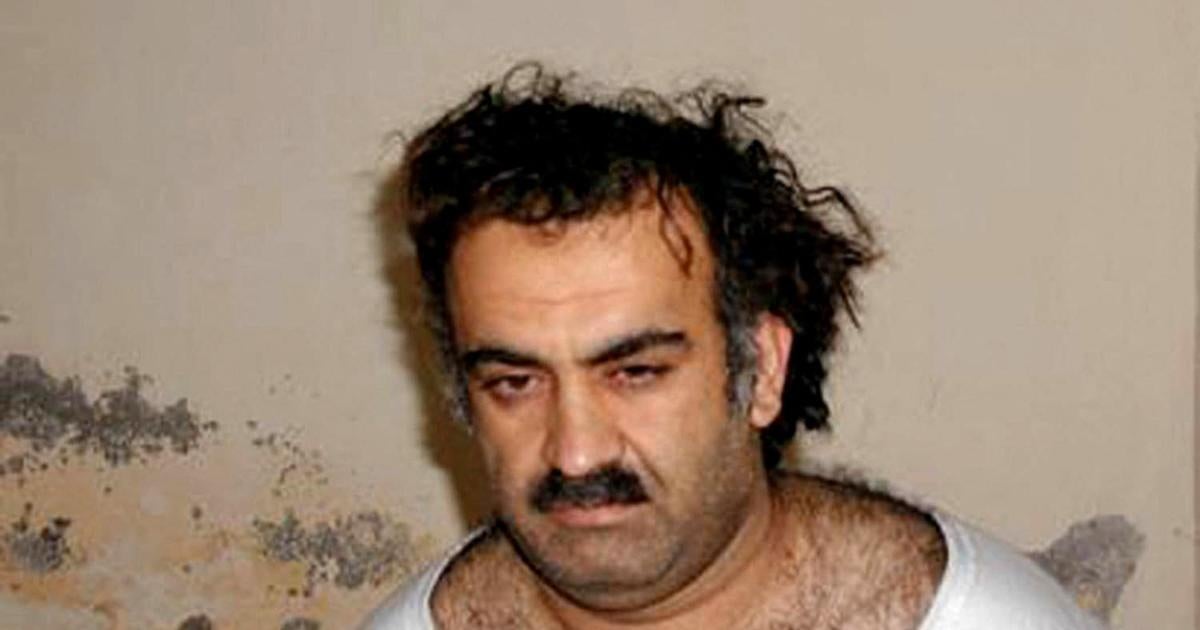
The Supreme Court took one look at the 23-year-long legal tire fire that is Guantanamo and decided, firmly and bravely, to do absolutely nothing. In an unsigned order — the judicial equivalent of ghosting — the justices refused to hear appeals from alleged 9/11 mastermind Khalid Sheikh Mohammed and two co-defendants, leaving in place the government’s decision to yank their plea deals. Justice Brett Kavanaugh sat this one out, presumably to avoid the awkwardness of mixing CIA black sites with his "tough on terror" cosplay.
The three men were captured in 2003, tortured in secret CIA prisons with "enhanced interrogation techniques" (also known as crimes in countries that can still look in a mirror), shipped to Guantanamo in 2006, and formally charged in 2008. Since then, the U.S. has spent nearly two decades trying to figure out how to hold a trial without admitting that the evidence is soaked in waterboarding. A 2024 plea deal would have given them life sentences and spared the death penalty, but Defense Secretary Lloyd Austin tore it up to keep the performative "tough" option on the table. Lower military courts said he couldn’t do that; the D.C. Circuit said actually, he absolutely could; and the Supreme Court has now shrugged and walked away.
So the status quo continues: a special offshore justice system designed to be outside normal constitutional rules, forever haunted by CIA torture, unable to deliver verdicts in the most consequential terrorism case in modern U.S. history. The world’s most powerful country can drone strike anyone on Earth in seconds, but 23 years later it still can’t hold a clean trial for the 9/11 defendants. Rule of law, but make it optional.
Trump has discovered a bold new strategy to end Russia's war on Ukraine: give the Kremlin more money and hope they get bored of invading people. Late on a Friday night — the traditional time slot for things you’re totally proud of — he quietly waived new sanctions on Russian energy and scrapped tariffs on top buyers that were supposed to kick in under the bipartisan Graham Act he literally just signed. At the same time, his administration greenlit a "diesel deal" to help Russia export more fuel, because nothing says "we're tough on Putin" like handing him an economic lifeline wrapped in a MAGA bow.
Energy Secretary Chris Wright then hit the Sunday shows to explain that this is actually a clever "carrot" to get Russia to ease its assault on Ukraine, as if Vladimir Putin is a fussy toddler who just needs more refined petroleum products to behave. Trump chimed in on Truth Social, scolding Volodymyr Zelensky for Ukrainian drone strikes on Russian refineries — you know, the ones helping fund the invasion — because those pesky Ukrainians are "hurting world diesel markets," which, tragically, includes the sacred suburban pump in Michigan. Apparently the real victim of Russia’s war is the GOP’s midterm polling.
Marco Rubio, now moonlighting as Secretary of State, says Trump just needs 60 days to "review" implementing the law, which is Washington-speak for "we’re going to stall this until after the election and pray voters like cheap gas more than they hate war crimes." Zelensky, shockingly ungrateful for this masterclass in appeasement, has been openly slamming both the diesel deal and the sanctions waiver. Meanwhile, Republicans are splitting into three camps: those who criticize Trump directly, those who criticize the policy but not Dear Leader’s name, and those who will apparently only find a spine once they’ve announced their retirement, like Thom Tillis calling the move "beyond irresponsible" as he heads for the exit.
Now House Republicans are floating threats to block Pentagon funding unless Trump pretends to get tougher on Russia, because nothing stabilizes global security like a hostage situation over the defense budget. With midterms weeks away, pieces of the GOP are finally saying the quiet part out loud: Trump is trading Ukraine’s survival and U.S. credibility for a short-term dip in diesel prices — a kind of cut-rate, pump-side foreign policy where the Commander-in-Chief’s grand strategy boils down to "let Putin sell more oil and maybe he’ll chill." What could possibly go wrong?
Trump’s idea of outbreak control: close the clinics, defund the watchdogs, then build a mystery quarantine camp in someone else’s country and call it leadership.
The US just hit a new level of pandemic genius: instead of using the "world-class" Ebola treatment units that American taxpayers already built at home, the Trump administration slapped together a controversial quarantine camp on a Kenyan air base and tried to park potentially infected Americans there like delayed luggage. Kenyans, who were not excited to become an involuntary annex of the CDC, sued, protested, and got a court to slam the brakes on the project while the country's first-ever Ebola cluster unfolds.
This diplomatic masterstroke comes after Trump & Friends demolished USAID, hacked away at CDC global health programs, and stormed out of the World Health Organization like a teenager quitting group chat. HIV prevention offices in Angola, South Sudan, and soon Zimbabwe? Closed. Longstanding disease monitoring in DRC and Kenya? Slashed. WHO funding? Yanked. The result: fewer eyes on emerging outbreaks, more confusion, and a whole lot of "we have no idea what's going on" at the exact moment you’d really want to have some idea what’s going on.
Public health experts like Jennifer Nuzzo are politely screaming into the void that the US already has the facilities and protocols to safely evacuate and treat patients, while bipartisan senators like Raphael Warnock and Bill Cassidy warn that shredding global health infrastructure is literally how you make sure Ebola and friends show up at US airports. Instead, the administration is busy negotiating secretive one-off deals with countries it just defunded, slapping on travel bans, and pretending that if you wall off enough borders, viruses will start respecting immigration policy.
Kenya, for its part, is doing the actual work: contact tracing, quarantine of over 100 people, and trying to maintain public trust while the US turns global health into a mix of austerity cosplay and biosecurity theater. Trump gets to brag about being "tough" on outbreaks, the WHO gets defunded, African clinics get shuttered, and everyone else gets to hope that the administration’s latest episode of Outbreak Response, But Make It Stupid doesn’t end with another disease on a transatlantic flight.
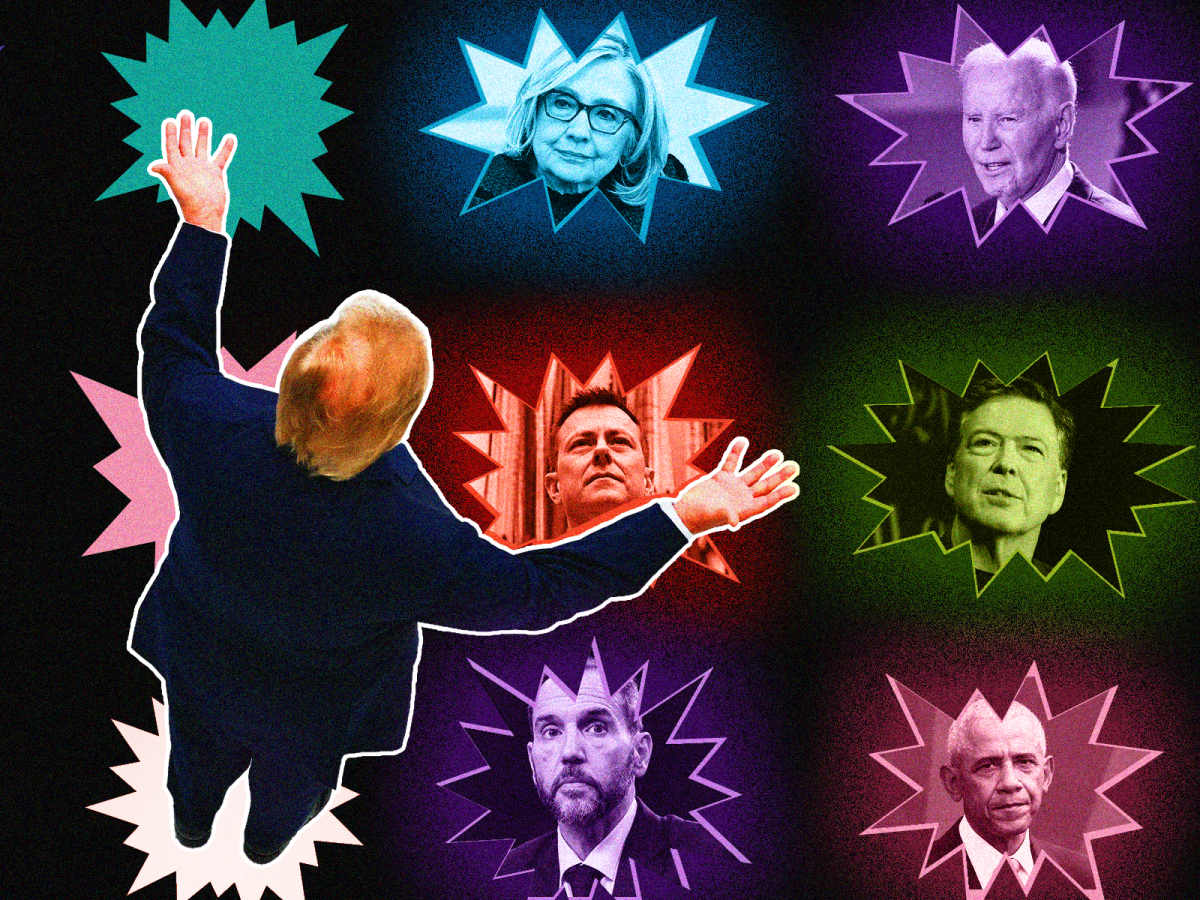
Artist’s rendering of the Grand Conspiracy task force: twelve empty chairs, one red hat, and a burning pile of taxpayer dollars.
The Trump administration has apparently decided that if you can’t beat QAnon, you can at least plagiarize its homework and turn it into official policy. Enter the so-called “Grand Conspiracy” investigation: a baroque fever dream in which Barack Obama, Joe Biden, Hillary Clinton, James Comey, Jack Smith, John Brennan, Peter Strzok, and half of Trump’s Twitter block list are all part of one giant Deep State Voltron dedicated to the grave crime of…checking whether Trump ever broke the law.
Despite lacking basic elements like evidence, a coherent theory of a crime, or any idea who’s supposedly doing what, this thing has already burned through “dozens” of DOJ officials and untold millions of dollars. Prosecutors have reportedly complained they can’t even get clear guidance from the local U.S. attorney, so the case has been dragged to D.C., where it continues to bewilder everyone forced to pretend this isn’t just Trump’s Reddit grievances laundered into federal investigations. The mission: indict Trump’s enemies for the sin of having ever investigated Trump.
Meanwhile, Trump’s media hype squad — Sean Hannity, Dan Bongino, Benny Johnson, Julie Kelly, Mark Levin, and assorted MyPillow candidates cosplaying as statesmen — keeps promising that any day now the Grand Conspiracy probe will blow the Deep State wide open and deliver Trump’s long-delayed martyrdom-to-victory arc. Out in the real world, Republican voters are busy noticing that inflation still exists, Trump dragged the country into a war with Iran after promising no new wars, and the Epstein questions remain very much un-answered, but sure, let’s keep hunting for the secret anti-Trump cabal hiding inside every indictment, impeachment, and FBI memo.
The result is a perfect Trump-era ouroboros: an administration using the Justice Department to investigate the investigators for investigating the crimes that Trump insists are proof of a conspiracy to investigate him. It was supposed to be the next QAnon; instead it’s just QAnon with subpoenas and a GSA travel budget — another flailing attempt to turn personal vendettas into state policy, and another guaranteed disappointment for a base told, once again, that salvation is just one more imaginary indictment away.
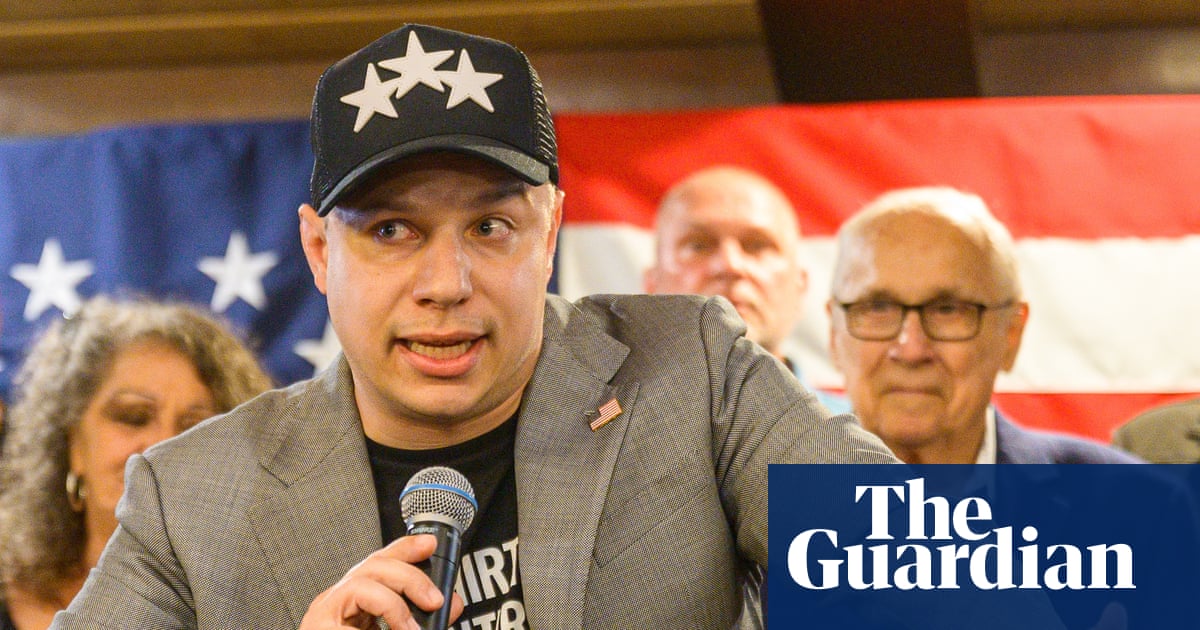
Anthony Constantino stands beside Donald Trump, presumably waiting for someone to carve both of their faces into the nearest federal monument while a normal congressional candidate tries to talk about actual policy in the background.
The Republican party’s ongoing experiment in replacing legislators with online personalities has reached its natural endpoint: a Trump-rap enthusiast sticker tycoon with a late midlife boxing career is now the GOP nominee for Elise Stefanik’s old New York seat. Anthony Constantino, CEO of Sticker Mule and self-described man of many difficult things, is running for Congress on a platform of: Trump is perfect, Trump’s golf game is supernatural, and also please extend Mount Rushmore so we can chisel the dear leader’s face into federal rock. Policy white paper? No. Twenty-track Trump worship album titled Thank You President Trump? Absolutely.
Constantino’s musical oeuvre includes tracks praising Trump’s "great family" and his "standing up after he got shot", plus a peace anthem recorded while Trump is literally stuck in an unpopular war with Iran. He also informs voters that multiple holes-in-one prove Trump can do any "difficult thing", a bold argument for handing someone nuclear codes. When he’s not cutting campaign mixtapes, Constantino is busy going full xenophobic attack dog on New York City mayor Zohran Mamdani—calling him a "wannabe terrorist", dropping a WorldStarHipHop video that leans on Uganda and homophobic tropes, and offering $500 bounties to people willing to personally deliver his "terrorist-loving Daddy" taunts to the mayor. Retail politics, but make it harassment incentives.
Even fellow Republicans are apparently tired enough of this circus to lawyer up, with his "brash rhetoric" spawning intra-party legal fights. Meanwhile, the Democrat in the race, dairy farmer Blake Gendebien, is running on boring stuff like inflation, diesel prices, and what it’s like to actually live in rural New York rather than on a soundstage. Polls in a district Trump won by 21 points have tightened to single digits and even show Constantino trailing in one survey—suggesting that while MAGA celebrity cosplay plays well on right-wing media, voters dealing with real costs might not be sold on sending a Trump hype man with a diss-track habit to Washington.
Outside good‑government groups are now treating U.S. elections the way you treat a porch in a high-crime neighborhood: cameras on every corner, motion sensors on the mailbox, and a bat by the door labeled "In Case Trump Tries Something." A coalition of pro-democracy organizations is racing to build legal war rooms, rapid-response teams, and voter hotlines because the sitting president and his Cabinet have been openly musing about how fun it would be to lean on the machinery of government to help Republicans keep their seats.
This isn’t a normal get-out-the-vote push; it’s a "please don’t let the executive branch tamper with the ballot box" fire drill. These groups are planning for interference before votes are cast, during Election Day, and after the results, because Trump-world has basically announced that any election they don’t win is automatically suspicious and ripe for "review." So while the White House toys with authoritarian cosplay, actual adults are busy trying to make sure the midterms don’t turn into a live-action stress test of whether American democracy can survive one more round of Trump’s feelings.
The administration’s contribution to election integrity so far has been to loudly question it, threaten vague federal "oversight" of local processes, and float the idea that security means giving the executive branch more ways to meddle. In response, watchdogs are stockpiling lawyers like it’s a hurricane supply run and building public-education campaigns to document and challenge any federal strong-arming. The Trump team keeps promising a law-and-order republic; the rest of the country is quietly preparing for the part where the "law" is whatever helps them stay in power.
Silicon Valley has decided that if they’re going to destabilize labor markets and rewrite reality with AI, they might as well set up the largest private pseudo-governments on earth and call them "philanthropy." Anthropic is tossing 5% of its shares into a "public benefit fund" that could hit $100 billion if the company reaches a $2 trillion valuation, while OpenAI’s nonprofit overlord already sits on a stake worth about $130 billion and controls the board. Don’t worry, though: it’s all in an LLC, so they’ll have the flexibility to fix the world like a startup fixes an app — ship chaos first, patch later.
Anthropic swears this mountain of equity won’t be used for lobbying or political giving, which is adorable, because when you can move $100 billion around the globe at will, you don’t need to call it lobbying; you can just directly fund the reality you prefer. They’re talking about AI safety, biomedical research, and maybe doing something about the jobs their products are poised to vaporize — details TBD. Meanwhile, the Trump White House has discovered that some of these folks are Effective Altruists who say weird, abstract things about the relative value of infant vs. adult lives, so instead of focusing on the massive unaccountable private power being assembled, Taylor Budowich is rage-posting old blog quotes on X.
So we get a world where trillion-dollar AI firms build private mega-funds that can outspend entire governments, while Trump’s people attack them not for constructing a parallel, billionaire-run shadow state, but for caring too much about chickens and future people. The billionaires get to launder influence as "impact"; the MAGA crowd gets a fresh culture-war chew toy. Actual democratic control over how these sums shape labor markets, science, and global policy? That’s the one thing nobody’s funding.
Campaigns have finally achieved their lifelong dream: lying without even having to hire bad actors. Axios walks through how Republicans and their super PACs are mainlining generative AI into midterm attack ads, churning out deepfakes of Democrats defacing Bibles, toasting at fancy dinners, and playing a board game that includes a "Death to America" card like it's GOP Cards Against Humanity. The Wesleyan Media Project clocks $137 million spent on 220 AI-generated ads, and the law's response so far is basically "please clap" — four states with partial bans, some disclosure rules, and zero meaningful federal regulation.
Georgia’s Senate Leadership Fund is busy airbrushing Jon Ossoff into a beauty-treatment montage, Michigan’s Front Line Action is pasting Abdul El-Sayed into AI fantasy jihad family photos, and New York’s Bruce Blakeman is asking AI to imagine "a truthful Kathy Hochul ad" — which somehow involves the Tooth Fairy going broke and Hochul being offered crack outside a precinct. Pennsylvania Republicans just skip to putting fake quotes directly in Josh Shapiro’s mouth, while Ken Paxton’s crew in Texas has AI-Jesus declaring six genders and a non-binary Genesis to smear James Talarico. And in Kentucky, a MAGA Inc.–backed PAC is literally rewriting Democrat Zach Dembo’s face. Candidates are pointing out this is a straight shot at reality itself; Republicans are calling it "grounded in his own public statements" because why bother with evidence when you’ve got a GPU farm and no conscience?
The punchline is that most of this is either undisclosed or "disclosed" in fine print that flashes by like a pharma side-effect warning. No federal law specifically touches AI political ads, which is extremely convenient for an authoritarian movement that’s been trying to divorce politics from facts for years. Why suppress votes with clumsy voter ID laws when you can just scramble reality until no one believes anything? The Trump-era project of breaking truth as a public standard has officially gone high-tech — now the lies scale automatically, and the only limit is how many server racks you can wedge between the Super PAC and the FEC.
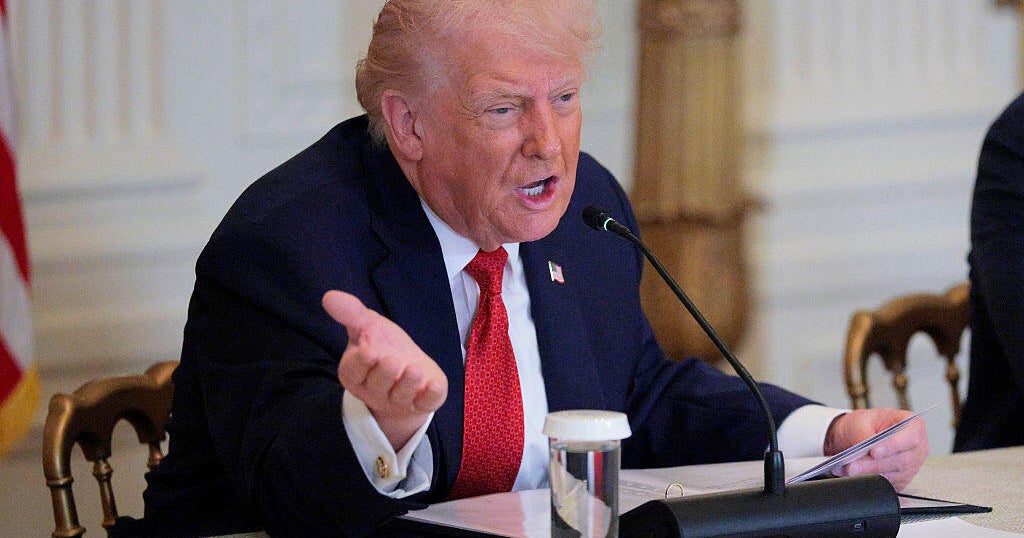
Trump hosts a 'Great, Historic Investment in Rural Health' roundtable, thoughtfully explaining that rural hospitals will get funded just as soon as their state governments say the magic policy words.
The Trump administration has discovered a bold new vision for rural healthcare: treat it like a reality show prize. States can compete for their share of a $50 billion "Rural Health Transformation" pot, but only if they agree to weaken or ditch their certificate of need (CON) laws — the rules that decide where and when new hospitals and services can be built. Call it Deal or No Deal, except the briefcases hold dialysis clinics and trauma centers.
CON laws are a mess and have bipartisan critics, but rather than, say, pass legislation or encourage thoughtful reform, the White House chose the more efficient route of dangling federal cash over collapsing rural hospitals and telling states: change your laws or watch your communities rot a little faster. Six states have already signaled they're ready to play ball, because when your budget is cratering and your hospitals are closing, "voluntary" federal policy starts to look a lot like a hostage note written on CMS letterhead.
The best part? This is being sold as a "Great, Historic Investment in Rural Health" while the fine print says states that keep stronger oversight of hospital expansion get worse scores and less money. So rural voters who were promised world-class care are now stuck in a grand experiment where Trump, citing the rare cosmic alignment between himself and Barack Obama, uses their access to emergency rooms as a bargaining chip in a long-running ideological fight. Modernization, apparently, means the federal government playing SimCity with actual human hospitals and telling states: obey, and maybe we’ll let your people live.
CISA, formerly the nation’s cyber shield, now repurposed as the White House’s "find me a glitch or I’ll scream fraud" department.
The Trump administration looked at the Cybersecurity and Infrastructure Security Agency — the outfit created to protect elections — and apparently decided it would be much more useful as an opposition-research lab for sabotaging democracy. Political appointees at DHS quietly asked CISA to secretly buy a voting machine, hack it, and keep any flaws from the manufacturer, so the White House could stash the findings like a constitutional doomsday weapon to pull out whenever an election result hurt Trump's feelings. Career staff, whose job is literally to stop hacking, recognized this as wildly improper. Also, the only people capable of doing the op had just been laid off by Elon Musk's Department of Government Efficiency, because of course they had.
That little scheme fizzled, but the broader project is going great: Trump has gutted CISA by over 1,000 employees, plans another $700 million in cuts, and basically ghosted state election officials during the most critical midterm prep window. The agency that once coordinated defenses against foreign hackers is now so hollowed out and politicized that states are buying their own sensors and whispering with voting machine vendors about what to do if the feds try to seize or invalidate their machines. Meanwhile, the administration is declassifying sensitive election security records to fuel conspiracy theories, torching trust so badly that a former top cyber official says states are "never" giving CISA intel again. And through it all, the White House insists Trump has done more than any president for "free and fair elections" — if you define that as making sure no election is considered legitimate unless he wins.
Elon Musk rolled out of bed at 4 a.m., logged onto his personal disinformation machine, and casually announced he will give one SpaceX share to every "kid" in America next year, which Axios helpfully notes is about an $11 billion giveaway. America, a serious country, is now apparently running child welfare policy via billionaire mood swings and late-night posting. Somewhere, actual social programs stare at this and weep into their unfunded mandates.
Musk didn't say what "kid" means, how any of this would work legally, or what "first of many" implies, but details are for poor people and regulators, not visionary space barons. At roughly 72 million minors and a current share price around $146, this is a rounding error in Musk's holdings and a massive PR nuke for everyone else. Instead of a functioning tax system and public investment, we now get speculative equity crumbs from a private company controlled by a guy who thinks securities law is optional if your vibes are strong enough.
The Trump-era lesson lives on: why build durable public policy when you can let one oligarch personally decide how America's kids get their slice of techno-feudalism? Forget child tax credits; the new safety net is hoping Elon doesn't delete his post.
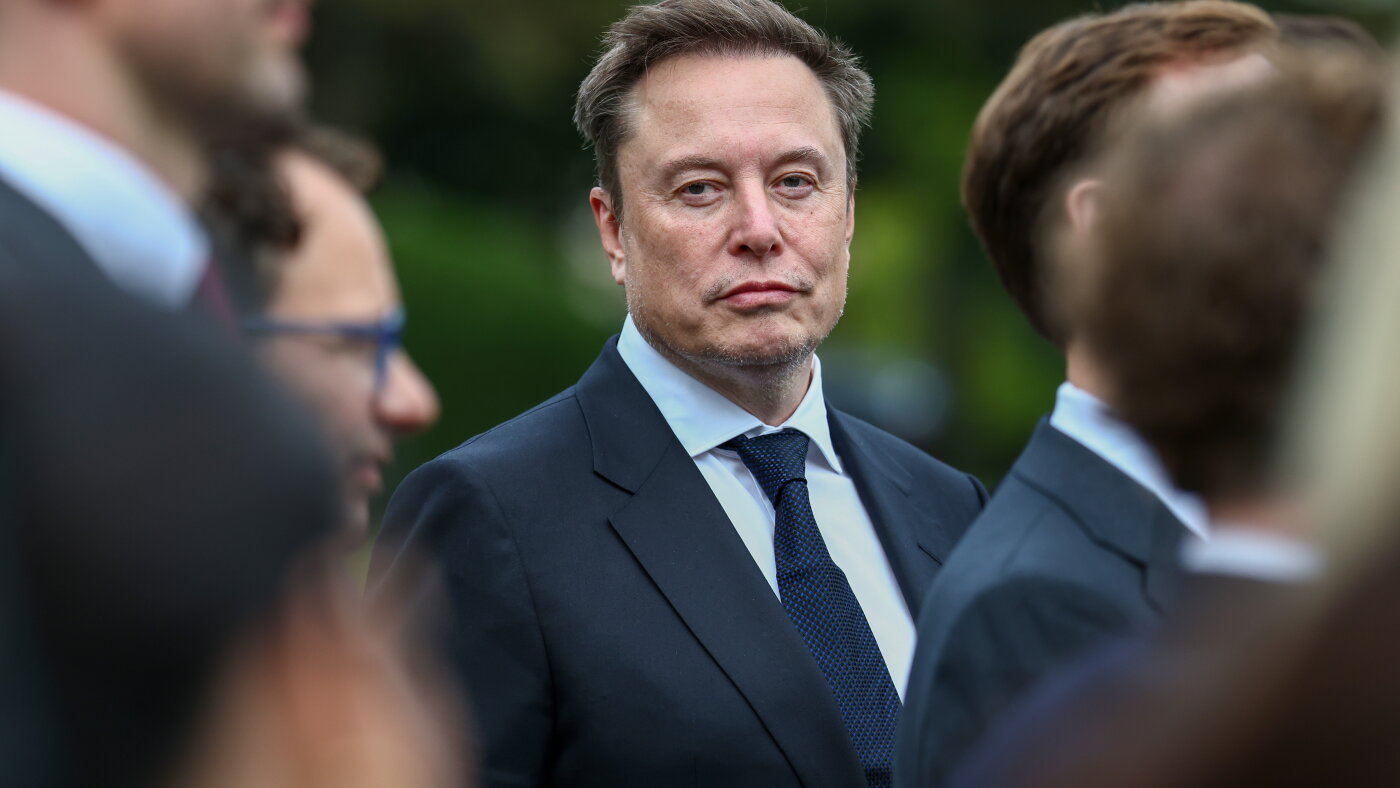
Elon Musk, fresh from advising Trump on AI and free speech, pauses outside the West Wing to consider which Senate race he'll accidentally set on fire with his next nine-figure super PAC dump.
The 2026 midterms are shaping up less like an election and more like a hostile takeover, with Democrats drowning in small-dollar cash while Republican megadonors — led by presidential prop Elon Musk — try to Venmo the country back into loving Trump. More than $15 billion has already been raised, half of it spent, because nothing says "functioning democracy" like torching a nation's GDP on attack ads about who loves the troops more.
Republicans somehow managed to win the White House and Congress in 2024, then immediately face-planted into an unpopular war in Iran, high fuel costs, and rising prices. Voters hate Trump's agenda, they also hate the Democratic brand, and yet Democratic Senate candidates in places like Texas, Kansas, and Ohio are vacuuming up cash and polling leads like people who've noticed that endless war and $7 gas are bad.
Democrats are outraising Republicans in 27 of 35 Senate races, posting a nearly 5-to-1 edge in the most competitive contests. Texas Democrat James Talarico just hauled in about $60 million in one quarter, while GOP incumbents like Kansas Sen. Roger Marshall and Mississippi's Cindy Hyde-Smith are scraping together couch-cushion money by comparison. Still, Republican outside groups — including a trio of MAGA, Inc. super PACs — are flooding the airwaves to scream that Democrats are "too extreme" to govern, which is a bold charge from the party currently led by a guy under multiple indictments and an oligarch who thinks content moderation is censorship.
So the scoreboard: Democrats dominate candidate fundraising, Musk & friends dominate super PAC spending, and America gets the bill either way. Call it the new bipartisan consensus — government of the donors, by the super PACs, for whoever can still afford groceries after the Iran war surge pricing.
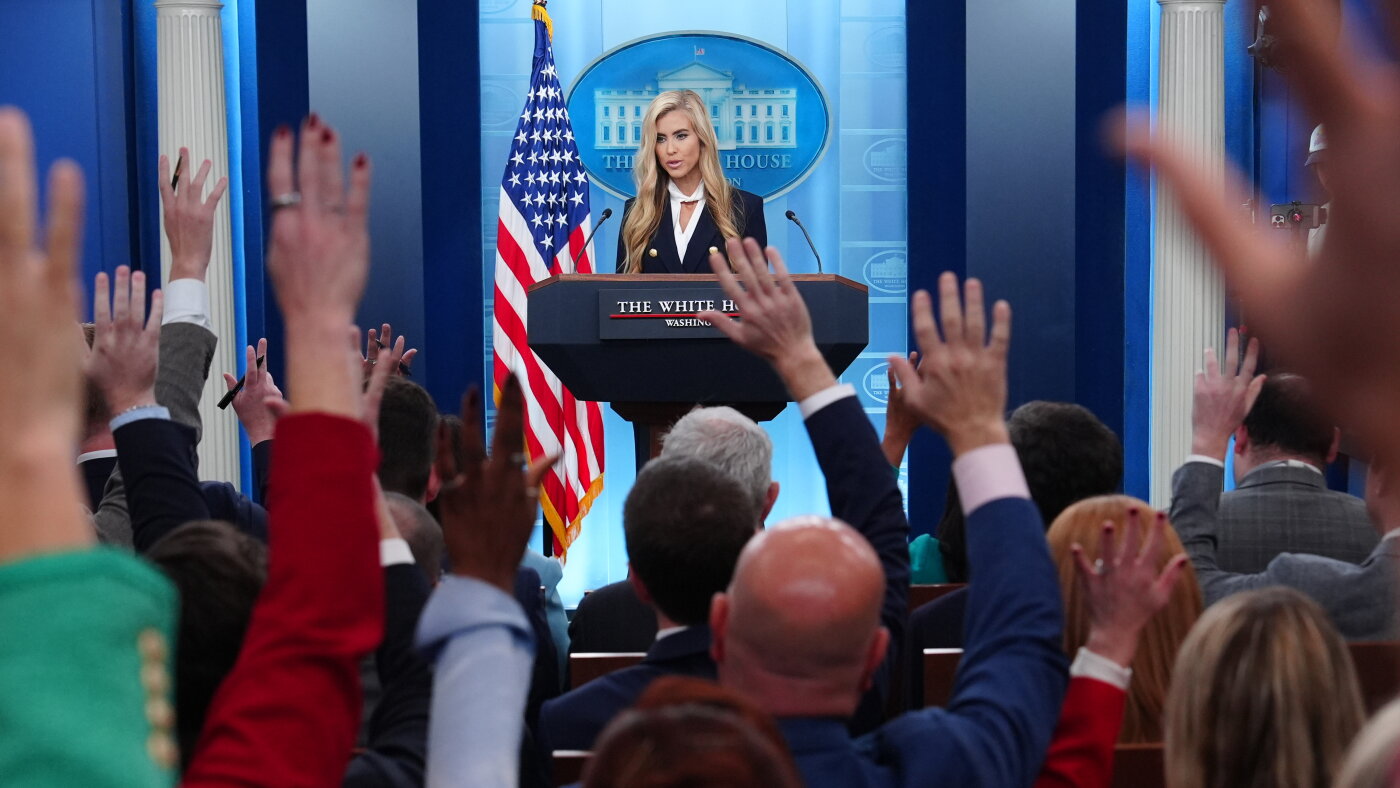
Katie Zacharia bravely attempts to cosplay as both a lawyer and a functioning press secretary while the Trump White House speed-runs the collapse of basic vetting.
The White House press secretary is, theoretically, the president’s voice to the American people. In the Trump era, it’s more like the president’s human spam filter: no job description, no required qualifications, no Senate vetting, and apparently not even a background check robust enough to catch “not actually a lawyer” before handing you the mic.
Katie Zacharia found this out the hard way. Two days into the job she was visibly rattled, clung to talking points like a life raft, took almost no questions, and then helpfully described herself as a lawyer — a bold choice for someone who failed the California bar and is therefore, minor detail, not an attorney. Five days after being hired, she was escorted off the carousel. The Trump White House continues its long tradition of treating one of the most important public-facing jobs in government like a speed-dating round for aspiring crisis actors.
Former Obama/Biden spokesman John Kirby politely remembers when the job involved being honest, answering tough questions, and actually being accountable to the public. The article then helpfully reminds us of Sean Spicer, who turned the briefing room into a performance-art piece about alternative facts and crowd-size fan fiction, insisting “sometimes we can disagree with the facts.” That ethos has now fully metastasized: the role that evolved over a century of democratic norms has been reduced to a gig where you can lie about your résumé on day one and be gone by day five, but the administration’s war on reality marches on.
Mick Mulvaney, veteran of the Trump White House meat grinder, has graciously popped up to predict that current chief of staff Susie Wiles is sitting in a "powerful place" in the West Wing — which is apparently DC-speak for "enjoy it before the inevitable purge." Mulvaney says he expects Wiles to leave after the midterms, but insists it’ll be "on her own terms," because nothing screams independence like timing your career around the mood swings of a 24/7 grievance machine.
The backdrop here is reporting that Trump may have lost confidence in Wiles, which in Trumpworld usually means she either (a) told him a true thing, (b) failed to prevent him from posting something deranged, or (c) didn’t clap hard enough during his latest monologue about crowd sizes. Being chief of staff in this administration is less a job and more a short-term hostage situation with better parking. But sure, we’ll all pretend the next person to take the gig won’t get tossed under the gold-plated bus the moment the polls wobble.
Mulvaney, who once held the same post before being launched into the diplomatic witness protection program, is now graciously narrating the cycle: Trump hires a loyalist, burns through them, then allies assure us the exit is totally normal and mutually respectful. The White House may not be functioning like a serious government, but as a never-ending HR disaster sitcom, it remains ruthlessly consistent.
Treasury Secretary Scott Bessent went on "Meet the Press" to calmly explain that whether Americans see relief at the pump before 2027 will "depend" on how the Iran war shakes out — because nothing screams responsible governance like treating a major Middle East conflict as your personal price-discovery mechanism. Kristen Welker asked if prices might drop by the start of 2027, noting Trump has already declared this mess "his" (of course he did), and Bessent basically replied: we’ll see what the war gods say.
So the administration’s energy policy is now: start or escalate a conflict, then hope the geopolitical roulette wheel lands on "cheaper oil" in time for the next election news cycle. Instead of investing in energy resilience or, wild thought, not turning half the region into a live-fire market experiment, Team Trump is openly selling the idea that your gas bill is just another front in the Iran war. Oil traders get a strategy, the war machine gets a mandate, and American citizens get to play "Will my commute depend on whether Tehran is on fire this quarter?"
The Trump White House has unveiled its bold, history‑making new strategy for peace in Europe: buy more Russian diesel and hope Vladimir Putin gets so busy counting money he forgets he's invading Ukraine. President Trump quietly waived new sanctions on Russia and tariffs on top buyers of Russian energy that were supposed to kick in under the bipartisan Lindsey Graham Act he signed last month, then had his team spend the weekend on TV trying to explain why helping finance Russia's war machine is actually a selfless quest for global harmony.
Energy Secretary Chris Wright went on CNN to insist this is all a giant peace carrot, solemnly explaining that Russia only really benefits if it scales back its war enough to export more fuel. Over at ABC, he doubled down on the "diesel for peace" theory like he was pitching a late‑night infomercial for war crimes offsets. Secretary of State Marco Rubio, meanwhile, wandered onto the tarmac at Joint Base Andrews and basically shrugged that Moscow would have sold the diesel anyway, so Trump's waiver is just… vibes? Somewhere between "this is leverage for peace" and "it changes nothing," the administration has invented quantum sanctions that are both crucial and meaningless at the same time.
The context they’re desperately tiptoeing around: Ukraine is hitting Russian refineries with drones because Russia keeps hammering Ukrainian energy infrastructure, "energy ceasefire" claims from Trump notwithstanding. At the same time, the Iran war is choking supply and wrecking refineries in the Middle East, which has made diesel prices a political nightmare for Republicans heading into the midterms. Faced with a choice between upholding a bipartisan law designed to squeeze Putin’s war chest or juicing the pump price a bit less before Election Day, Trump naturally chose to keep Russia’s export lifeline open and blame it on complicated global markets and "ongoing negotiations with China."
Treasury Secretary Scott Bessent popped up on "Meet the Press" to remind everyone they sanctioned Rosneft and Lukoil in 2025, so clearly no one has been tougher on Russia than the guy currently declining to use the new sanctions authority Congress just handed him. Meanwhile, Republican senators like Thom Tillis, John Cornyn, and Ted Cruz are suddenly clutching their Lindsey Graham Act pearls and demanding classified briefings, shocked—shocked!—to discover that the man they spent years empowering to ignore Congress is now ignoring Congress. As the midterms close in, the party that built the imperial presidency is frantically trying to distance itself from the emperor, who is busy selling "peace" at the diesel pump and calling it strategy.
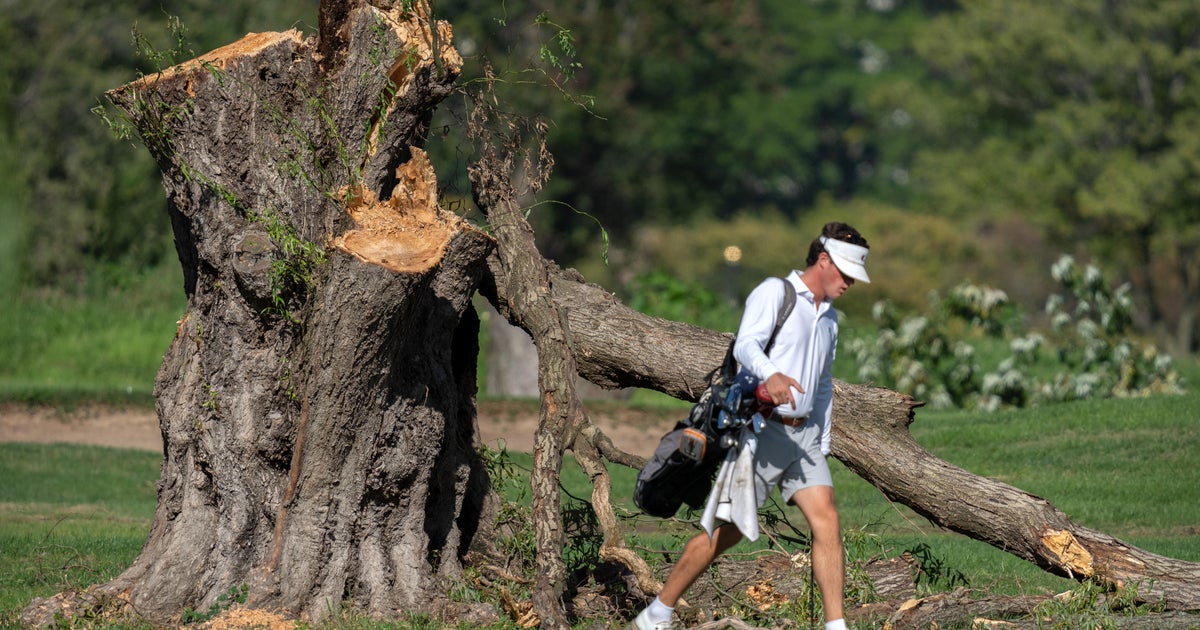
A lone golfer wanders past a fresh stump at East Potomac, wondering when his municipal course turned into a prequel to "Trump National D.C.: Public Land Edition."
The Trump administration’s infrastructure agenda remains laser-focused on the nation’s most vulnerable asset: Donald Trump’s access to a "World Class Championship Golf Course" in downtown D.C. On Truth Social, Trump proudly announced that the Department of the Interior, "under the auspices" of Secretary Doug Burgum (sure), is teaming up with luxury golf whisperer Tom Fazio to turn the historic East Potomac Golf Links — a public, affordable course — into a high-end tournament venue ready for the U.S. Open, PGA Championship, Ryder Cup, and presumably the First Annual Authoritarians Invitational.
There’s just one tiny hiccup: a federal judge already had to step in and bar the administration from cutting more trees after hundreds mysteriously vanished over a single weekend. U.S. District Judge Ana Reyes told Team Trump they can’t make any "irreparable modification" to the course without giving the court and plaintiffs three business days’ notice, which is Washington, D.C. legalese for "stop acting like you own this park." Local preservationists and golfers are suing to stop the conversion of a public recreation space into a high-end shrine to Trump’s favorite hobby, and the court agreed there’s enough sketchiness here to slam the brakes, at least temporarily.
Trump, naturally, didn’t mention any of that in his big announcement. Instead, he called the current course "old, broken, dilapidated" with "disease infested" trees and a "collapsing" seawall, as if he’d just discovered nature and decided it was an eyesore. He insists it’ll stay "open to the public" while being redesigned to host elite tournaments, which is a bit like promising your neighborhood diner will still be technically open after it’s converted into a private Michelin-starred supper club. The administration is selling this as a "tremendously positive" economic opportunity, which, given this crowd’s track record, usually means someone is getting rich, and it’s not the people currently using the cheap public course.
So to recap: a historic public space, federal land, a president with a lifelong obsession with golf branding, an Interior Department doing his bidding, trees quietly chainsawed until a judge intervenes, and a plan to replace a public amenity with a luxury playground. Government of the people, by the people, for the people has once again been thoughtfully reimagined as government of the president, by his appointees, for his hobbies.
Treasury Secretary Scott Bessent took a break from managing the economy to warn Ukrainian President Volodymyr Zelensky that he "should be careful" with his "reckless" comments about the U.S. slowing down Starlink. Because nothing says "healthy alliance" like the world’s most powerful government telling a wartime president to watch his mouth about whether his troops can actually communicate on the battlefield. Bessent helpfully cites the ironclad credibility of Donald Trump and Secretary of State Marco Rubio, who have both categorically denied any role, and as we all know, when this crew categorically denies something, that’s usually the part you should be most worried about.
The subtext isn’t exactly subtle: Zelensky is being told that questioning U.S. influence over a privately controlled, battlefield-essential communications system is out of bounds. Instead of asking why a single billionaire’s satellite network — deeply entangled with Trumpworld — can make or break Ukraine’s defenses, Bessent scolds the guy whose country is literally being invaded. It’s a neat little demonstration of modern American "diplomacy": we arm you, we wire your internet, we can flip the switch, and if you complain in public, the Treasury Secretary shows up on TV to call you reckless. Very normal alliance behavior for a government that keeps insisting it’s the guardian of freedom and sovereignty.
Barack Obama logged onto X (because 2026 is a prank we’re all trapped in) to point out that the Trump administration’s criminal investigation into Rep. Ilhan Omar looks less like law enforcement and more like a trial run for weaponized denaturalization. The feds are digging into old immigration paperwork while mysteriously ignoring the towering landfill of alleged crimes surrounding Trump and his allies. Balance!
Instead of just running against Omar on policy like a normal functioning democracy, the White House appears to be exploring whether it can yank her U.S. citizenship and boot a sitting member of Congress out of the country. You know, the kind of stunt we used to condemn when strongmen in other countries did it. Obama called it an attack that should "outrage all Americans," which is adorable given that MAGA media is already busy workshopping "Can we deport all our critics?" as a legitimate policy plank.
This isn’t immigration enforcement; it’s a loyalty test with a paperwork audit stapled to it. If they can frame a progressive Black Muslim congresswoman as an immigration criminal for political gain, the message to every naturalized critic is clear: your passport is conditional, your rights are revocable, and your status depends on how loudly you clap for the Dear Leader. Democracy, but make it probationary.
Nine days before Israelis head to the polls, Donald Trump hopped on Truth Social to remind everyone that he still thinks U.S. foreign policy is a reality show where he picks the cast. He issued a "Complete and Total Endorsement" of Benjamin Netanyahu, declaring that anyone other than Bibi would be "the wrong Leader" for Israel and implying that if Israelis vote incorrectly, the U.S. might have to deal with Iran alone — and he's "not inclined" to do that.
So the message is clear: vote for Netanyahu, or Trump will pout about Iran from Mar-a-Lago and maybe cheer on another regional crisis from the golf course. It's a neat little package of election interference, saber-rattling, and personalized foreign policy where the fate of an entire region is reduced to whether Trump likes the guy in the chair. Democracy, but make it fan club politics.