Sharyn Alfonsi, moments before discovering that in 2026 the real editorial policy at CBS is: "all the news that won’t upset the guy with his finger on the DOJ."
At CBS News, veteran 60 Minutes correspondent Sharyn Alfonsi just committed the modern newsroom’s gravest sin: insisting that a factually correct story about Venezuelan migrants being dumped into El Salvador’s notorious Cecot prison should air without being rewritten to flatter the Trump administration. CBS News editor Bari Weiss — because of course it’s Bari Weiss — allegedly "spiked" the piece until it included more White House spin, then finally aired a barely changed version a month later, minus an on-air Trump official. So the story was fine, but the timing needed to wait until corporate and political handlers finished hyperventilating.
Alfonsi used her Ridenhour prize speech to describe what’s really going on: "the spread of corporate meddling and editorial fear" where executives ask not "Is it true?" but "Is it good for business?" Translation: is it good for ad revenue, stock price, and keeping Trump from rage-posting their names in ALL CAPS. She refused to change the piece, worried that viewers would notice that the original version accidentally aired in Canada and realize CBS had caved. Because the audience is, tragically for management, literate.
Her reward for basic journalistic integrity? Her job is now in jeopardy, she wakes up to headlines speculating about her firing, her bosses are furious, and someone even swatted her house after the segment was delayed. But sure, the real threat to democracy is college kids with protest signs. Alfonsi and former 60 Minutes executive producer Bill Owens — who already quit over corporate interference — are getting courage awards while the network that built its reputation on grilling presidents is now terrified of losing "access" and catching a frivolous lawsuit. The line between newsroom and PR shop is getting so thin you need a microscope to see it.
So we’ve arrived at the logical endpoint of Trump-era media capture: a flagship investigative show demands more administration talking points before it will air a story about a hell-prison, while the reporter who insists on telling the truth gets treated like the problem. Free press, meet free market. One of you is not walking out of this alive.
FEMA HQ, where warning about another Katrina gets you benched and cutting tornado tracking is just another day at the office.
Fourteen FEMA employees just got released from Trump-world detention — also known as eight months of "administrative leave" — for the crime of signing a public letter warning that gutting disaster preparedness might, stay with me here, kill a lot of people. They dared to write the "Katrina declaration" on the 20th anniversary of Katrina, pointing out that hollowing out FEMA and shredding mitigation programs is a great way to relive 2005, but with more climate change and fewer staff. The administration's response? Yank them off the job in 24 hours and call it a day for whistleblower protection.
The new DHS secretary, Markwayne Mullin, apparently read the part of the law that says you can’t openly retaliate against whistleblowers and decided to at least pretend to care. He reinstated the workers, loosened Kristi Noem’s $100,000 micromanagement chokehold on FEMA spending, and started releasing over $1bn in backlogged grants that Noem had been sitting on like a vindictive dragon who hates floodplain maps. Meanwhile, hundreds of millions in preparedness funding have already been cut, a third of FEMA’s full-time staff is gone, and the agency is stumbling into hurricane, heat, and fire seasons like it pregamed with bleach injections and Facebook memes.
The body count is not theoretical. Aid to Hurricane Helene survivors was severely delayed, it took over 72 hours to authorize federal search-and-rescue after the Guadalupe River flood killed more than 135 people, and tornado-hit communities had to respond without key tracking tools because a $200,000 FEMA contract just… lapsed. But Trump is still sermonizing that states should do more disaster response on their own, while his budget slashes state and local preparedness grants by another $1.3bn. So yes, the whistleblowers are back at their desks, feeling "vindicated". Too bad the policy is still: if you warn that people will die, we ignore you until they do.
Pavel Talankin’s dangerous gold statuette, moments before TSA realized it posed a grave threat to overhead bins and authoritarian sensitivities alike.
At JFK, the Transportation Security Administration has heroically prevented an 8.5lb gold statue from brutally hijacking a Lufthansa flight. The Oscar belonging to Pavel Talankin, co-director of the documentary Mr Nobody Against Putin, was seized because agents decided the statuette was a weapon. Talankin, who has flown with the same Oscar multiple times without issue, was told he had to check it under the plane. No hard case? No problem, said the brain trust: Lufthansa handed him a cardboard box and some bubble wrap, and off the Oscar went to the cargo hold.
Naturally, the box then mysteriously vanished somewhere between New York and Frankfurt. Lufthansa can’t find it, despite a ticket number, and Talankin’s award for exposing Putin’s propaganda machine has been disappeared faster than an inconvenient critic in Moscow. Co-director David Borenstein publicly wondered whether a famous actor or fluent English speaker would’ve been treated the same way. Given that Russia has already banned the film for promoting "negative attitudes" about the government and the war in Ukraine, it’s nice to see US airport security stepping up to do its own small part for transnational authoritarian vibes.
The film itself is about how you lose a country through "countless, small, little acts of complicity." TSA appears to have taken that as a how-to manual. Instead of protecting a dissident’s symbol of free expression from a regime that bombs schools, US security officials decided the real threat was… a pointy golden man. Putin censors the movie; TSA loses the Oscar. Truly a global partnership for security.
Trump, on the phone with Baghdad, explaining that Iraq is fully sovereign and free to choose any prime minister he personally approves of.
Donald Trump got on the phone with Iraq’s new prime minister-designate Ali al-Zaidi to offer congratulations, an invitation to Washington, and the diplomatic equivalent of a Good Housekeeping Seal of Approval. He then rushed to Truth Social to proclaim the start of a “tremendous new chapter” of prosperity and stability, because nothing says respect for sovereignty like the U.S. president publicly blessing a foreign leader’s appointment like he’s handing out rose ceremonies on reality TV.
None of this is subtle. Iraq’s dominant Shiite bloc originally wanted Nouri al-Maliki, but Trump loudly threatened to cut off aid to Iraq if they picked the guy he didn’t like. After some posturing, they magically “compromised” on al-Zaidi, a businessman who conveniently chairs a bank that was previously barred from dollar transactions under U.S. pressure, but somehow never quite made it to the sanctions list. Now that he’s the chosen one, Trump is eager to reboot relations with a man whose business and investment ties might prove highly productive in all the ways that never quite make it into official readouts.
Iraq’s constitution says parliament gets to confirm the new prime minister, but Trump has already pre-graded the exam and posted the answer key online. While Iraq tries to navigate the fallout from the Iran war and an oil-choked economy, the U.S. is busy turning its aid spigot into a remote-control governance device. Call it “democracy assistance”: you get the democracy, Trump gets the assistance.
King Charles leaves Washington having discovered that US trade policy can be rewritten with a state visit, a speech about alliances, and the promise of better whisky photos at Mar-a-Lago.
Donald Trump has announced he’s lifting US tariffs on Scotch whisky, not because of a coherent trade strategy or economic analysis, but because the King and Queen of the United Kingdom were very nice to him at the White House. After slapping broad tariffs on British goods in 2025, Trump is now bragging on Truth Social that Charles and Camilla “got me to do something nobody else was able to do, without hardly even asking!”—which is less a flex and more a confession that US trade policy is just whatever flattery-based roulette wheel is spinning in his head that day.
Rather than admit his tariffs helped tank Scotch exports and cost the industry an estimated £4m a week, Trump framed this as a benevolent royal favor to "two very important Industries within Scotland and Kentucky" and their magical wooden barrels. The Scotch Whisky Association is understandably relieved to stop paying for Trump’s economic cosplay, but the bigger message is clear: if you want stable, rules-based trade with the United States, forget diplomats and trade reps—send a monarch, pour him a drink, compliment his crowd sizes, and watch a 10% tariff disappear like Trump’s attention span during a briefing.
So the United States now has a de facto trade doctrine: tariffs go on when Trump is mad, tariffs come off when someone important pats him on the head and calls him special. King Charles used his congressional speech to gently nudge Trump back toward “traditional alliances”; Trump responded by proving that the special relationship is alive and well—as long as it comes with a royal visit and a branded bottle.
Nothing weird here, just the transport minister smiling over a toy plane while everyone politely ignores the part where US helicopters were recently the main airline in this airspace.
US–Venezuela relations have entered what officials are calling “a new chapter,” which is a poetic way of saying: now that Trump’s special forces snatched Nicolás Maduro in a two-and-a-half-hour night raid, we can finally get back to selling plane tickets.
Nearly four months after US attack helicopters were carving up Caracas airspace to grab a sitting head of state for a narco-terrorism trial in New York, an American Airlines jet glided into Simón Bolívar airport so executives and diplomats could declare a “historic milestone” and hand each other tiny toy planes. The US chargé d’affaires credited the flight to Trump and Secretary of State Marco Rubio’s three-phase plan for post-Maduro Venezuela: stabilize, reboot the economy, and eventually maybe remember what the word “democracy” is supposed to mean. Totally normal foreign policy: regime change by commando raid, followed by a ribbon-cutting at the duty-free.
The same airport that once symbolized mass exodus, repression, and journalists getting interrogated is now the backdrop for American Airlines staff waving Venezuelan flags in front of a balloon arch, while a saxophonist plays “Hotel California” — because nothing says “you can check out any time you like, but you can never leave” like celebrating a US military snatch-op with soft jazz. Officials on both sides gushed about “reconnecting our peoples” and “economic opening,” carefully skipping the part where Washington just demonstrated it can abduct foreign leaders and then send in the travel agents. It’s not diplomacy, it’s imperialism with a frequent flyer program.
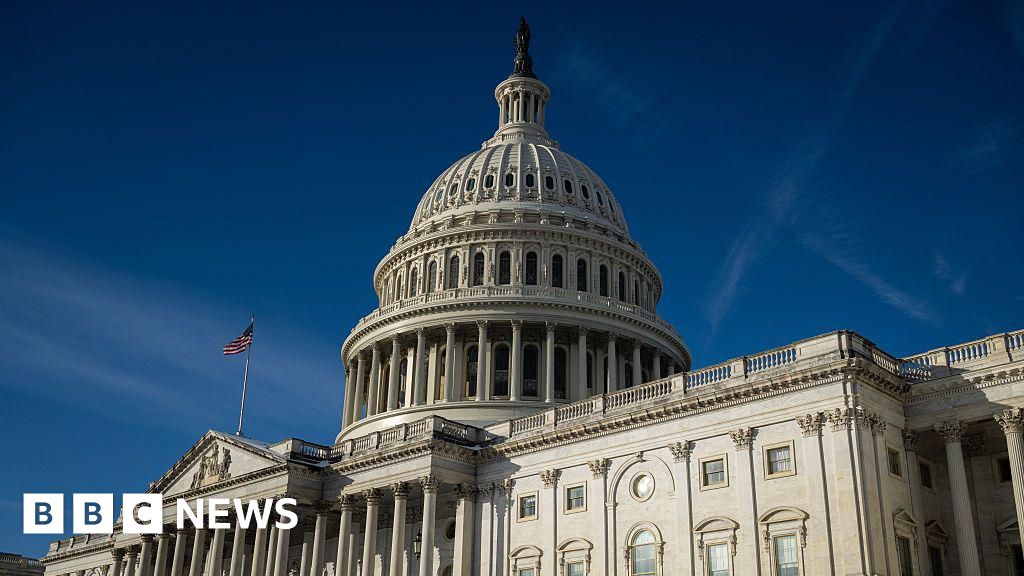
The Capitol, where funding the government is treated as an optional side quest to appeasing the deportation-industrial complex.
The House has finally ended a 76-day partial government shutdown of the Department of Homeland Security, because apparently even Republicans eventually notice when their little hostage-taking experiment starts breaking actual things instead of just people. They used a voice vote – the congressional equivalent of "everyone mumble yes so there’s no video for attack ads" – to pass the Senate’s bill.
The bill, blessed by President Donald Trump, reopens most of DHS without new money for ICE or Border Patrol, meaning the White House just spent two and a half months holding national security funding hostage and walked away with exactly zero extra deportation dollars. Democrats forced changes to immigration operations, while Republicans now promise to try to fund the deportation machinery separately, because if there’s one thing this era guarantees, it’s that the cruelty budget always gets a sequel vote.
So DHS turns the lights back on, the "law and order" crowd quietly retreats from its own shutdown stunt, and the next manufactured crisis over immigration enforcement is already loading in the chamber. Governance by temper tantrum remains the official policy.
Trump reviews surgeon general candidates using the rigorous criteria of ‘has been on Fox’ and ‘comes with a catchy book title.’
Donald Trump has withdrawn the nomination of wellness influencer–adjacent surgeon Casey Means for US surgeon general, after her confirmation hearing went so badly that even Susan Collins and Lisa Murkowski couldn’t bring themselves to mumble their usual, “deeply troubled, but voting yes.” Means, who bailed on her surgical residency and has been cagey on vaccines, will instead continue to serve the administration’s MAHA (Make America Healthy Again, because of course there’s a slogan) crusade under health secretary Robert F Kennedy Jr, the anti-vax whisperer-in-chief.
Having burned through yet another nominee, Trump quickly pivoted to his favorite hiring pipeline: Fox News. He’s now nominating Dr Nicole Saphier, a radiologist, CDC advisory committee member, and longtime Fox talking head whose key policy credential appears to be writing a book titled Make America Healthy Again, arguing you don’t need things like socialized medicine when you can just snack on personal responsibility. Trump praised her as a “STAR physician” and “an incredible communicator,” which is polite code for “she looks good on cable and agrees with me.” The nation’s top public health post continues its transformation from serious job to branded content slot.
Behold the Kennedy Center, currently starring in a high-budget remake of "Trump Tower: The Memorial Edition."
The Kennedy Center — you know, the living memorial to John F. Kennedy created by Congress — is currently being treated like just another gaudy Trump property in need of a rebranding and a chandelier the size of Ohio. Less than two months into his second term, Trump fired the Center’s leadership, purged Biden-appointed board members, replaced them with loyalists, and then had those loyalists vote to make him board chair and slap his name on the building. Congress did not approve that name change, because technically this is supposed to be a democracy and not an episode of The Apprentice: National Landmarks Edition.
Now, two lawsuits are begging a federal judge to stop this slow-motion arson of American culture. Rep. Joyce Beatty is suing to remove Trump’s name and halt the closure of the Center, while preservation and architecture groups are suing to block the shutdown until Congress actually sees and approves a real renovation plan. The administration, having secured $257 million in taxpayer money for “capital repair” and “security structures,” wants to close the whole place down on the promise that, unlike the East Wing demolition fiasco, this time the bulldozers will totally respect history and law. Plaintiffs, having watched Trump swear his White House ballroom wouldn’t "interfere" with the building right before the East Wing got wrecked, are suggesting that perhaps the guy who treats federal property like a personal casino renovation shouldn’t get another blank check.
Trump’s handpicked executive director testified that the building is in terrible shape and needs urgent work, which might be more compelling if this crowd hadn’t already used “it’s falling apart!” as the go-to excuse for everything from gutting agencies to walling off migrants. Past renovations happened while the Center stayed open; this time, the plan is: trust the man who just renamed a JFK memorial after himself and stacked the board with sycophants. The lawsuits basically ask the judge to enforce the radical proposition that Congress, not Trump’s ego, gets to decide what happens to a national cultural institution. The question before the court: will the Kennedy Center remain a memorial to John F. Kennedy, or become the world’s most expensive Trump event venue with a presidential assassination theme?
Dr. Sara Brenner, seen here preparing to replace peer review with slogans and Pilates, brings her ‘Make America Healthy Again’ brand of vibes-based medicine to the top of federal public health.
Trump’s latest contribution to modern medicine: putting a vaccine skeptic in the room where public health decisions happen and making sure she doesn’t need Senate confirmation to get there. Dr. Sara Brenner, an FDA deputy commissioner and proud “MAHA mom” (Make America Healthy Again, because acronyms cure measles now), has been tapped as Robert F. Kennedy Jr.’s senior counselor for public health — the person who will serve as his eyes and ears at the CDC and NIH.
While the new CDC director nominee, Dr. Erica Schwartz, has the radical belief that vaccines work, Brenner has publicly suggested people shouldn’t “reflexively believe” in their benefits, putting her squarely in RFK Jr.’s anti-vax fan club. The job conveniently dodges Senate confirmation, meaning Trump and Kennedy can quietly wire a vaccine skeptic directly into the command center of federal public health without having to explain to anyone why the nation’s disease fighters now report to someone who thinks the basic tools of disease prevention are more of a vibe than a necessity.
From her perch in the health secretary’s office, Brenner will be meeting daily with CDC brass and liaising with NIH, which is already under fire for slashing research grants. So while scientists scramble to keep funding and defend basic evidence, Trump and RFK Jr. are making sure the person whispering in their ears is someone who treats vaccination like a controversial lifestyle choice. It’s not public health policy anymore — it’s a wellness influencer takeover of the federal government.
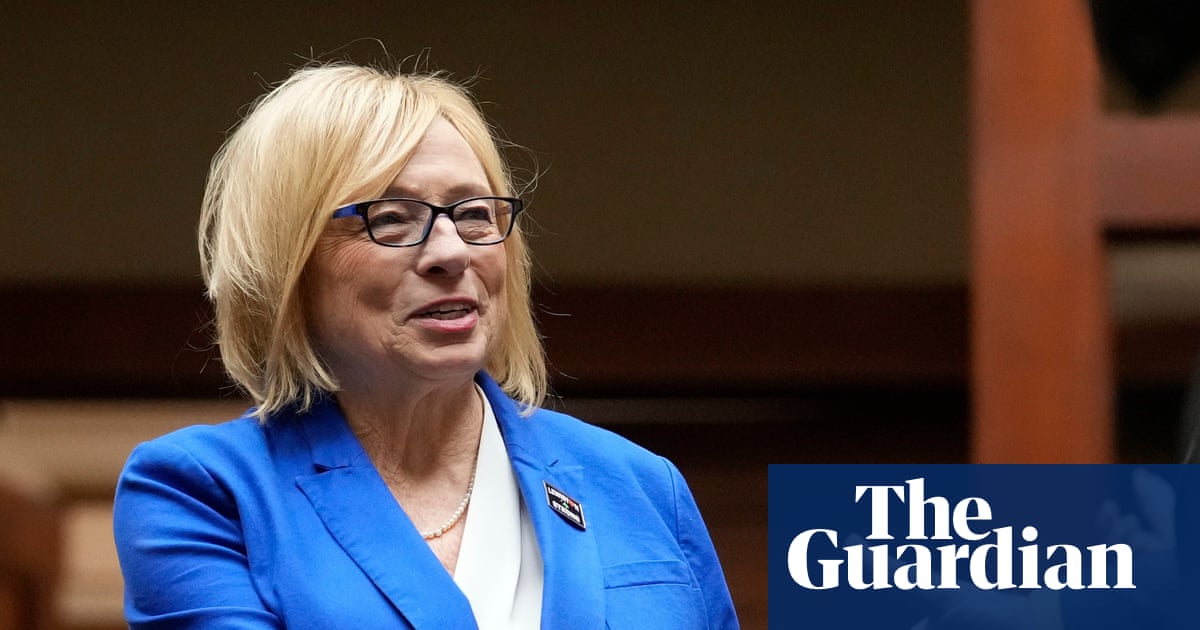
Janet Mills stares into the distance, calculating how many Nazi tattoos it would take to finally unlock a national fundraising list.
Janet Mills, two-term governor and supposed top-tier Democratic recruit, just dropped her Maine Senate bid not because of scandal, corruption, or a surprise polling collapse, but because she doesn’t have the one thing American democracy actually runs on: cash. She insists she’s got the experience, the passion, the fight – just not the bottomless money pit required to play in Donald Trump’s Washington, where ideas are optional but a war chest is mandatory.
Her likely replacement? Graham Platner, a first-time candidate who somehow remains popular despite controversy over past online comments and a tattoo that’s “widely recognized as a Nazi symbol”. So the big strategic debate inside the Democratic Party in 2026 boils down to: can we beat Susan Collins and help end unified GOP control of government by rallying behind the guy who’s going to spend the rest of the campaign explaining his Nazi ink. Bold theory of change.
Chuck Schumer and various left-leaning groups had lined up behind Mills as the serious, establishment-backed option to flip one of the most competitive Senate seats. Instead, the money hose didn’t turn on, the institutional favorite bailed, and the party is now flirting with nominating someone whose body art would have been instant career death in any allegedly functioning democracy. In Trump’s America, though, everyone just shrugs and moves on to the next fire.
Artist’s rendering of the White House "ballroom-bunker": part Versailles, part panic room, all authoritarian cosplay.
Trump is demanding a "Militarily Secure Top Secret Ballroom" at the White House, because nothing says "confident, popular leader" like hiding under bulletproof chandeliers. After a Bush-appointed judge blocked the above-ground monstrosity for lacking congressional authorization, Trumpists immediately rebranded the project as an urgent national security necessity, insisting the president can only be safe inside his bespoke gala bunker. The court helpfully noted that the giant dangerous hole next to the White House was created by Trump himself, which, to be fair, doubles as a metaphor for his entire presidency.
The grift-adjacent scramble kicked in right away: Republicans are rushing to draft special legislation for Dear Leader’s panic ballroom, and a new lawsuit against the National Trust for Historic Preservation reads like it was ghostwritten on Truth Social – complete with "They are very bad for our Country" and "Trump Derangement Syndrome" baked straight into the legal filings. Meanwhile, Trump is already teasing which private groups might get VIP access to his bunker-ballroom, because if you’re going to hollow out checks and balances and ignore Congress’s power of the purse, you might as well monetize the fallout.
Architecturally, this is straight-up tyrant chic. Renaissance theorists pointed out that only rulers who fear their own people need fortresses; Trump wants one in the heart of the capital, wrapped in the language of permanent emergency and antifa fan fiction. Top aides are holed up on military bases, the administration is mainlining a narrative of constant threat, and the president is fantasizing about a bunker with a "state of the art hospital" that, as continuity-of-government experts note, looks less like emergency planning and more like preparing a comfy place to hunker down and never leave. Ballroom 2.0 isn’t about parties; it’s about building the set for the authoritarian endgame.
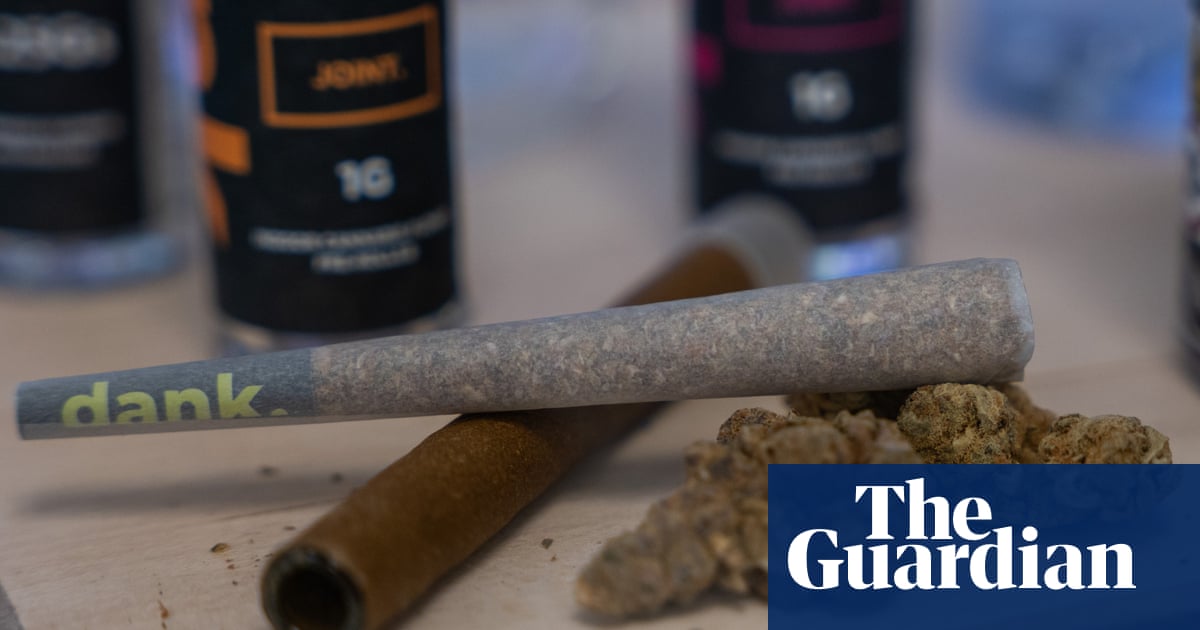
Todd Blanche signs a document that simultaneously legalizes, criminalizes, and utterly confuses the status of the same bag of weed.
The Trump administration has bravely stepped forward to end the war on drugs by…partially rescheduling some cannabis sometimes for certain people under unclear conditions. Acting attorney general Todd Blanche signed an order bumping state-licensed medical cannabis and hypothetical future FDA-approved cannabis products from Schedule I to Schedule III, while leaving everything else in prohibition limbo. So if you buy an ounce from the medical side of the counter, you’re a patient with federally recognized medicine; if you take three steps to the left and buy the exact same ounce from the adult-use side, congratulations, you’re back to being a potential criminal. Regulatory clarity, Trump style.
The order leans hard on a 1961 UN narcotics treaty, as if the administration just found it in a dusty filing cabinet and decided to build modern drug policy around it. Experts note that the move pre-determines scheduling outcomes for future cannabis medicines without a full evidence-based review, but who needs science when you’ve got midterms to win and “younger males” to pander to? Even better, the carveout only really helps medical operators who can register with the DEA – a group that, thanks to how early markets were structured, skews whiter and wealthier – while Black and Latino entrepreneurs, more likely to hold adult-use licenses, stay stuck on the wrong side of federal law. Separate and unequal, now with more paperwork.
Patients are told they “should no longer be treated as criminals under federal law,” yet the order is so vague that housing, employment, and other discrimination are still very much on the table. Meanwhile, a new DEA hearing is scheduled for June, where full rescheduling remains “far from guaranteed” and still wouldn’t match the majority of Americans who support full legalization. So the grand reform amounts to a campaign talking point, a compliance nightmare, and a quiet subsidy to the more privileged slice of the industry. It’s not ending the drug war; it’s just reallocating who gets the shield and who keeps the target on their back.
Brendan Carr, bravely shielding the American public from the clear and present danger of late-night monologue jokes.
Jimmy Kimmel cracks an age-gap joke about Melania Trump having “a glow like an expectant widow,” and within days the Trump White House turns it into yet another episode of Presidential Hurt Feelings Court. Melania denounces the line as “hateful and violent rhetoric,” Donald Trump calls it “a despicable call to violence,” and then demands ABC fire Kimmel, because nothing honors the First Amendment quite like the president personally trying to get comedians fired over monologue material.
The real fun starts when Trump’s handpicked FCC chair, Brendan Carr, decides the agency’s job isn’t regulating the airwaves but protecting the presidential ego. He orders early license reviews for eight ABC stations, pretending it’s about “unlawful discrimination” and DEI compliance while everyone with a functioning brain cell notes it’s retaliation over a joke. An FCC commissioner calls it the agency’s worst First Amendment violation yet, Free Press labels it an “extraordinary and unconstitutional attack on the media,” and Carr just keeps lumbering around Washington like a walking SLAPP suit.
Disney, having folded like a cheap lawn chair in earlier Trump tantrums—including settling a flimsy defamation case over George Stephanopoulos and watching CBS nuke Colbert after he called a corporate cave-in a “big fat bribe”—finally hints it might actually fight this one in court. Not exactly Patrick Henry, but better than preemptively handing Trump the remote. Meanwhile, the real point of Carr’s crusade is clear: scare networks into censoring themselves so thoroughly that the FCC and the White House never have to say a word. Trump gets the adulation, comedians get the message, and the First Amendment gets treated like a suggestion.
The Strait of Hormuz, where global energy flows and Donald Trump’s ego go to collide head-on.
Global oil just rocketed past $126 a barrel because Donald Trump has discovered his new favorite toy: a US naval blockade of Iran that he now says could last "months". Iran has responded by practically sealing the Strait of Hormuz, choking off nearly 20 million barrels of oil a day. So yes, the president of the United States and the Iranian regime are currently playing chicken with the world economy, and the rest of us are the hood ornament.
Talks in Islamabad? Canceled by Trump, naturally. Why negotiate when you can pose as a wartime strongman on Axios and boast that your blockade is "more effective than bombing" and that the other side is "choking like a stuffed pig"? While Trump workshopped new metaphors for mass economic strangulation, he huddled with oil executives at the White House to discuss how to "continue the current blockade for months if needed". The free market is very free, as long as the president is personally throttling a key shipping lane.
Meanwhile, economists are quietly screaming into their spreadsheets. Oxford Economics is floating $190 oil by August if this drags on, bond yields are spiking to multi-decade highs, and Paul Krugman is out here saying a global recession is now "more likely than not" if Hormuz stays jammed for another three months. US inflation is climbing, Britain’s staring at a £35bn hit and a 2026 recession, and Congress is grilling Defense Secretary Pete Hegseth about the war’s cost and total lack of strategy. The Trump administration, true to form, has finally found a way to combine imperial overreach, economic self-harm, and energy shock therapy into one neat, explosive package.
So to recap: Trump promised a 4–6 week conflict, we’re heading into week 10, oil is spiking, recession alarms are blaring, and the president’s main public message is that Iran should "get smart" while he figures out how long he can keep the world economy in a chokehold. Mission accomplished, if the mission was to turn the Strait of Hormuz into a live-action stress test for how much chaos democracies can absorb before they snap.
Acting Attorney General Todd Blanche explains that the real way to stop gun violence is to make sure nobody has to pass a background check ever again.
The Trump Justice Department took one look at an armed man allegedly trying to storm the White House Correspondents’ Dinner and kill the president and thought: you know what this country needs? fewer gun rules. So Acting Attorney General Todd Blanche rolled out more than 30 changes to federal gun regulations, headlined by a move to kill a 2024 Biden rule that finally tried to close the gun show loophole by forcing more sellers to run background checks.
Blanche bragged this was the “most comprehensive regulatory reform package” in ATF history, which is a poetic way of saying they’re helping unlicensed dealers keep shoveling guns into the stream of commerce without anyone asking awkward questions like, “Hey, are you legally allowed to own that AR-15?” Gun control groups noted that dismantling basic safeguards four days after gunfire at a presidential event is less “public safety” and more “Darwin Awards, federal edition.”
To really sell the bit, the rollback package was signed just after the Senate confirmed Robert Cekada as ATF director — only the third confirmed chief since 2006. So ATF finally gets a permanent leader and, as a reward, the administration starts yanking out the agency’s regulatory teeth while praising its heroic work taking illegal guns off the street. Conservatives spend decades turning ATF into a political punching bag, then Trumpworld uses it as a prop while quietly making sure the gun lobby never has a bad day again.
Trump, pondering which constitutional clause says 'the government pays my defamation bills when I insult my alleged assault victim.'
The 2nd Circuit just told Donald Trump he cannot, in fact, hand the bill for his $83 million E. Jean Carroll defamation verdict to "The United States" like it's a corporate Amex. In a split decision, the court rejected his request for a full en banc do-over, with Judge Denny Chin politely noting that literally no other defendant gets to wander in fifteen months after losing at trial and say, "Actually, make the taxpayers the defendant." Revolutionary stuff: presidents don't get a punch card for unlimited immunity every time they open their mouths.
Undeterred, Trump's legal team responded with its usual legal brief in all caps: it's "Liberal Lawfare," a "Democrat-funded travesty," and of course a "Witch Hunt"—because nothing says "strong legal argument" like accusing your rape accuser of being too unattractive to assault and then demanding the Justice Department defend you as part of your "official duties." E. Jean Carroll, who has been dragging this case through the courts since 2019, would simply like to finally get justice, while a three-judge minority on the court would like to expand presidential immunity so far that defaming alleged sexual-assault victims becomes a constitutional perk of the office.
Judge Chin helpfully reminded everyone that Trump didn't just "respond" once to Carroll's accusation; he spent years calling her a liar chasing money and politics, all while insisting she was beneath his assaulting standards—an argument so vile it somehow got turned into an immunity claim. Now the path is clear for Trump to beg the Supreme Court to rescue him, as he simultaneously appeals another Carroll case where he already got hit for $5 million. The man who ran on "I alone can fix it" is now arguing "The entire United States must pay for it." Bold platform.
James Comey, moments before discovering that "independent law enforcement" is not a concept in the Trump HR manual.
NBC dusts off the Meet the Press archives so we can all relive that magical era when James Comey was trying to explain, with the patience of a substitute teacher on the last day of school, why the FBI is not supposed to be the president’s personal hit squad. Trump wanted Clinton prosecuted because rallies are more fun when you chant about imprisoning political rivals; Comey kept mumbling boring words like "facts," "evidence," and "independence" like some kind of deep-state weirdo who’d actually read the Constitution.
Instead of a normal civics lesson, we got the pilot episode of "How to Undermine a Democracy in 10 Easy Tweets," featuring a president publicly attacking his own law enforcement agencies, demanding loyalty oaths, and treating criminal investigations like PR problems. The interview plays now like a prequel to the firing, the Mueller probe, and the years-long Republican hobby of calling the FBI a corrupt leftist cabal while simultaneously demanding it throw their enemies in jail. Separation of powers? Cute idea. Shame what happened to it.
The archive label is doing a lot of work here: it’s marketed as history, but it doubles as an instructional video on how to normalize authoritarian behavior by talking about it in the calm, even tones of Sunday news shows. Trump’s "law and order" brand turns out — shockingly — to have meant his law, your order, and an FBI director whose main crime was refusing to act like Michael Cohen with a badge.
Trump congratulates Artemis astronauts on their courage while openly rooting for the Supreme Court to crater the Voting Rights Act, proving the only atmosphere he wants to thin is around American democracy.
Trump invited the Artemis II crew to the White House to honor their record-breaking lunar mission, then immediately turned the event into a live infomercial for dismantling civil rights. After bragging that he himself would have "had no trouble" becoming an astronaut because he’s "physically very, very good" – sure, the Apollo treadmill was famously designed for golf cart athletes – he seamlessly pivoted from space exploration to exploring just how far you can roll back democracy in one news conference.
The real mission of the day wasn’t science, it was suffocating the Voting Rights Act. When told the supreme court had effectively gutted section 2 – the last strong piece protecting minority voters from racist maps – Trump claimed he hadn’t seen the ruling, then instantly celebrated it as a "win for Republicans" and said, "I love it, this is very good." He urged states to redraw their maps to take advantage of the decision, helpfully noting they "have time" to do it before the midterms. Nothing says "free and fair elections" like the president openly cheering a court decision that makes it easier to dilute Black and brown votes while treating it as campaign strategy.
Meanwhile, the astronauts stood there as props while Trump praised their courage and then casually mentioned he wants to slash NASA’s budget by 23%, including a 46% cut to space science. So the message is: congratulations on your historic mission, now please enjoy watching your agency get kneecapped so we can shovel more money into the Pentagon and voter suppression. Toss in some confusion about whether Ukraine or Iran is "defeated" and a vague promise to dump a bunch of UFO files for entertainment value, and you’ve got the Trump administration in one scene: use national achievements as a backdrop, defund the future, and celebrate the slow suffocation of democracy on live TV.
The Orion capsule was named Integrity. The irony is doing more re-entry heat shielding work than the spacecraft did.
Speaker Mike Johnson poses in front of a giant flag, moments before helping extend the government’s favorite warrant-optional eavesdropping program. Freedom imagery sold separately.
The House just voted 235-191 to keep Section 702 of FISA humming along for another three years, because why wouldn't you preserve a system that lets the government vacuum up Americans' communications as "incidental" souvenirs? After weeks of melodrama from "privacy hawks" in the GOP, Speaker Mike Johnson finally found the magic formula: keep the warrantless spying, toss in some paperwork, and slap on a maximum 5-year penalty for abuse that almost no one will ever see enforced. Constitutional rights, now with extra compliance forms.
For nearly two decades, a bipartisan group has begged for a simple thing called a warrant before law enforcement can rummage through Americans' data in the 702 database. They failed again. Intelligence officials and their alumni chorus, like former NSA general counsel Stewart Baker, warned that requiring a warrant to look at information the government already grabbed might endanger national security — a fascinating way of admitting the danger comes from letting courts do their jobs. Instead of real reform, Congress settled on "ask an attorney first" and "write down why you're doing it" as if the Fourth Amendment were just a particularly needy HR policy.
And because no modern surveillance bill is complete without a dash of culture-war cosplay, Johnson stapled on a ban on a hypothetical Central Bank Digital Currency to win over the hardliners. So the same crowd screaming about a dystopian digital dollar just voted to preserve a very real, very current system that lets the government sift through Americans' calls, texts, and emails without a judge. Big Brother remains fully funded; the Bill of Rights will be considered in a future markup, time permitting.