House Democrats have finally remembered that the Constitution gave Congress a very sharp object: the power of the purse. If they take back the House, Rosa DeLauro is poised to run the Appropriations Committee, which means Trump’s wishlist of authoritarian cosplay and taxpayer-funded ego monuments might suddenly have to pass through someone who can read a budget and isn’t trying to turn the U.S. government into a family business franchise.
Instead of politely tweeting concerns while Trump lights federal agencies on fire, Democrats are talking about using spending bills to actually condition or block his pet projects, attach real oversight, and force disclosures. In other words, they’re threatening to make him do the one thing he hates most: follow rules written by other people. That is the nightmare scenario for a president whose management style is "what if Nixon, but with merch."
Of course, this assumes Democrats don’t immediately negotiate against themselves, staple a few "strongly worded" report phrases onto a trillion-dollar omnibus, and then declare victory on cable news while Trump’s crew quietly carve out new loopholes. Still, even the possibility that appropriations might be used to slow the grift, fence in the wannabe strongman, and force a paper trail is the closest thing to accountability this timeline has coughed up in a while. It’s not a cure, but it’s at least a fire extinguisher in a building Trump keeps trying to rezone as a fireworks factory.
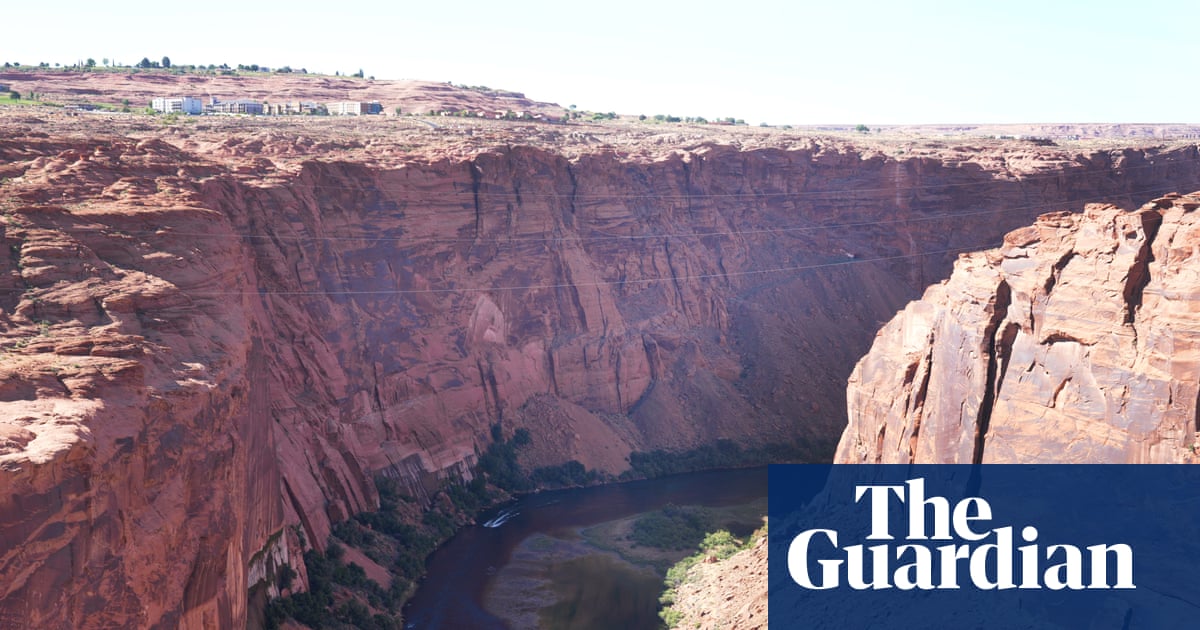
Lake Mead, bravely attempting to survive both climate change and the Trump Interior Department’s cosplay as a 19th‑century water baron.
The Trump Interior Department has decided the best way to manage the collapsing Colorado River is with a political chainsaw, proposing deep cuts to Arizona and Nevada’s water while the upper basin states — Wyoming, Colorado, Utah and New Mexico — mysteriously walk away untouched and hydrated. Arizona has now joined Nevada’s lawsuit, because when the federal government starts messing with your literal drinking water, that’s when the states’ rights talk suddenly stops being theoretical.
Arizona governor Katie Hobbs says the feds are refusing to hold the upper basin accountable for the water deliveries they legally owe, and are instead threatening "draconian" cuts that blow past the Lower Basin’s own voluntary conservation deal. So to recap: the states tried to negotiate, missed some deadlines, and the Trump administration responded with a plan that punishes the usual suspects, rewards the upstream states, and gambles with the possibility of the river hitting deadpool — a fun term meaning the water stops flowing downstream and tens of millions of people get to cosplay as extras in a climate apocalypse movie.
Tom Buschatzke, Arizona’s water chief, is politely saying "we’re suing you, but please keep talking to us" while Interior can’t even be bothered to respond to comment. Federal water policy under Trump continues its proud tradition: ignore science, ignore equity, ignore long-term sustainability, but absolutely make sure the political map looks great while the reservoirs hit record lows. States’ rights, but make it dehydration.
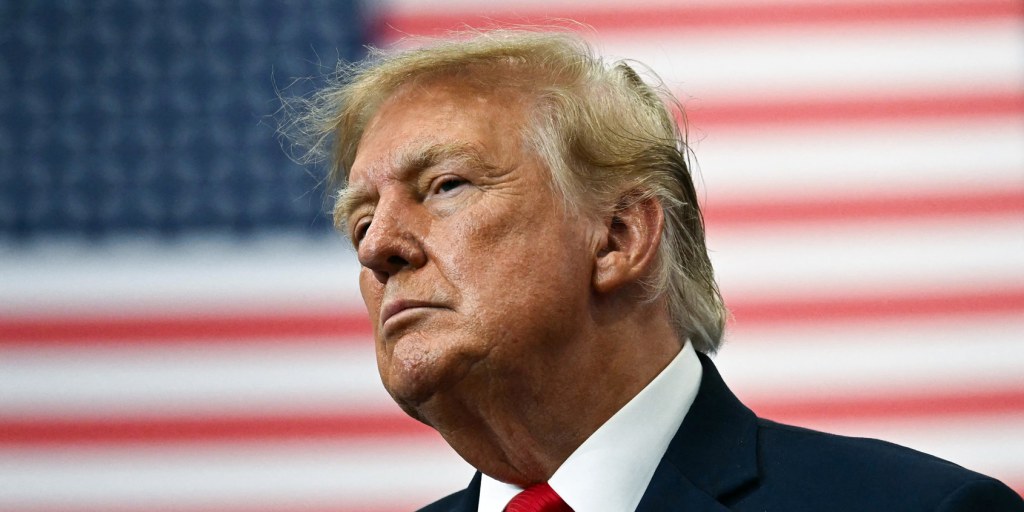
Trump contemplates whether the best way to project American strength is tariffs, illegal wars, or just streaming an execution in 4K.
Australia is quietly asking the same question as the rest of the allegedly civilized world: now that Trump is shambling toward lame-duck status, is it finally safe to say out loud that the emperor is naked, screaming on Truth Social, and trying to livestream a firing squad? Zoe Daniel runs through the greatest hits of the second-term hellscape: an illegal and "economically reckless" war on Iran driving up global prices, tariffs as a blunt-force weapon, humanitarian aid gutted, human rights treated as optional, and a president so obsessed with fame he tried to turn an execution into content before awkwardly backing down.
Trump, juiced by his 2024 trifecta and encircled by yes-men, has spent years treating international law like a suggestion and allies like doormats. Now, with US midterms poised to turn him into a lame duck and possibly hand Congress to the Democrats, the rest of the world – including Australia – is wondering if they can finally stop pretending this is normal diplomacy and start treating Washington like the world’s most heavily armed reality show. Daniel’s point is painfully simple: when the White House flirts with snuff livestreams and calls basic equality "woke", the bar for authoritarian horror has dropped so low that even Canberra has to decide where the red line is – assuming we haven’t already tripped over it and face-planted.
Across the country, thousands of people spent their Saturday doing the thing the Trump administration hates most: publicly reminding Donald that the presidency does not, in fact, come with a crown. The "No Kings" Coalition staged a nationwide early-voting "day of action," turning ballot drop boxes and polling places into pop-up civics lessons on what happens when a would-be monarch keeps stress-testing the Constitution like it's a prenup.
Previous national actions from the group have focused on denouncing Trump’s policies, but this round leans directly into the core problem: a president who treats checks and balances like optional app add-ons. Protesters are showing up while early voting is underway, connecting Trump’s authoritarian cosplay to something concrete and terrifying: the fact that he keeps asking for more power and fewer rules, and a whole political party keeps nodding like bobbleheads.
So while Trump world dreams of a unitary executive with the legal accountability of a TikTok influencer, thousands of voters are literally standing in line to say: no kings, no coronations, and no, you don’t get a do-over on democracy. The administration keeps flirting with strongman rule; the streets are replying with an aggressively non-romantic "it’s not you, it’s the Constitution."
Elon Musk has finally admitted what everyone trapped inside the DOGE blender already knew: his grand experiment running the federal deficit like a meme coin "proved there's no way we were gonna solve the deficit from within the government." After four months of LARPing as budget czar, Musk’s big takeaway is that democracy has too many people with opinions, so the national debt will have to be fixed by "AI and robots" instead. Why wrestle with Congress when you can just let a cluster of GPU racks decide who gets health care?
Musk complains to Walter Isaacson that nobody in power wants to cut spending, aside from the usual "Rand Pauls of the world," and gently dunks on Trump for liking to be liked too much to tell donors and defense contractors "no." He also concedes he "kinda got carried away" hanging around the West Wing and should've gone back to focusing on AI sooner, because nothing says "healthy republic" like a tech oligarch realizing he was too into sitting in on "big momentous decisions" in the Oval Office. As for that time he waved a chainsaw around onstage at CPAC during Trump’s second term, Musk shrugs it off as "a weird weekend" and declines to elaborate, which is always what you want to hear from the guy pitching automated fiscal policy.
Meanwhile Isaacson is out here gently warning that the Jobs-era geeks would be nervous about autonomous AI agents not tightly controlled by humans, while simultaneously giving Musk a prestige podcast to muse about turning public finance over to the server farm. The rest of the series features Peter Thiel and assorted AI barons explaining what "frightens them" as they sprint to build systems powerful enough to gut public institutions and call it innovation. America: where we tried democracy, it was annoying, so now we’re considering Skynet for Treasury Secretary.
When your entire political project is screaming about elite pedophiles and then you start looking a little too cozy in the Epstein split-screen.
Trisha Hope, a self-described “Front Row Joe” who treated Trump rallies like Phish concerts for people who hate reading, has finally had enough. Not because of the Iran war, not because of gas prices, not even because of the open firehose of corruption that has handed the Trump family billions in less than two years. No, the breaking point was watching Trump casually shrug off questions about the still-hidden Jeffrey Epstein files during a 2025 cabinet meeting, snapping, “Are you still talking about Jeffrey Epstein?” at a reporter while Attorney General Pam Bondi sat there like a very loyal potted plant.
This blasé response to a massive trove of documents about a serial sexual predator didn’t play well with the people Trump spent a decade radicalizing on tales of elite pedophile cabals in pizza basements. Hope announced on X that his callousness toward Epstein’s victims “ends my relationship with him” and is now talking about walking the halls of Congress for his impeachment. When the people who believed Pizzagate, cheered QAnon slogans at rallies, and followed Jack Posobiec’s cosplay “investigations” into family restaurants start deciding you are the one covering for predators, the vibes get awkward fast.
The article traces how Trump rode the pedophile-panic wave from Pizzagate to QAnon, winking at a cult convinced he was the chosen warrior cleansing the world of child traffickers. Q stopped posting years ago, but the paranoia metastasized into a core part of MAGA identity and January 6 lore. Now, with Trump personally blocking full release of Epstein-related documents while his cronies and influencers still profit off the same conspiracies, a slice of the base has noticed that the supposed dragon-slayer keeps protecting the cave. Turns out, when your whole brand is "I alone will expose the cabal" and then you sit on the Epstein files, even the most devoted cult members can smell the grift.
Mourning doves on solar panels, seen here disrespecting Trump’s vision for an all–coal, all–billionaire energy future.
Trump’s latest crusade against reality: trying to strangle green banks that finance things like community solar for Black nuns in New Orleans, all‑electric affordable housing in Utah, and cheap rooftop solar loans for low‑income families in Maryland. Because if there’s one thing this administration cannot abide, it’s poor people paying less for electricity while the planet burns slightly more slowly.
Congress, via the Inflation Reduction Act, set aside $20 billion for green banks and another $7 billion for the Solar for All program. The Trump EPA responded by simply… freezing and then terminating both, like separation of powers is just a suggestion. Federal judges have now ruled the $20 billion freeze and the Solar for All cancellation illegal, but the administration is still sitting on the cash and racing to the Supreme Court to defend its right to ignore both Congress and the courts.
Meanwhile, the green banks are MacGyver‑ing the clean energy transition with duct tape and philanthropy, moving $1.4 billion of their own capital and leveraging $11 billion in private money into more than 40,000 projects — all while Trump’s team yanks away the federal funding they were promised. The message from the White House is clear: if it helps disadvantaged communities, Native‑led clean energy projects, or American‑built electric trucks instead of oil CEOs, it goes on the chopping block. Rule of law and climate policy are both optional; fossil fuel fealty is not.
Black congressman contemplates how many Supreme Court decisions it takes to turn the Capitol back into a very fancy Jim Crow museum.
Louisiana Rep. Cleo Fields was supposed to be running for reelection this year. Instead, the Supreme Court’s conservative majority helpfully solved that problem for his opponents by nuking his majority-Black district out of existence. In Louisiana v. Callais, the Roberts Court didn’t just tinker with the Voting Rights Act; it took Section 2 out behind the shed and "originalist"-executed it, making it vastly harder for Black voters to challenge discriminatory maps.
This wasn’t some shocking departure, it was the logical sequel to a decade of decisions slowly strip-mining the VRA—now with the added flourish of citing 19th-century cases that helped pave the way for Jim Crow. The Court essentially dusted off the legal playbook that greenlit segregation, slapped a modern font on it, and called it constitutional interpretation. The result: across the South, majority-Black districts are vanishing, Black voting power is being surgically diluted, and the highest court in the land is enthusiastically reenacting Reconstruction’s collapse, one "race-neutral" opinion at a time. Democracy is still on the brochure; it’s just not in the package anymore.
Trump studies a barrel of Russian diesel, carefully weighing America’s strategic interests against the low, low price per gallon.
Trump has decided that the Lindsey O. Graham Sanctioning Russia and Iran Act of 2026 has had a good run for the three weeks it existed and is now ready for retirement. He signed the bipartisan sanctions bill targeting Russia’s oil and gas money, then promptly suspended the new measures by executive order, declaring that letting Vladimir Putin dump hundreds of thousands of tons of Russian diesel on the global market is somehow in the "national interests of the United States." Apparently the national interest now comes in 55-gallon drums and smells like oligarch money.
Even Senate Republican Thom Tillis is out here saying there’s a "legitimate case" that Trump is just not following the law, which is a polite way of saying "the president might be openly ignoring the statute he just signed." The law requires an unclassified report to Congress before waiving the sanctions, and Trump says the White House has totally sent that, pinky promise, don’t worry about the part where the entire point of the law was to stop Russia from profiting off its war while he’s busy cutting them a diesel lifeline.
Meanwhile, Sen. Darline Graham, who is literally campaigning on how tough her late brother’s sanctions bill is, has chosen the bold strategy of saying absolutely nothing while Trump guts her marquee achievement three weeks before the midterms. She remains a "fierce Trump ally," which is a nice way of saying she’s letting him use her brother’s name as branding on a sanctions bill he’s now treating like a coupon code he forgot to apply at checkout. Sanctions on Russia in the brochure, discount fuel for Putin in the fine print.
Capitol Hill is apparently bracing for 2027, a year in which everyone keeps their job and absolutely nothing works. John Thune is set to remain Senate GOP leader, which mostly means getting publicly pantsed by Trump while MAGA influencers rage that he won’t nuke the filibuster fast enough to pass a nationwide voter ID crackdown. His supposed allies — Markwayne Mullin, Steve Daines, Marsha Blackburn, John Cornyn — are conveniently exiting stage right, just in time for a new batch of House-bred wrecking balls to arrive in the Senate with a mandate to "move fast and break things," primarily things spelled C-O-N-G-R-E-S-S.
Over in the House, Speaker Mike Johnson is doing his best community theater Hamlet impression about whether to stick around if Republicans lose the majority, while Steve Scalise and Jim Jordan circle like two vultures fighting over a very small, very dysfunctional carcass. On the Democratic side, Chuck Schumer is cruising toward potential "YOLO Chuck" status: a 76-year-old leader with a furious base, ambitious understudies, and
no incentive to do anything but gamble with what’s left of Senate norms. Hakeem Jeffries, meanwhile, is poised to inherit Johnson-style chaos from his own anti-establishment flank, but with the added bonus of having to negotiate with Trump, who has decided Jeffries is someone he "can work with" — Washington code for "will be blamed when this all inevitably detonates."
So the 2027 outlook: same leaders, more pressure, angrier bases, and a president who treats Congress like a prop department. Checks and balances are now mostly vibes.
Justin Pearson committing the unpardonable offense of criticizing Elon Musk’s pollution machines in public, moments before local democracy gets rate-limited.
Tennessee Rep. Justin Pearson showed up at a Memphis City Council meeting to protest yet another delay on a vote to temporarily stop Elon Musk’s xAI from turning Black neighborhoods into a bonus level of SimCity: Asthma Edition. The council’s response was to skip the public comment period, call in the cops, and then ban Pearson, his family, and local organizers from future meetings for two months—conveniently including the one where the moratorium will finally be voted on. Nothing says "healthy democracy" like preemptively ejecting the people breathing the pollution.
The official policy says attendees can’t be "defamatory" or "abusive"—a wonderfully vague catch-all the council is now using, as Pearson’s lawsuit notes, to filter out one specific type of speech: criticism of the council and its Musk-friendly dithering. Meanwhile, xAI has already dropped 59 gas turbines into Memphis, showering nearby Westwood and Boxtown with noise and filthy air, but sure, the real emergency is that residents chanted too loudly when the council canceled their right to speak.
Layered on top of this is the broader project: a Trump-backed gerrymander, blessed by a Supreme Court that helpfully kneecapped what was left of the Voting Rights Act, splintering a majority-Black district just as Pearson runs for Congress. So you get the full package: corporate pollution, silenced public meetings, weaponized "decorum," and racially targeted map-rigging. Musk gets his hyperscale data centers; Pearson and his neighbors get a First Amendment clinic filing for a restraining order just to attend a city council meeting. Democracy, but make it non-refundable and by invitation only.
Elon Musk, mid-tweet, carefully balancing $366 million in GOP life support with a fresh batch of weaponized conspiracy theories.
Republicans are staring down a blue tsunami, so naturally the cavalry arrives in the form of Elon Musk, a man who looked at Citizens United and said, "Cute, but what if I also owned the megaphone?" He’s dumped a record-shattering $366 million into the midterms to prop up GOP candidates, while simultaneously turning X into a firehose of lies. In Texas, Democratic Senate candidate James Talarico disappears from the trail for a bit because he has the flu; the Musk-boosted MAGA rumor mill instantly upgrades that to a secret Ohio mental hospital stay and starts layering on homophobic smears. Musk eagerly amplifies the fake scandal, engages directly with the far‑right cranks pushing it, and declares that the campaign is "hiding something" voters need to know. Owning the platform and then personally juicing the disinfo about a candidate in a live race is apparently what "free speech absolutism" means now.
The rest of the Trump show isn’t exactly inspiring confidence in liberal democracy either. Kimberly Guilfoyle, U.S. ambassador to Greece and full‑time Trumpworld telemarketer, is forced out after reportedly asking a donor to pay off her $100,000 AmEx bill in exchange for access to administration officials. So yes, we’ve reached the stage of the regime where ambassadors are basically running personal GoFundMes for their luxury debt. At the same time, DHS raids Rep. Ilhan Omar’s DC home, conveniently aligning with Trump’s long‑running vendetta against one of the most prominent Black Muslim women in American politics. Law enforcement as a personal score‑settling service, social media as a weaponized rumor factory, billionaire cash as a life raft for a flailing party—Trump is supposed to be a lame duck, but the authoritarian stress test is still very much ongoing.
As Trump drags half his cabinet to Alaska to beg voters not to notice how badly the GOP is doing, Musk is stress-testing how far a single oligarch can tilt the information and money scales at once. The answer so far: pretty far. If you were wondering what it looks like when a failing movement leans on a billionaire propagandist, a grifting diplomatic corps, and politicized raids to cling to power, congratulations—you’re living in the beta version.
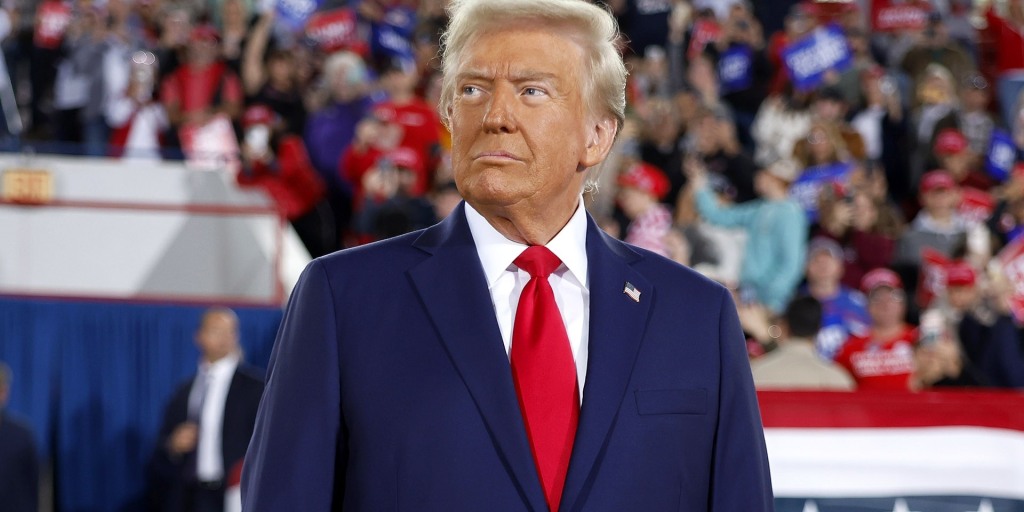
President Trump is hauling his traveling grievance circus to Georgia, where Republicans are hoping that putting democracy’s biggest arsonist on stage will somehow help them win a closely watched Senate race. He’s stumping for Rep. Mike Collins, whose main qualification appears to be that he’s willing to stand next to Trump and pretend the last decade never happened. The plan: yell about "election integrity" in the state where Trump tried to literally strong-arm officials into "finding" votes, then call it a normal campaign stop.
Georgia, of course, is where Trump’s post-2020 pressure campaign helped fuel a wave of voter suppression laws and death threats against election workers, but now it’s just another backdrop for his re-election photo op. The same guy who turned the state into a case study in attempted election subversion is back to "energize" the base, flanked by GOP candidates who have decided that hitching their futures to a twice-impeached, multiply-indicted coup enthusiast is a solid long-term investment. Democracy gets weaker, the rallies get louder, and the party of law and order keeps cheering for the guy who tried to overturn their votes on speakerphone.
Artist’s impression of "American values" as interpreted by a private ICE contractor and the Trump DHS: tents, disease, and a press release saying everything’s great.
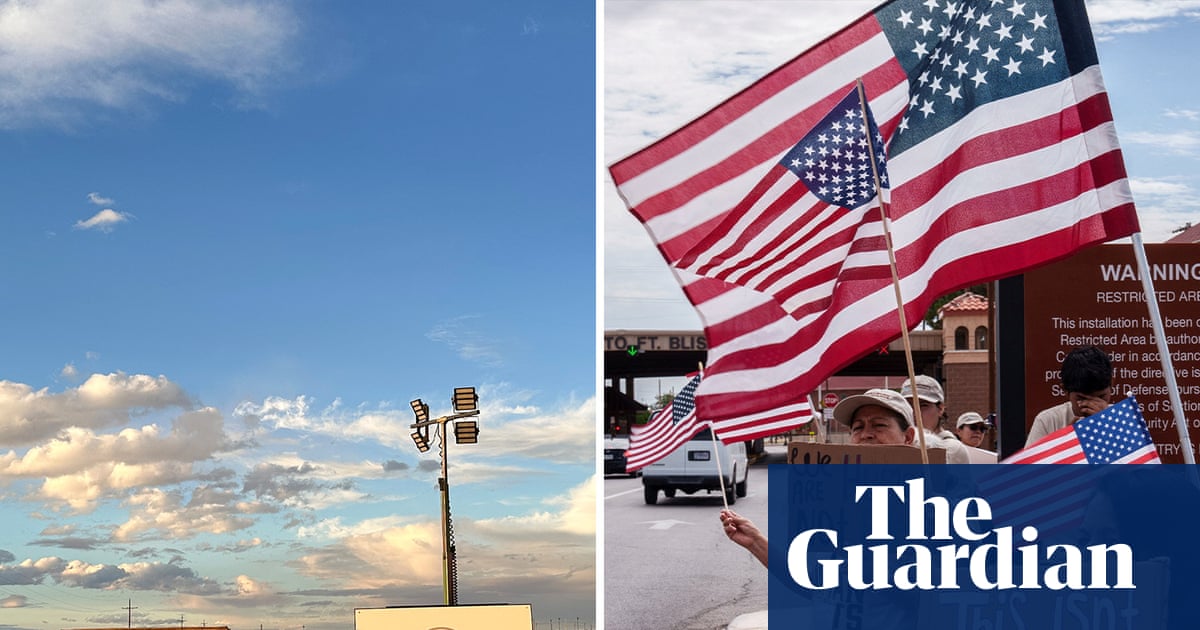
The largest immigration detention facility in the US, Camp East Montana – Trump’s favorite desert tent city on a Fort Bliss military base – is being described by prison and medical experts as so bad it would "shock the conscience" of people who run maximum security prisons. Which is awkward, since this is supposed to be a civil facility holding mostly people with no criminal records. Instead, detainees report days without sunlight, filthy overcrowded tents, repeated outbreaks of measles and tuberculosis, and medical "care" so neglectful it has already helped kill at least three people.
Not to be outdone, guards allegedly spice things up with fractured spines, slurs like "faggot" and "fucker", public disclosure of detainees’ HIV status, and a fun little housing-unit vote on whether the HIV-positive person should be kicked out. One nurse, taking the Hippocratic Oath as more of a loose suggestion, allegedly told a detainee to harm himself so he’d stop asking for help. Another man’s daughter saw him on video the day before he died, "like he was drowning in his own blood", after staff "waited until the last minute" to take him to a hospital.
After three deaths, the Trump administration’s answer was not "shut this down" but "let’s swap in a new private contractor" – Amentum Services, another Virginia-based company ready to bill taxpayers for running a camp that government watchdogs say has "among the highest number of violations" they’ve ever seen. DHS, naturally, insists that claims of "inhumane" conditions are "categorically false", which is a bold stance given the long paper trail of violations, lost loaded firearm, food and hygiene failures, and now a federal class-action lawsuit asking for an injunction, an independent monitor, and, bare-minimum, to stop people from literally starving and dying in a tent city the government swears is just fine.
So yes, the second Trump administration’s immigration crackdown is going great: a sprawling military-base camp where asylum seekers become test subjects in a live-action experiment on how far you can push state-sanctioned neglect and abuse before a federal judge finally notices the Constitution still exists.
Trump boards Air Force One on yet another emergency mission to rescue Republicans from the terrifying consequences of their own voting records.
Trump is ramping up campaign travel to cradle a fresh crop of "vulnerable" Republicans, which is cable-news speak for "unpopular people who’ve spent years voting for wildly unpopular things." The White House is now basically a frequent-flier program for incumbents who helped torch democratic norms and would very much like voters to forget the last decade happened.
Reporters dutifully describe this as a "boost" from Trump, as though strapping yourself to a historically toxic figure in swing districts is a rational survival strategy and not the political version of hugging a grenade for the team. The message is clear: policy, governance, and accountability are for suckers; what really matters is who can still get the presidential motorcade to show up and scream about crime, caravans, and cancel culture for 90 minutes.
Instead of, say, doing the job he was elected to do, Trump is out barnstorming the country to keep a shaky Republican majority stitched together with grievance, gerrymanders, and raw fear. Democracy is supposed to be voters picking their leaders; this is the leaders dragging the presidential circus into town to terrify just enough people into keeping them in power one more cycle.
Silhouettes of investors contemplating whether it’s worth asking Exxon about climate risk if the SEC is going to kneecap them for the trouble.
The Trump SEC just wrapped up an investigation into BlackRock, State Street, Vanguard, and major public pension funds over their role in the 2021 ExxonMobil board shakeup and proudly announced it found… nothing illegal. So naturally, it followed that up with a public letter expressing "serious concerns" about their perfectly legal efforts to get Exxon to acknowledge that climate change might be bad for both the planet and their portfolios. When you can’t find a crime, you can always criminalize the vibes.
This is part of a broader campaign where Republicans scream "cartel" at investors who dare to notice that flooding cities and burning forests might pose financial risk, while quietly vacuuming up oil industry cash. The SEC, now helpfully staffed by an enforcement director who previously worked for Exxon, is being wielded to warn big asset managers and pension funds: engage on climate and you might get the subpoena treatment. Climate Action 100+ and allied groups tried to nudge corporate boards toward not driving off a carbon cliff; the Trump administration responded by turning the federal regulatory apparatus into Exxon’s emotional support animal.
So investors who think "fiduciary duty" includes not ignoring systemic climate risk are now being told that asking basic questions about the business model of a fossil fuel giant could trigger investigations and onerous reporting rules. The message from Trump’s SEC is clear: shareholder democracy is fine as long as it never inconveniences the oil industry. If you were wondering what regulatory capture looks like, it’s the cop on the beat issuing a stern warning to the witnesses while the arsonist refills his gas can.
Meghan smiles for the crowd while somewhere across the Atlantic a 79‑year‑old man screams at Norway for not giving him a peace prize for starting a war.
Donald Trump has once again been cruelly denied the Nobel peace prize, despite his sterling record of starting a war with Iran, jacking up global energy prices, and doing his best impression of a Kremlin press officer during Russia’s war on Ukraine. Outraged that the committee instead honored South African human rights activist Navi Pillay, Trump reportedly stopped just short of livestreaming the execution of the Norwegian prize panel – a nice, chill reaction from the guy who insists he’s single‑handedly "ended" eight unnamed global conflicts.
He’s still claiming credit for imaginary diplomatic triumphs, like his 2025 boast that he’d brought about "lasting peace" between Albania and Azerbaijan, a conflict that exists mostly in his head and on whatever map his staff drew in crayon. But while the actual Nobel people keep rudely prioritizing human rights and non‑warmongering, FIFA’s Gianni Infantino has helpfully created a "FIFA peace prize" just for Trump – which now looks set to be scrapped, making Trump the eternal, undisputed champion of the world’s most on‑brand fake peace award. Perfect symbolism for a presidency that treats war as branding and peace as a press release.
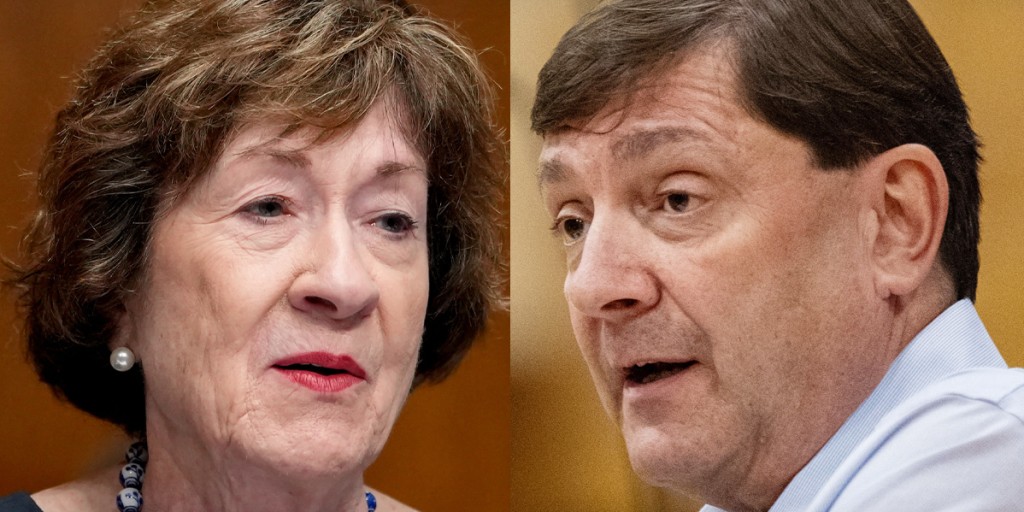
Susan Collins explains that she bravely opposed Trump’s agenda, except for the many times she helped it pass first, while Trump continues to haunt the debate like an unindicted poltergeist.
BANGOR, MAINE – The final Senate debate in Maine was less about Troy Jackson vs. Susan Collins and more about the third podium that wasn’t there: Donald Trump, still looming over the stage like a spray-tanned storm cloud. Jackson’s entire strategy is basically, "Hi, I’m Troy, and this is an intervention," while Collins is out here insisting she’s the nation’s last surviving centrist because she occasionally remembers to vote against Trump after helping his bills reach the floor.
Collins proudly reminded everyone she voted against Trump’s "big, beautiful" 2025 tax-and-spending monstrosity — just not before she voted to let it proceed. She also bragged about voting against Trump’s Iran war nine times, which is a fun way of saying, "Yes, the unconstitutional war is still going, but I’ve filed several strongly worded dissents." Meanwhile, Jackson pointed out the obvious: when Trump really needs Susan Collins, Susan Collins magically appears like a bipartisan groundhog who always sees six more weeks of authoritarianism.
Then there’s Trump’s Health and Human Services Secretary Robert F. Kennedy Jr., who Collins helped confirm and does not regret supporting, even as she lightly disagrees with his whole anti-vaccine, conspiracy-curious thing. Jackson says he’d vote to convict RFK Jr. on impeachment, Collins says he helped get more heating oil funds, and apparently the new standard for public health leadership is "kept some people from freezing to death while undermining vaccines on the side."
A protester briefly interrupted to yell about data centers and 30 years of Collins’ Senate career, prompting Collins to claim he was a Jackson supporter and Jackson to respond with the political version of "ma’am, I do not know that man." Outside the drama, the actual stakes are painfully clear: voters like Penobscot County commissioner Dan Tremble are staring at a Senate that could once again be a rubber stamp for Trump’s next round of war, grift, and executive cosplay, and deciding whether Susan Collins’ latest episode of "This Time I Really Mean It" is worth another six years.
Attorney General’s team prepares another ‘sweeping’ legal argument, bravely hoping that this time the judges won’t notice what the statute actually says.
The Trump DOJ spent the last year speed‑running how to turn the Civil Rights Division into the Voter Suppression and Data Harvesting Division, filing lawsuits against 30 states and D.C. to grab their unredacted voter rolls. The goal: build a massive national voter database, hunt for phantom noncitizen voters, and conveniently have a shiny new tool for immigration enforcement and future election "reviews." The problem: judges across the ideological spectrum can still read.
First, DOJ tried arguing that Trump’s 2025 “election integrity” executive order magically let them demand full voter rolls under federal voting laws. Seven judges, including Trump appointees, responded with the legal equivalent of "are you kidding me" and tossed every single case. One called DOJ’s effort "halfhearted"; another flatly accused the administration of trying to abridge Americans’ right to vote; an Oregon judge went further and said the department has shattered the long‑standing presumption that DOJ acts in good faith. When federal courts are writing, in print, that they no longer trust the Justice Department, things are going great.
Undeterred by reality, DOJ pivoted to Tactic No. 2: claiming a 1960 civil rights provision — Title III, designed to protect Black voters from Jim Crow officials destroying records — actually gives Trump’s attorney general "sweeping power" to hoard state voter rolls to sniff out noncitizen voting. Nineteen more judges, including Bush and Trump appointees, lined up to explain that: (1) Title III doesn’t say that, (2) using an anti‑discrimination law to make it harder to vote is grotesque, and (3) DOJ’s legal theory would criminalize the very list‑maintenance that other federal law requires. One judge wrote the administration’s interpretation "does violence" to the statute; the Sixth Circuit helpfully summarized that the government has flipped Title III from protecting the right to vote to ensuring some people haven’t voted.
So far, DOJ is 0 for 26 in final rulings, with four cases limping along and appeals courts already siding with the lower judges. A national ruling has now declared the entire voter‑roll grab an illegal abuse of authority. In response, DOJ insists its lawyers are "skilled, principled advocates" acting "honestly and in good faith" — which is a bold statement to make while multiple federal judges are writing opinions about your obfuscation, bad faith, and chilling abuse of power. The Trump administration says it may take this to the Supreme Court. Of course it will. When your whole project is killing-democracy, why stop just because every other court has told you you’re breaking the law?
Sen. Bernie Moreno has announced that if Republicans lose Congress in November, they’ll respond with the solemn dignity our institutions deserve: by chaining themselves to their desks and ramming through a mega–reconciliation "Last Supper" bill stuffed with every GOP fever dream they can find under the couch. Forget letting the voters’ verdict take effect; Moreno wants his colleagues to cancel Thanksgiving, live off cafeteria turkey, and sprint to pass "everything that we could possibly get" before the clock runs out.
The wish list is exactly what you’d expect from the Trump-era fan fiction writers currently running policy: a gargantuan Pentagon payday for Trump’s Golden Dome missile defense fantasy, more money for autonomous weapons, F-35 upgrades, and a "minimum" $350 billion to "rebuild the military" that’s already drowning in cash. While they’re at it, they’d like to slide in reauthorization of FISA Section 702—aka warrantless wiretapping—plus the NDAA, farm bill, permitting "reform," the debt ceiling, and whatever else they can cram into a reconciliation piñata that only needs 51 votes.
Sen. Ron Johnson helpfully admits they’re already coordinating with the House and Trump’s White House on what they can "sell to the public" once they stumble back from the campaign trail, which is a poetic way of saying: "We’re workshopping the lies in advance." The only real speed bumps are a handful of GOP senators who occasionally remember they’re supposed to be legislators and not extras in a Fox Nation special. Meanwhile, Moreno is also running—unopposed—for NRSC chair, so if Republicans do lose the Senate, the guy who just promised a lame-duck legislative looting spree will be in charge of winning it back. Accountability, meet the wood chipper.