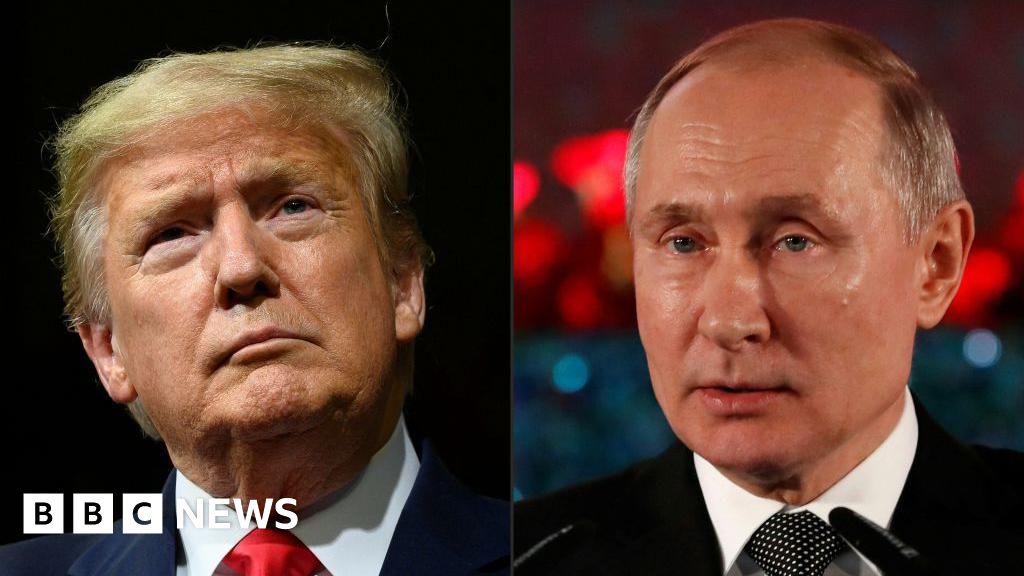
trump’s forever war fan club takes aim at iran’s oil jugular

Nothing says “stability in the Middle East” like pointing expensive flying gas tanks at someone else’s oil infrastructure.
Documenting the chaos since day one — one awful day at a time.

Nothing says “stability in the Middle East” like pointing expensive flying gas tanks at someone else’s oil infrastructure.

Trump’s foreign policy team workshopping new lyrics to “Jolene” between airstrikes and Greenland invasion plans.

Pictured: a friendly diplomatic partner explaining that the beatings will continue until democracy improves.

Two guys who really hate each other, which is why one keeps rearranging U.S. policy to boost the other’s oil revenue.

Kemi Badenoch, carefully calibrating the exact distance at which you can both support and not support a Trump war at the same time.

Trump, fresh off bombing Iranian ships, explains that when it comes to war, the U.S. really hasn’t even started trying yet.

Trump, Netanyahu, and Pahlavi audition their latest regime-change reboot: now with 100% more dead civilians and the same old shah-branded merchandise.

Lindsey Graham, wondering why the region he helped set on fire isn’t more grateful for the opportunity to burn.
Lindsey Graham, America’s most enthusiastic unpaid defense lobbyist, is suddenly wondering if maybe, possibly, the US shouldn’t keep shoveling security guarantees and weapons at Saudi Arabia, since Riyadh has declined to jump into the Iran war he personally helped sell to Donald Trump between golf swings. The US embassy in Riyadh is being evacuated under Iranian fire, Americans are dying, civilians across the region are being blown apart, and Graham’s big takeaway is that the Saudis are being insufficiently enthusiastic about the carnage.
Graham posted on X to complain that the US is spending billions to “dislodge the terrorist Iranian regime” while Saudi Arabia is mostly issuing statements and doing “marginally helpful” things in the background. He then helpfully expanded the guilt trip to the entire Gulf Cooperation Council, warning that if they don’t get more involved in the war being fought in their “backyard”, “consequences will follow” — a phrase that always ends well when shouted by the guy who just helped light the region on fire.
This comes after the Trump administration bragged in 2025 about a $142bn arms package with Riyadh — the “largest defense cooperation agreement in US history” — and handed Saudi Arabia major non-NATO ally status, all while dangling a Japan-style mutual defense pact. Now the same crew that spent years arming and appeasing Mohammed bin Salman is shocked that he’d prefer Washington to do the heavy lifting while he issues sternly worded press releases from a safe distance.
The Wall Street Journal helpfully laid out how we got here: Graham spent months lobbying Trump for strikes on Iran, coordinating with retired general Jack Keane, neocon columnist Marc Thiessen, Israeli officials, and even chatting up MBS to signal that war was coming. Trump, ever the strategic thinker, was nudged along via TV hits and op-eds he saw on his phone. The result: Operation Epic Fury — yes, that’s the actual name, not a Mountain Dew flavor — which killed Iran’s supreme leader and senior officials, and so far has produced at least 1,255 dead in Iran (mostly civilians), nearly 400 dead in Lebanon, deaths across Gulf states, and seven dead US service members. Tens of thousands of Americans are being airlifted out of the region, and Lindsey Graham is online asking why his favorite autocracy isn’t pulling its weight in the disaster he helped engineer.
Trump explains he’s 'nowhere near' invading Iran while standing on a runway surrounded by enough hardware to start three wars by accident.

America’s ‘secretary of war’ explains that more dead troops and bombed schools just mean our resolve is strong and our gravity bombs are working as designed.
Pete Hegseth, the self-branded "secretary of war" and former Fox News couch ornament, went on 60 Minutes to calmly explain that yes, more Americans will die in Trump’s Iran adventure, but that’s just the price of "advancing American interests" and "protecting American lives"—which currently includes getting seven reservists killed in Kuwait by an Iranian drone strike. The message to military families: steel your spines, your kids are now inspirational props for Operation Epic Fury, a name that sounds like it was A/B tested on Xbox Live.
Having already promised "death and destruction from the sky all day long," Hegseth now brags that the bombing of Iran—3,000 targets and counting—is "only just the beginning" and that the US and Israel’s combined air forces haven’t even started the really fun part with 500lb, 1,000lb, and 2,000lb bombs. This is all totally not a regime-change war, he swears, even though the former Ayatollah is dead and Trump is demanding Iran’s "unconditional surrender" like he’s role‑playing Patton on Truth Social.
On the home front, Hegseth casually contradicts House speaker Mike Johnson’s fantasy that the US is "not at war" with Iran, because apparently even this administration can’t keep its propaganda straight. Meanwhile, Trump is blaming Iran for a deadly airstrike on an Iranian girls’ school that US investigators strongly suspect was done by US forces, while new footage shows what looks awfully like a Tomahawk missile in the neighborhood. Hegseth’s brave stance when pressed on the likely US strike on a school full of children: it’s "being investigated"—the Beltway version of hitting mute on a war crime.

Woman in Havana bravely attempts the radical act of existing while the Trump administration tests how many blackouts it takes to achieve regime change.
While the world was still processing the kidnapping of Nicolás Maduro and the assassination of Ayatollah Khamenei, Trump apparently looked at a map, noticed Cuba still existed, and declared it an “unusual and extraordinary threat” to the United States. He slapped a national emergency on Havana and threatened tariffs to stop ships from delivering fuel, because nothing screams national security like making sure a Caribbean island can’t keep the lights on. Venezuela and Mexico, helpfully motivated by the whole “US attack on Venezuela” thing, promptly halted oil exports to Cuba, and now ordinary Cubans are enjoying 18-hour daily blackouts courtesy of American foreign policy.
On the ground, it’s textbook humanitarian cruelty dressed up as democracy promotion. Gasoline and diesel sales to the public: gone. Airline routes: cancelled. Inflation: spiking. The peso: tanking. People wake up in the middle of the night to cook, charge phones, and do chores in the few hours when power exists. Bakeries in Guantánamo are running on firewood, chicken prices are detonating, and community kitchens struggle to feed the poorest because Trump already kneecapped remittances and money transfers. Even Cubans who despise their own government don’t buy Washington’s line: everyone the reporter spoke to – teachers, farmers, small business owners, local officials – rejected the US measures outright. The blockade isn’t winning hearts and minds; it’s just unifying people against the country cutting off their power.
Meanwhile, Havana scrambles to privatize some state enterprises and lean into solar just to keep the country from collapsing, while Washington congratulates itself for being ‘tough on communism’ by making grandmothers cook by candlelight. Decades of sanctions already failed to topple the Cuban government, so naturally Trump’s answer is to double down and create a new “special period” that many Cubans say feels even worse. Regime change is once again less about changing regimes and more about proving the United States can still flip the switch on other people’s basic survival – all under the noble banner of freedom and tariffs.

Defense Secretary Pete Hegseth carefully explains that blowing up small boats without presenting evidence is totally fine because Trump said the magic words "armed conflict."

Iran’s foreign minister politely pretending it’s normal that the U.S. president is trying to cast Iran’s next leader like a failed ‘Apprentice’ reboot.

Trump explains that the US doesn’t need British help, just their runways, airspace, and geopolitical obedience.

Trump unveils his new hemispheric security architecture between the 9th and 10th holes, proving that all roads to regional stability run through the pro shop.

Trump staring at a map of the Middle East like it’s a restaurant menu, somehow surprised that ordering the Suleimani special came with a side of assassination plots and regional war.
The Trump show has officially gone international syndication. A Pakistani man, Asif Merchant, has been convicted in New York of plotting to kill Donald Trump, Joe Biden, and Nikki Haley at the direction of Iran’s Islamic Revolutionary Guard Corps, as payback for Trump’s 2020 assassination of Qassem Suleimani. You remember that one: the bold, galaxy-brain strike that was absolutely not going to spark years of spiraling retaliation or turn US officials into walking targets worldwide. Flawless strategic foresight, as always.
The plot never got off the ground because someone Merchant tried to recruit did the thing the Secret Service wishes more Trump staffers would do: called law enforcement. Merchant claims he only joined the IRGC scheme to protect his family in Tehran, while Iran officially denies it targeted Trump or any US officials. Meanwhile, the trial conveniently kicked off just as Trump ordered a joint assault on Iran with Israel, which has already killed at least 1,332 Iranian civilians and wiped out a chunk of the country’s leadership, according to Tehran’s UN ambassador. Six US service members and at least 10 Israeli civilians are also dead, because the Forever War doesn’t do refunds, just sequels.
So we’ve got: Trump’s first-term drone assassination of Suleimani; Iran-linked plots to assassinate Trump and other US leaders on US soil; and now a region-wide war with a mounting civilian body count. But sure, tell us again how blowing up senior officials in foreign countries is a tidy, contained policy tool and not a long-term subscription to global vendetta politics. The only thing transcending national boundaries here is the sheer volume of terrible decisions.

Marco Rubio explains how cutting off fuel, food and medicine to 11 million people is actually a bold stand for 'freedom,' as Trump roleplays 1960s Cold War villain on hard mode.

US officials smile for the cameras in Caracas while quietly measuring Venezuela for new pipelines, mine shafts, and a convenient democracy costume.

José María Aznar and George W Bush in 2003, back when Spain’s role was to smile for the camera and sign up for the wrong war on cue.

Pete Hegseth explains that Latin America can either join America’s noble fight against 'narco-communism' or enjoy the deluxe unilateral freedom package previously tested in Venezuela.